
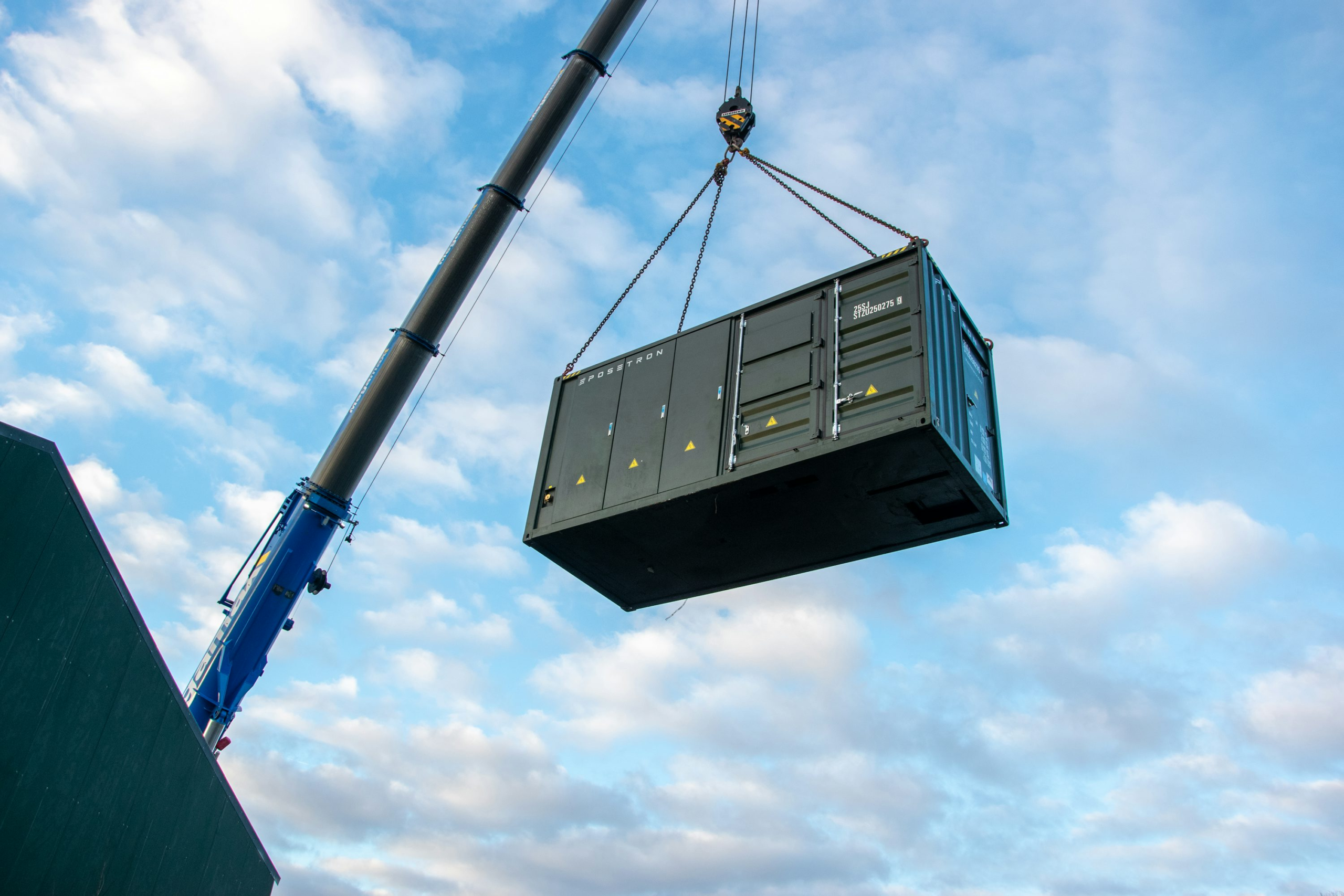
IN Brief:
- The Series A round takes Ore Energy’s total funding above $61 million.
- Its iron-air systems are designed to discharge for periods of up to 100 hours.
- The company plans its first factory before targeting gigawatt-hour production in 2028.
Ore Energy has raised $43 million in Series A funding to scale its iron-air battery technology, taking total funding above $61 million. Plural and HV led the round, with participation from Positron Ventures, and the proceeds will support the company’s first manufacturing facility and planned expansion towards gigawatt-hour production in 2028.
The Dutch company is developing systems designed to discharge for up to 100 hours, placing the technology beyond the one- to four-hour applications commonly served by lithium-ion batteries. Ore stores and releases electricity through the reversible oxidation and reduction of iron, using iron, water, and air rather than lithium, nickel, or cobalt.
That material choice is central to the commercial proposition. Iron is abundant and widely processed, which could support a European supply chain with less exposure to battery-grade critical minerals. The trade-off is a lower energy density than lithium-ion systems, making land, enclosure design, air management, and balance of plant important parts of the installed project.
Ore says its technology can deliver long-duration capacity at one tenth of the energy-capacity cost of lithium-ion storage. The figure remains a company claim rather than a published record from a fleet of commercial projects, and the new funding must now convert it into repeatable manufacturing, commissioned assets, and verified lifetime performance.
The first factory is therefore more significant than the round number attached to the investment. Ore must establish production equipment, supplier qualification, quality control, safety testing, and field-service processes capable of supporting larger deployments. A battery chemistry can perform well in controlled trials while still proving difficult to manufacture consistently at industrial volumes.
The company has set a target of gigawatt-hour-scale production in 2028, leaving a compressed period for factory commissioning and production validation. Long-duration systems require large quantities of active material, tanks or enclosures, air-handling equipment, power electronics, controls, and site infrastructure. Abundant chemistry does not remove the need to control cost and quality across those components.
Ore has already signed a 1GWh agreement with Dutch energy and telecoms supplier Budget Thuis. It has also undertaken pilot work with EDF, which the company says has demonstrated performance in utility settings. Those projects provide a route from technical validation to commercial delivery, although the factory will have to maintain product quality and schedule performance as order volumes rise.
A 100-hour battery serves a different system need from fast, short-duration storage. It is intended to move energy across multi-day periods of low renewable output rather than focus solely on frequency response or short evening peaks. Its value will depend on round-trip efficiency, availability, degradation, response time, minimum stable output, and the market arrangements available for extended discharge.
Co-location with wind or solar generation is one potential application. A long-duration system can absorb electricity that would otherwise be curtailed, then discharge when the connection has spare capacity or market prices improve. The economics depend on how often curtailment occurs, how predictable it is, and whether the stored energy can be sold at a sufficient spread after conversion losses.
Ore is also presenting the technology as an option for data centres and industrial sites seeking reliable low-carbon power. Storage can smooth demand and reduce exposure to short supply gaps, but it cannot create energy. Any claim to renewable baseload depends on the combined size of the generation portfolio, the storage duration, the grid connection, and the reserve margin required by the customer.
Iron-air systems will compete with flow batteries, thermal storage, compressed-air projects, pumped storage, and other long-duration technologies. Each offers a different combination of efficiency, duration, response, footprint, location constraint, and supply-chain maturity. Ore will have to show that its system can be financed, insured, maintained, and connected at a competitive total project cost.
The funding round gives the company resources to establish that industrial case. Manufacturing yield, component consistency, installation time, and service requirements will matter as much as electrochemical performance because they determine the delivered cost seen by a customer. The first factory will show whether the technology can move from promising chemistry to repeatable infrastructure.
Ore’s 2028 target creates a clear test. By then, investors and customers will expect evidence of manufacturing output, commissioned capacity, operating efficiency, and reliable long-duration discharge. The $43 million round opens the route to scale, but the factory and the first commercial fleet will decide whether iron-air storage can occupy a durable place in the power system.

