IN Brief:
- NatWest provided a term loan and ancillary facilities after OnPath reached financial close at Common Farm in South Yorkshire.
- The installation combines 49MW of solar generating capacity with a 50MW, two-hour battery rated at approximately 100MWh.
- The solar asset has a long-term subsidy-free route to market agreement, while a separate third party will optimise battery trading.
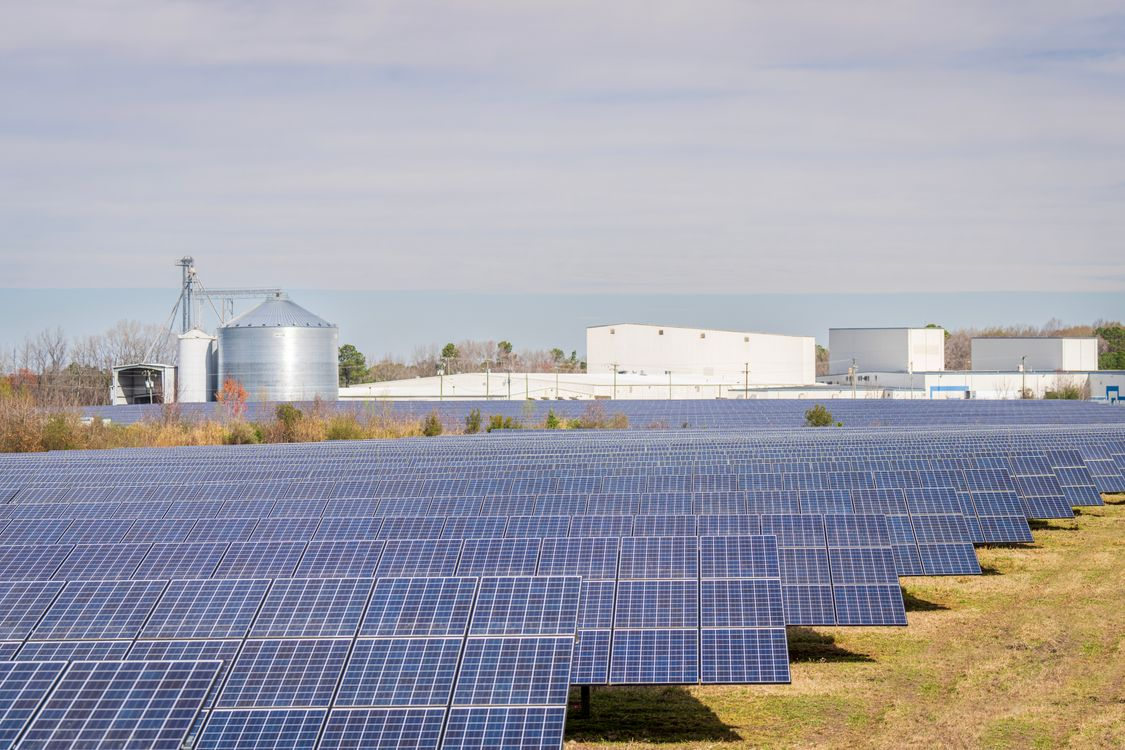
OnPath Energy has reached financial close on Common Farm Solar Park in South Yorkshire, where its first co-located solar and battery project is already under construction. NatWest is providing financing for a 49MW photovoltaic installation and a 50MW battery specified for two hours of storage, equivalent to a nominal 100MWh energy rating. The project is near Dinnington, east of Sheffield, and OnPath expects construction to be completed by mid-2027.
The NatWest agreement includes a term loan and ancillary facilities covering the construction period and the assets’ operational life. Neither the debt amount nor its financing terms have been published. Financial close confirms that the agreed funding arrangements are in place for a project already being built; it does not mark the start of construction or demonstrate that grid export has commenced. The mid-2027 completion date remains dependent on the remaining civil, electrical and testing work.
Separate commercial arrangements have been agreed for each part of the project. The solar facility has a long-term, subsidy-free route-to-market contract with a global technology company, while a third-party optimiser will manage the battery’s trading strategy. OnPath has not named those counterparties. Solar offtake relates to energy generated from the arrays, whereas battery optimisation can involve charging and discharging around market and system conditions, constrained by the plant’s available stored energy.
Photovoltaic modules generate direct-current electricity, with power electronic inverters converting it into alternating current for the collection network. Battery inverters can operate in either direction, converting electricity into stored chemical energy during charging and returning it to the grid during discharge. The 50MW battery power rating is separate from its approximately 100MWh nominal storage capacity: the former sets a power limit, while the latter indicates a theoretical two-hour discharge at full output.
Co-location can allow plant owners to share connection infrastructure, access routes, maintenance arrangements and some electrical equipment. It does not establish that every megawatt of the solar array and battery can be exported simultaneously: the aggregate output must remain within the grid connection agreement and the capacity of the transformers, switchgear and associated cables. The commercial controller must also coordinate charge, discharge and solar curtailment instructions against those physical limits.
The connection arrangements include infrastructure serving the nearby Thurcroft electricity substation, approximately three kilometres from the solar park. OnPath previously reported that electrical works were progressing alongside its development programme, including work at a new substation compound. Connection equipment must allow the site’s inverters to operate safely with the distribution network and must coordinate protection trips, fault isolation, metering and the limits on import and export. Completing civil substation works alone does not authorise commercial energisation.
AECOM is lead consultant, while Grupotec is carrying out engineering, procurement and construction work and is expected to provide operational maintenance and management services. Project updates show solar panel mounting structures installed, panel installation progressing and battery equipment positioned on prepared foundations. Those milestones reduce the remaining construction scope, but the inverter systems, site-wide controls, electrical circuits and grid connection will still require integration tests before both assets can enter service.
At full discharge, the battery could theoretically sustain 50MW for two hours from its specified stored energy. Delivered energy will depend on usable state-of-charge limits, conversion losses, auxiliary loads and controls that protect the cells from excessive temperature or degradation. Its commercial optimiser will have to balance available capacity, reserve obligations and market opportunities rather than assume the nominal energy rating is available for every service at all times.
OnPath estimates that the solar facility will generate electricity equivalent to the average annual consumption of up to 18,800 homes. This is an annual energy comparison based on expected output, rather than a guaranteed continuous supply to particular households. Actual generation will vary through the seasons and with cloud cover, equipment availability and any curtailment. Battery dispatch can shift when part of that electricity reaches the network, but charging and discharging losses mean it cannot increase the energy originally captured by the photovoltaic modules.
Local works also include landscape and ecological measures. OnPath reports grassland establishment, hedgerow planting and provisions intended to benefit wildlife. Its proposed annual community benefits package is around £50,000, with discussions continuing over local allocation. These commitments sit alongside a construction programme that still requires delivery of electrical connections, site-wide controls, safety systems and testing before generation and storage can be commissioned.
The financial structure is supported by two different operating profiles. The solar route-to-market agreement provides an identified commercial channel for generated electricity, while the battery optimisation arrangement allows a specialist party to manage dispatch opportunities within the plant’s operating limits. Those arrangements do not guarantee any particular level of trading income. Debt repayment and operating costs will need to be met from project cash flows while the equipment is maintained and contract obligations are performed.
Work now centres on completing panel installation, finishing the electrical infrastructure and commissioning the co-located systems. Testing must establish the response of solar and battery inverters to voltage and frequency conditions, verify protection and communications, and demonstrate that combined export stays within the approved connection capacity. OnPath continues to target mid-2027 for completion, with NatWest financing already secured and construction proceeding on site.