IN Brief:
- Ofgem launched Offshore Transmission Owner Tender Round 14 on 21 October, covering Hornsea 3 transmission assets valued at approximately £3.5bn.
- The transmission package includes offshore and onshore electrical infrastructure connecting the 2.9GW wind farm to Britain's electricity network.
- The successful bidder will acquire the relevant assets and receive an offshore transmission licence, with inflation-linked revenue available for up to 25 years subject to performance and availability.
Ofgem has opened a competitive tender for ownership and operation of the electrical transmission infrastructure serving the 2.9GW Hornsea 3 offshore wind farm. The regulator estimates that the assets are worth approximately £3.5bn, making Tender Round 14 its largest offshore transmission ownership competition to date.
The tender concerns the cables and electrical infrastructure connecting the North Sea development to Britain’s onshore transmission network. It is separate from the construction and operation of the wind farm’s generating turbines, which form part of Ørsted’s wider Hornsea 3 development.
Hornsea 3 is being constructed more than 100km offshore and is expected to reach completion by the end of 2027. Its planned 2.9GW generating capacity will require substantial electrical infrastructure to collect electricity from the offshore turbines and transfer it to the mainland.
Tender Round 14 operates under Ofgem’s Offshore Transmission Owner framework, which provides for transmission infrastructure constructed by a wind farm developer to be transferred to a licensed owner selected through competition. The successful bidder will acquire the relevant assets and assume responsibility for their long-term operation and maintenance.
The arrangement separates electricity generation from ownership of the infrastructure used to transmit power to the onshore network. It allows the generating project developer to deliver the necessary electrical connection while specialist infrastructure investors compete for the subsequent transmission ownership role.
Ofgem formally launched the tender on 21 October, following its September notice setting out the intended start date. The current exercise covers one development, Hornsea Project Three, rather than a group of separate offshore wind farms.
The regulator has also issued enhanced prequalification documentation to establish which potential bidders are suitable to participate. The assessment considers whether interested parties can meet the required financial, organisational and technical conditions before proceeding through the later stages of competition.
The launch does not mean that a successful bidder has been selected or that ownership of the transmission infrastructure has already changed. The relevant licence award and asset transfer will follow the competitive process and applicable requirements.
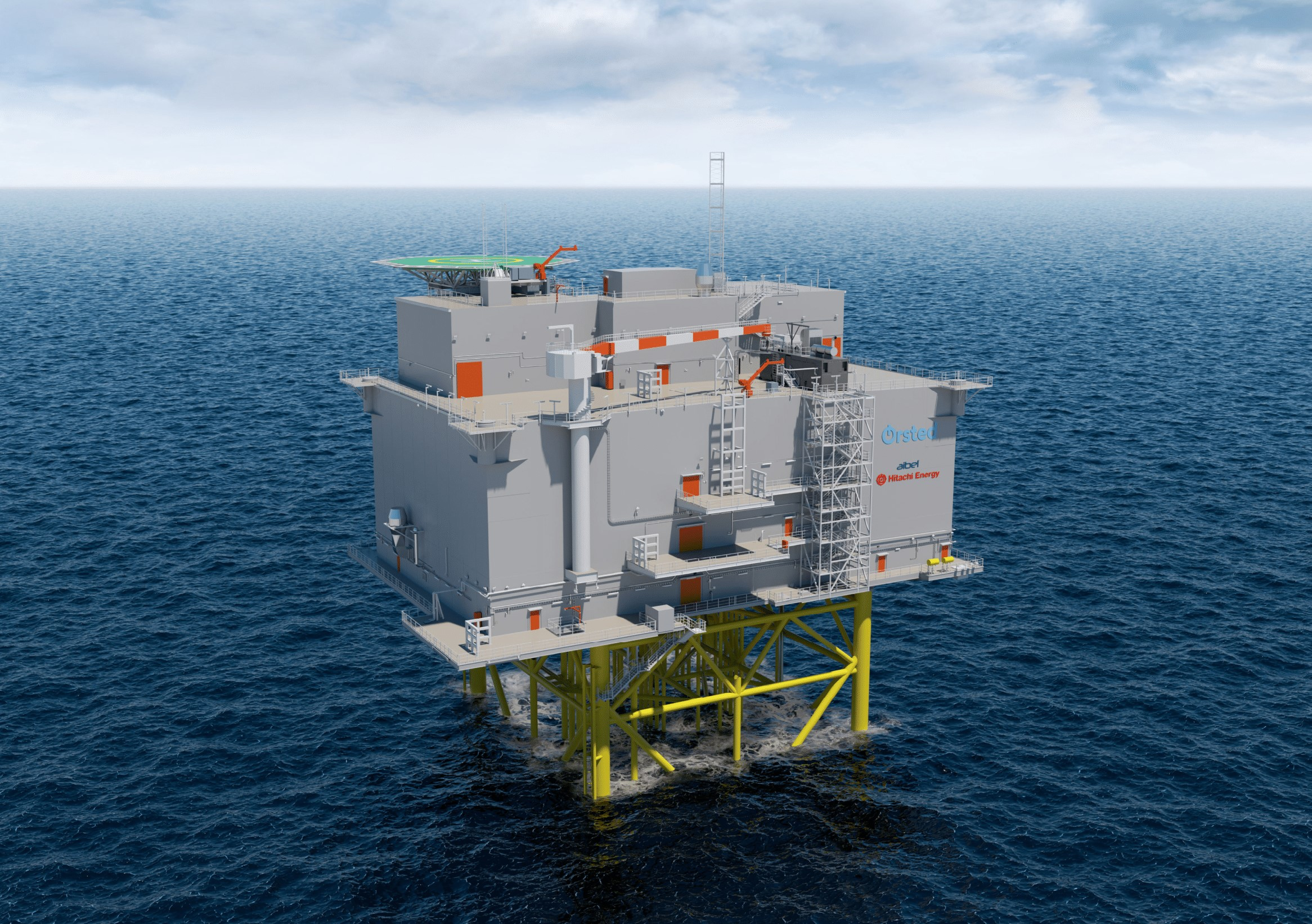
Hornsea 3’s transmission package comprises several important electrical systems. Offshore infrastructure gathers and processes electricity generated by the turbines, while high-voltage export cables carry power towards the onshore connection and associated equipment.
The project uses high-voltage direct current transmission for its offshore export connection. Electricity generated by the turbines is collected through the wind farm’s internal electrical infrastructure before being converted into direct current for transmission over the long export route.
At the mainland end, converter equipment transfers power back into alternating current for connection with Britain’s established electricity transmission network. The complete system must coordinate the electrical characteristics of the offshore generating installation with the requirements of the onshore grid.
The use of HVDC transmission is relevant to a development located a substantial distance offshore. Long submarine AC connections can be affected by cable capacitance and associated reactive power requirements, while HVDC technology provides an alternative for transferring large quantities of electrical power over extended distances.
HVDC infrastructure also introduces specialised converter equipment and associated control systems. Its suitability depends on the transmission distance, required capacity, losses, equipment costs and the technical characteristics of the connected networks.
The offshore converter stations form major elements of the electrical system. Their equipment must operate reliably in a marine environment while providing the necessary power conversion, switching, control and protection functions.
Both offshore converter station topsides had been installed by September 2026, but completion of those installation activities does not establish that the full electrical connection is commissioned. Export cables, onshore equipment, testing and integration with the surrounding system remain part of the wider delivery programme.
Submarine cables introduce additional asset management requirements because their condition and operating performance depend on cable design, installation methods, seabed conditions and the thermal environment surrounding the conductors.
Mechanical damage, insulation defects or other cable failures can cause substantial interruptions, and offshore repairs may require specialist vessels and suitable weather conditions. The transmission owner must therefore manage inspection, maintenance and repair arrangements across assets that can be difficult to access.
Offshore and onshore substations present different operating demands. Their transformers, switchgear, protection systems and supporting equipment must meet the required electrical ratings while allowing safe access for planned maintenance and controlled responses to faults.
Protection coordination is essential because abnormal electrical conditions must be detected and managed without unnecessarily disconnecting healthy parts of the system. The operating arrangements must also account for the changing electrical output of the wind farm and the network conditions at its connection point.
These technical responsibilities form part of the long-term obligations that potential transmission owners must assess when preparing bids. Equipment availability, maintenance expenditure, replacement risks and the resources required to operate the infrastructure influence the cost of ownership.
Under the established OFTO regime, successful bidders receive an inflation-linked revenue stream for up to 25 years. Payments are subject to the relevant licence conditions, including asset availability and performance, rather than being guaranteed irrespective of the condition of the transmission equipment.
The framework therefore combines long-term financing arrangements with operational obligations. Bidders must determine how to fund the asset acquisition while meeting maintenance, performance and other requirements over the licence period.
Competition is intended to establish efficient financing and operating costs for offshore transmission infrastructure. The process does not remove the need for regulatory oversight or technical compliance after the successful bidder takes ownership.
The estimated £3.5bn value relates to the transmission assets being tendered. It should not be described as the total capital expenditure required to construct the entire Hornsea 3 wind farm, which also includes turbines, foundations and other generating infrastructure.
Ofgem reports that the OFTO regime has attracted more than £10bn of investment in transmission connections serving 28 offshore wind farms since its introduction in 2009. The Hornsea 3 tender extends that model to an individual connection of substantially greater scale.
The regulator estimates that Hornsea 3 could generate electricity equivalent to the annual requirements of approximately 3.3 million UK homes. That figure is a generation equivalence estimate rather than a guarantee of continuous household supply, because wind output varies and electricity flows through the interconnected grid.
Large offshore wind developments also depend on the capacity of the wider onshore network to accommodate their electricity production. A functioning offshore transmission connection cannot independently resolve constraints elsewhere in the system, particularly where additional power must travel through existing inland transmission corridors.
The ownership tender is taking place while the wind farm and its transmission infrastructure remain under construction. Asset completion, electrical testing and commissioning will establish when the connection becomes available for normal operation, while the tender process determines the organisation responsible for its long-term ownership.
Ofgem’s next steps concern bidder qualification and progression through the competitive selection procedure. The licence award and eventual transfer of the Hornsea 3 transmission assets will establish the long-term operating responsibilities for a connection serving one of Britain’s largest offshore wind projects.