IN Brief:
- SSEN Transmission has selected Thainstone Business Park near Inverurie for a £150 million high-voltage training facility.
- The centre will combine classroom teaching, practical network equipment, operational scenarios, and space for testing technologies before live deployment.
- It forms part of SSEN Transmission’s £29 billion network investment programme as its employee and contractor skills requirements expand.
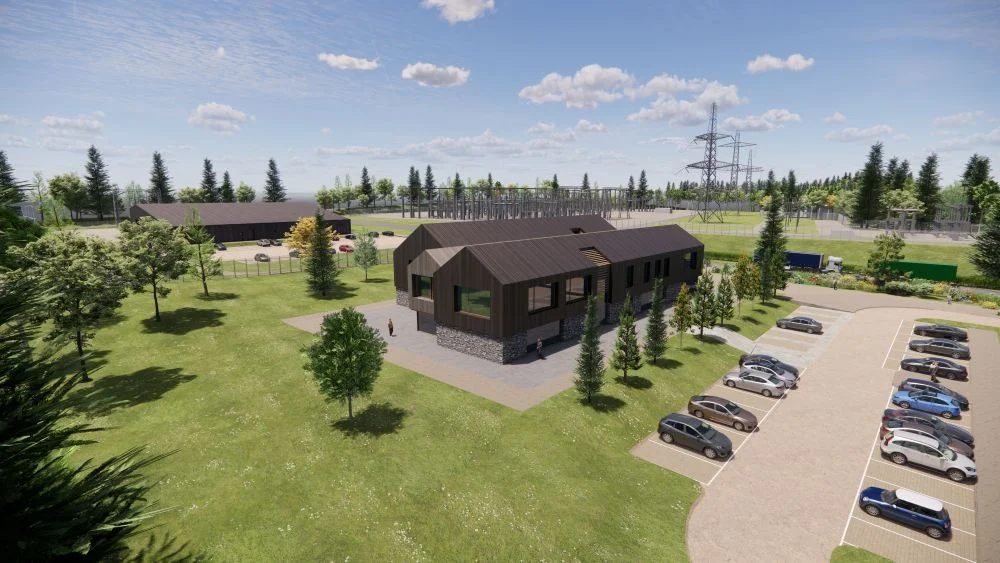
SSEN Transmission has selected Thainstone Business Park near Inverurie as the location for a £150 million high-voltage training centre intended to support the workforce required for its expanding north-of-Scotland transmission network.
The Aberdeenshire facility will be used by SSEN Transmission employees and contractor partners and is expected to support hundreds of trainees each year. It will combine classroom teaching with practical operating environments designed around the equipment, procedures, and safety requirements encountered on a high-voltage transmission system.
Thainstone Business Park is owned by ANM Group, and around 10 permanent training, operational, and support roles are expected to be based at the centre. Experienced local engineers and external tutors will supplement that core workforce as the facility develops its training programme.
The centre forms part of SSEN Transmission’s wider £29 billion investment programme to upgrade and strengthen the electricity network across the north of Scotland. It was first announced in June, with Thainstone now selected as the site ahead of further consultation, planning, detailed design, and construction.
Subject to the required approvals, SSEN expects the facility to be delivered in the early 2030s. Consultation events are scheduled at Thainstone in September and October as the operator develops the project in more detail.
The new centre will complement the existing Faskally Training Centre in Perth rather than replace it. SSEN intends the Aberdeenshire site to be purpose-built for a transmission network whose equipment base, voltage levels, digital systems, and construction programme are all expanding.
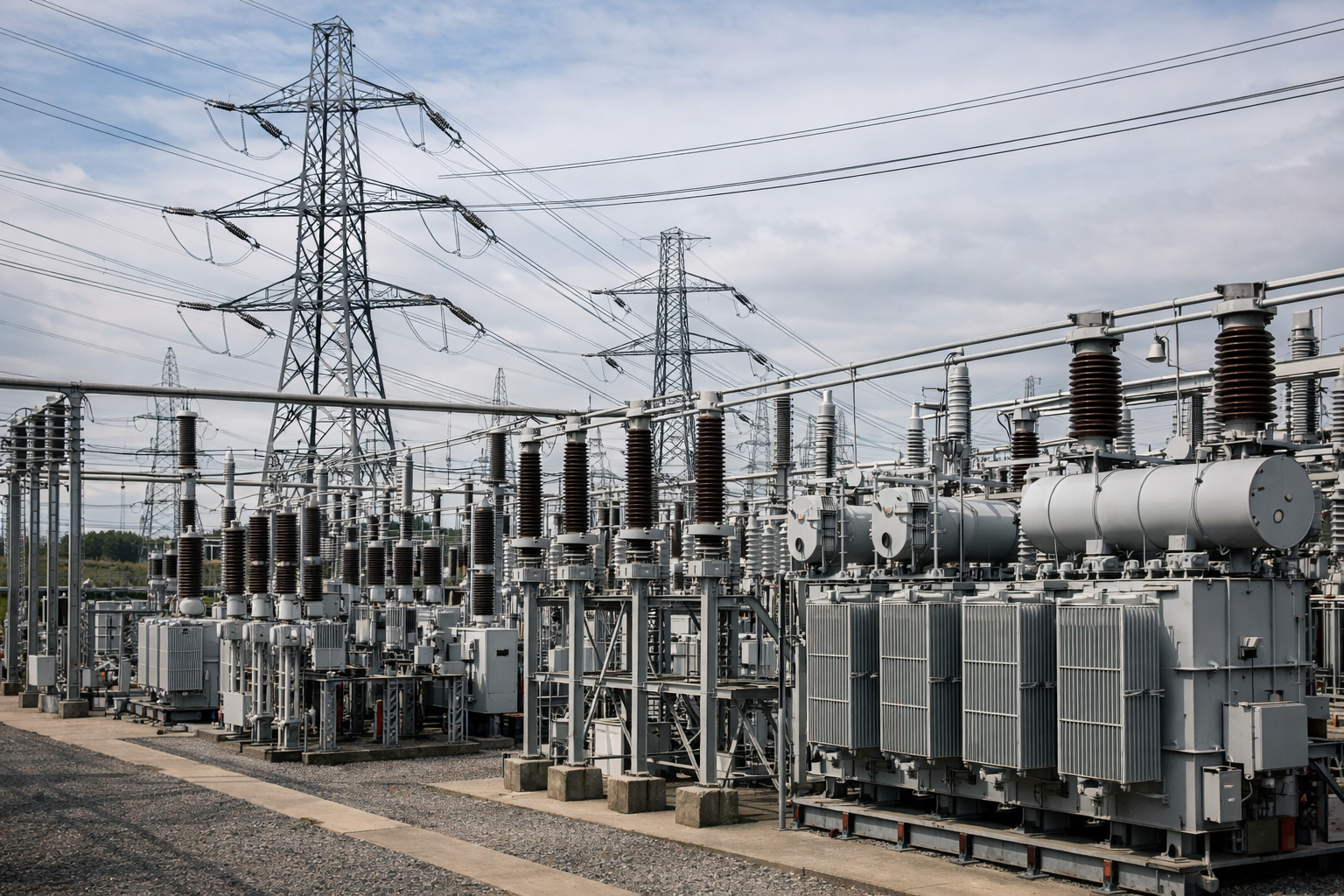
Practical training will cover equipment including transformers, circuit breakers, gas-insulated switchgear, overhead-line structures, and cables. Those systems cannot be taught entirely through classroom material because maintenance and operational competence depends on understanding access arrangements, isolations, switching procedures, inspection, fault response, and the physical behaviour of the equipment.
A controlled training environment gives engineers and technicians somewhere to practise those tasks without exposing staff or live network assets to unnecessary risk. It also allows procedures to be repeated, assessed, and standardised before trainees progress to operational substations, transmission lines, and cable systems.
The proposed facility will include space for testing new technologies and operating approaches before they are deployed on the live network. That creates a direct link between training and technical adoption: when new equipment changes switching, maintenance, protection, monitoring, or safety procedures, the workforce can be trained alongside the engineering validation process.
SSEN Transmission’s asset programme is growing in both volume and complexity. New and upgraded 400kV substations, overhead-line reinforcement, high-voltage cables, offshore links, and associated connection infrastructure require different combinations of civil, electrical, protection, control, commissioning, and operational expertise.
The resulting workforce requirement extends beyond direct employees. Transmission projects depend heavily on contractors, original equipment manufacturers, engineering consultants, construction specialists, and commissioning teams, all of whom need consistent standards when work crosses the boundary between construction and an energised system.
A dedicated training centre gives SSEN another mechanism for aligning those standards. Contractors can encounter the same equipment and operating principles as internal staff before working on live assets, reducing the gap between project-specific construction competence and the authorisations required to operate or maintain transmission infrastructure.
The investment also arrives while SSEN Transmission itself is expanding quickly. The company says it has recently reached 3,000 employees and is recruiting a further 500 jobs by the end of March 2027, increasing the number of people who will require network-specific skills as its capital programme accelerates.
The north-east location gives it access to an established engineering labour market shaped by oil, gas, offshore operations, marine engineering, and associated supply chains. Some of those capabilities transfer readily into electricity infrastructure, including project management, inspection, high-integrity engineering, offshore construction, and maintenance.
High-voltage transmission competence, however, carries its own requirements. Electrical safety rules, switching authority, protection systems, substation equipment, cable systems, commissioning, and network operation require specialist training even when an engineer arrives with considerable experience from another energy sector.
The same problem applies when new technology enters the transmission fleet. SF6-free switchgear, digital monitoring, new cable systems, and increasingly complex control equipment can change maintenance and operating practices, creating a need to train personnel before large numbers of new assets reach service.
Training capacity therefore becomes part of delivery capacity. A utility can order transformers, switchgear, structures, and cables years ahead, but qualified technicians and authorised engineers cannot be produced by procurement alone. Recruitment without a route to competency simply moves the constraint from headcount to training.
Thainstone remains a development project rather than an operating centre, and the £150 million investment still has to pass through consultation, planning, design, and construction. Its selection nevertheless fixes a location for infrastructure that SSEN expects to use alongside Faskally for decades.
By the time the centre is due to open in the early 2030s, much of the current £29 billion transmission programme should already have moved through construction. The facility’s longer value will come from operating and maintaining that enlarged asset base — the less visible part of grid expansion that begins only after new substations and circuits have been energised.