
IN Brief:
- Initial renewable hydrogen has travelled approximately 120km from Lingen to Marl.
- ITM Power and Linde Engineering are supplying two 100MW PEM electrolyser plants.
- RWE plans 200MW of operation during 2026 and a 300MW site from 2027.
RWE has delivered initial quantities of green hydrogen from its Lingen electrolysis site to Evonik’s chemical complex in Marl. The commissioning flow travelled through approximately 120km of pipeline, connecting large-scale production equipment, transport infrastructure, metering, certification, and an industrial customer within the GET H2 Nukleus programme.
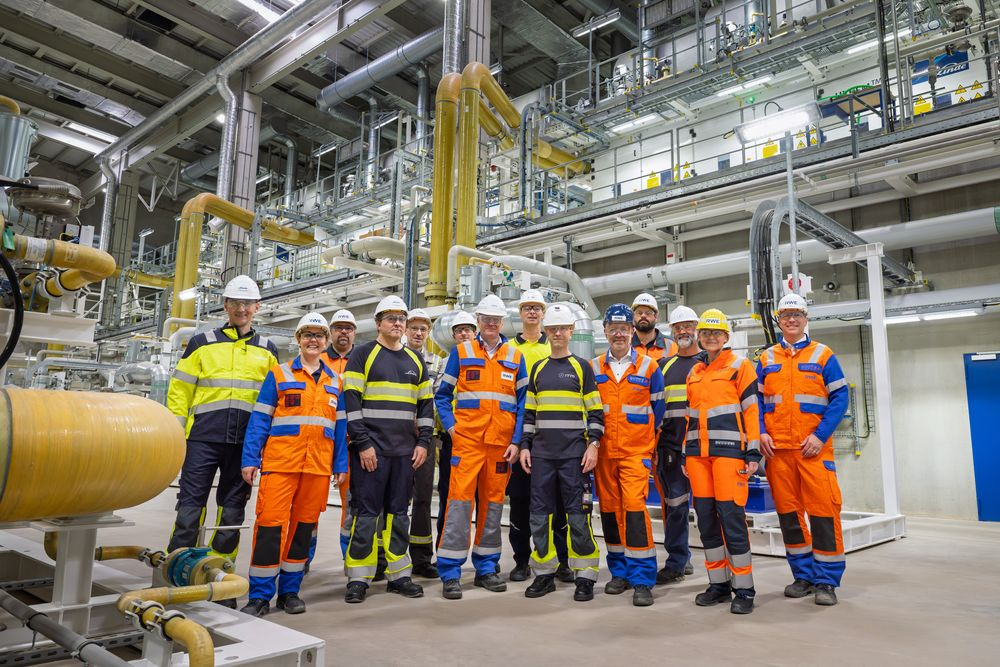
ITM Power and Linde Engineering are supplying two 100MW proton-exchange membrane electrolyser plants at Lingen. Hydrogen produced during commissioning has now reached Marl, establishing that the main technical interfaces can operate as one chain before the plant moves towards full commercial output. The initial volumes are small compared with the planned capacity, but they mark the first physical delivery across the developing network.
RWE plans to commission 200MW of electrolysis capacity at Lingen by the end of 2026 and expand the site to 300MW from 2027. At full capacity, the GET H2 programme expects the plant to produce around 5.6 tonnes of green hydrogen per hour. Germany is supporting the project through its contribution to the Hy2Infra Important Project of Common European Interest programme.
The hydrogen is intended to meet European requirements for renewable fuels of non-biological origin. Customers will receive sustainability documentation so that delivered volumes can be included in industrial decarbonisation accounting. That certification is commercially important because an operating pipeline has limited value when customers cannot demonstrate that the hydrogen satisfies the regulatory conditions attached to investment, product claims, or emissions reporting.
GET H2 Nukleus is being developed as an integrated regional system rather than a single production plant. The wider programme links electrolysis in northern Germany with transport infrastructure, cavern storage, and industrial demand in Lower Saxony and North Rhine-Westphalia. More than 50 companies, institutions, associations, and municipalities participate across production, imports, transport, storage, and end use.
Several related infrastructure elements are progressing. OGE and Nowega completed a 10km pipeline between Heek and Epe at the end of 2025 to connect a hydrogen storage facility. RWE Gas Storage West plans to begin filling the first commercial hydrogen cavern at the end of 2026, with operation scheduled for mid-2027.
Further work includes conversion of an existing pipeline between Legden and Dorsten, construction of a new Dorsten-to-Marl section, and a completed connection from Marl Chemical Park to the Gelsenkirchen-Scholven refinery. Each section has to meet pressure, purity, measurement, and operating requirements that remain consistent across several owners. The network’s reliability will depend on those interfaces continuing to work after commissioning teams have left the site.
The electrical demand at Lingen is substantial. A 200MW electrolyser plant is a major grid connection, and the planned 300MW site will require dependable high-voltage supply, power conversion, protection, control, and coordination with changing renewable output. Commercial performance will depend partly on how effectively the electrolysers respond to electricity prices and network conditions without reducing utilisation below an economic level.
PEM electrolysis can adjust output more quickly than some alternative technologies, but large-scale operation still places demanding requirements on rectifiers, cooling, water treatment, compression, and balance-of-plant systems. Sending hydrogen into the pipeline begins the collection of operating data across those systems. It also tests pressure control, purity, custody transfer, and customer procedures under real conditions.
Marl provides an immediate industrial destination rather than a speculative future market. Chemical parks already manage process gases, energy networks, and tightly controlled production systems, making them logical early hubs for hydrogen infrastructure. The commercial challenge is to sustain deliveries at a reliability and cost level that industrial users can absorb.
Stable operation also requires coordination between companies with different responsibilities. RWE controls production, pipeline operators manage transport, Evonik receives the gas, and certification records must follow each delivered volume. The first flow establishes a baseline, while availability, purity, pressure stability, and delivered cost over the coming months will determine whether the system is ready for routine industrial use.
Commissioning at this scale will proceed in stages rather than through a single start date. Individual electrolyser modules, power-conversion equipment, compressors, and pipeline sections must be tested before the complete plant can operate at rated output. The sequence will also reveal how efficiently the site can ramp production, maintain hydrogen quality, and respond to interruptions elsewhere in the network.
The cavern-storage connection will add another operating option by separating production timing from customer demand. Storage can absorb output when industrial consumption is lower and support supply during maintenance or changing electricity conditions. Its contribution will depend on injection and withdrawal rates, available capacity, and coordination with the pipeline system.
Full 200MW operation remains the next major target, followed by the 300MW expansion and cavern-storage connection. Lingen has now progressed beyond installed equipment and isolated tests; the remaining milestones will show whether the production, network, storage, and customer assets can operate as a dependable regional hydrogen system.

