IN Brief:
- The 10 MWh vanadium flow battery at Viejas has delivered more than 1 GWh since entering commercial operation.
- The battery charges from a 15 MW solar array and supports operating loads at the Viejas Casino & Resort.
- Invinity says the system has operated near-continuously while meeting or exceeding its contracted performance requirements.
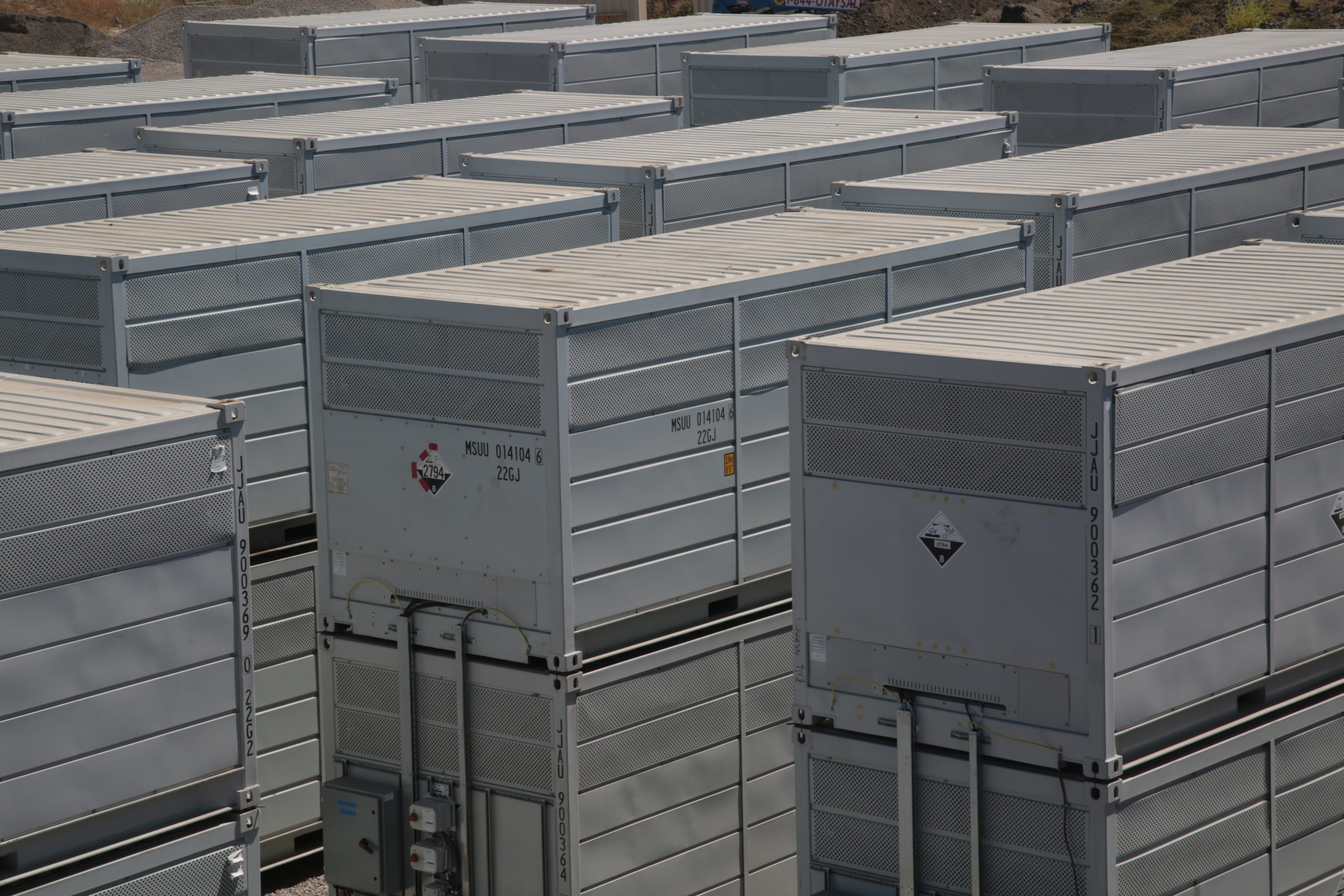
Invinity Energy Systems says the 10 MWh vanadium flow battery at the Viejas Enterprise Microgrid in California has delivered more than 1 GWh of electricity since entering commercial operation in late 2025. Installed at the Viejas Casino & Resort near San Diego for Indian Energy, the battery has been used near-continuously alongside a 15 MW solar array, charging from onsite generation before returning electricity to support resort operations.
Cumulative throughput gives the project a different measure of performance from the capacity figure used when the system was commissioned, because 1 GWh of delivered electricity is equivalent to 100 full 10 MWh turnovers when measured against nameplate energy capacity. Actual operating cycles will not correspond neatly to that number because commercial dispatch contains partial charges and discharges, varying depths of discharge, and periods at different power levels, but the total indicates that the battery has been used repeatedly rather than retained mainly as standby capacity.
Invinity says the system has met or exceeded its contracted performance parameters throughout that period, providing an operating reference for a storage technology whose commercial case relies heavily on repeated cycling. The project received support from the California Energy Commission and forms part of what the company describes as California’s largest tribal microgrid installation, coupling local renewable generation with storage behind an operational commercial load rather than using the battery solely as a grid-connected merchant asset.
Vanadium flow batteries store energy in liquid electrolyte held in tanks, with the electrolyte pumped through electrochemical stacks during charging and discharge. Invinity’s systems use vanadium in a water-based electrolyte on both sides of the battery, while the size of the tanks determines much of the energy capacity and the cell stacks determine the power conversion capability. The architecture differs from conventional lithium-ion systems, where energy and power are tied more closely to the number of battery cells installed.
That separation is one reason flow batteries are generally aimed at high-throughput and longer-duration applications, particularly where storage is expected to charge and discharge frequently over a long operating life. Invinity markets its systems around repeated deep cycling and low capacity degradation from use, making cumulative delivered energy a particularly relevant datapoint for the technology. A project that spends most of its life waiting for an occasional outage would provide relatively little evidence about those claimed cycling characteristics.
Viejas instead combines daily commercial activity with variable solar production, creating a continuing requirement to decide when locally generated electricity should be consumed directly, stored, or discharged later. A 15 MW photovoltaic array can produce far more than the site needs at some points and considerably less at others, leaving the microgrid controller to coordinate generation, storage, and resort demand rather than treating the battery as an independent device. The economics depend on that control strategy as well as on battery efficiency and availability.
The project also has to maintain ordinary electrical functions while shifting energy between those periods, including power conversion, protection, metering, communications, and coordination with the wider supply system. Microgrids become more demanding where local generation and storage are expected to support resilience because operating conditions can change substantially when the site moves away from normal grid supply. Although Invinity has not published a complete operating record for Viejas, near-continuous battery use since commissioning provides a materially larger dataset than a short demonstration programme.
Flow battery chemistry changes some of the asset-management assumptions familiar from lithium-ion storage, although it does not remove the requirement for pumps, power electronics, controls, sensors, and other equipment to remain serviceable. Invinity says its vanadium electrolyte can be cycled repeatedly without the same cycle-driven capacity loss associated with conventional battery chemistries, while its system architecture uses tanks, stacks, and modular power equipment that can be maintained separately. Commercial performance still depends on the complete system rather than the electrolyte alone.
The Viejas installation remains modest beside battery parks now being built at hundreds of megawatt-hours, but its operating record is useful because long-duration technologies are increasingly being evaluated on lifetime throughput rather than headline capacity alone. A system that can move its rated energy repeatedly over many years may produce a different cost profile from one optimised around fewer cycles, even where the competing technology begins with a lower capital cost or smaller physical footprint.
More than 1 GWh delivered does not settle that comparison, and the figure on its own does not disclose round-trip efficiency, availability, degradation, operating cost, or the value captured from each discharge. It does establish that the 10 MWh Viejas system has moved a volume of energy equal to at least 100 nameplate-capacity turnovers within its first period of commercial service, giving Invinity a measurable operating reference as it pursues larger vanadium flow projects designed around frequent cycling and longer discharge durations.