IN Brief:
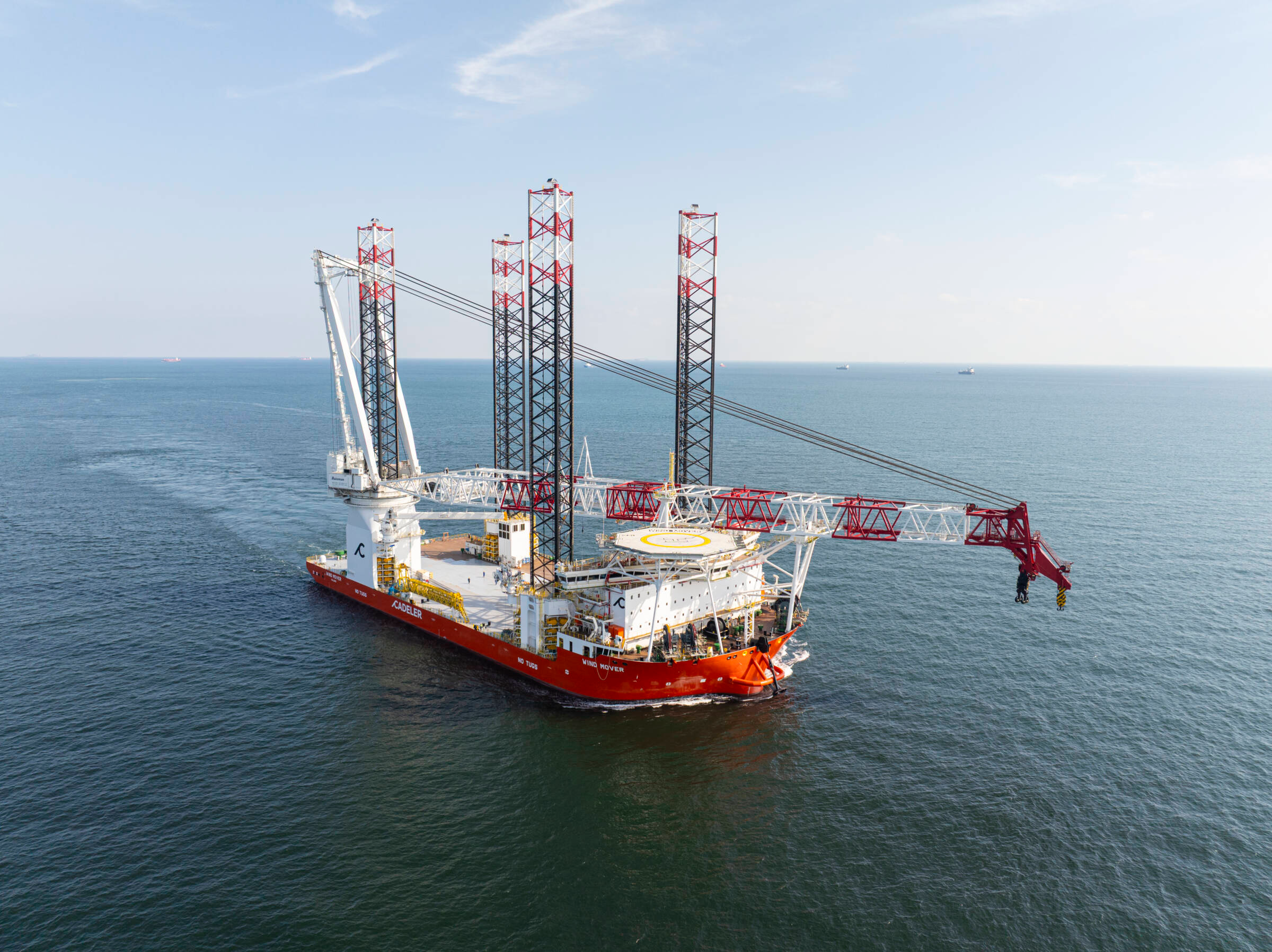
- Cadeler’s Wind Mover reached the Inch Cape offshore wind site around 30 October to begin the turbine-installation campaign.
- The 1.1GW project is designed for 72 Vestas V236-15MW machines, marshalled and loaded from the Port of Dundee.
- The vessel’s first safe-haven arrival does not establish that a complete turbine had already been installed.
Inch Cape Offshore Wind Farm has moved into the mobilisation phase of its 72-turbine installation campaign, with Cadeler’s Wind Mover arriving at the project area off Scotland’s Angus coast on 30 October. The jack-up vessel initially entered a designated safe-haven position before its first component load-out from the Port of Dundee. The programme now links completed foundation works and turbine assembly ashore with the sequence of offshore lifts, electrical connections, and commissioning needed to bring the 1.1GW wind farm into service.
The development is situated approximately 15 kilometres off Angus and is owned by a 50:50 venture between ESB and Red Rock Renewables. It will use 72 Vestas V236-15MW turbines on a combination of 54 monopile and 18 jacket foundations. The turbine programme follows installation of the monopile structures and continuing work on the jackets, export system, and inter-array cables. The offshore civil and electrical packages must be coordinated because turbine installation can progress on an individual foundation before the complete array is ready to export electricity.
The maritime programme places Wind Mover at an offshore safe-haven position before its first Dundee load-out. From the port, the vessel will make successive voyages carrying components for groups of turbines. Each voyage depends on the readiness of assembled equipment and a suitable installation window offshore; the actual first turbine lift will mark the next mechanical construction milestone after the vessel’s mobilisation.
Dundee is acting as the project’s turbine marshalling, assembly, and load-out base. The port is handling 576 main components: 288 tower sections, 216 blades, and 72 nacelles. Each turbine uses a four-section tower and three blades, and the project’s logistics plan calls for transporting turbine sets offshore in batches of four. The loading sequence depends on vessel availability, the readiness of assembled components, and offshore conditions suitable for installation.
At Dundee, tower sections are being marshalled and assembled ahead of loading onto Wind Mover, with the tallest completed towers reaching 127.4 metres. Individual blades measure approximately 115.5 metres. More than 130 people are involved in the port operations across a marshalling site of about 170,000 square metres, where component deliveries, inspections, assembly, and sail-away preparation must be coordinated with the vessel’s loading programme. The scale of the components also limits handling and transport options between the storage areas and the quayside.
Wind Mover will take prepared turbine sets offshore and jack up beside the relevant foundation to create a more stable lifting platform above the sea surface. Tower sections, nacelles, and blades are then raised and secured to the turbine structure. Mechanical completion is followed by inspection and electrical commissioning, including integration with turbine controls and the offshore collection system. Weather limits, marine access, and the readiness of the foundations can affect the installation sequence even when components are available in Dundee.
Wind Mover is supported by a separate offshore commissioning arrangement. Acta Marine’s service operations vessel Acta Hercules is assigned to the commissioning phase, with technicians able to access turbines through a walk-to-work system. Crew transfer vessels NOS Exceller and NOS Empowerer will also support personnel movements. The distinction between turbine installation and commissioning is practical: the construction jack-up handles major components, while subsequent work requires technicians and electrical specialists to prepare each assembled machine for service.
Earlier construction delivered 54 monopile foundations with their transition-piece interfaces. The other 18 turbine positions use jacket structures fixed to the seabed by pin piles, with separate marine installation equipment and procedures. The different foundation types accommodate the project’s engineering design and seabed requirements, while both ultimately provide the mechanical and electrical interfaces needed for the same turbine model. Jacket construction is progressing alongside the start of the turbine installation campaign.
Individual turbine output will feed the offshore electrical collection network before passing through substation equipment and export cables to the onshore connection near Cockenzie in East Lothian. The developer has progressed the first offshore export connection, installation of the second export cable, and array-cable works while foundations have been prepared. These overlapping construction activities create successive milestones: a turbine may be mechanically installed before its inter-array circuit, offshore substation, and export route are ready for energisation.
The 72 machines carry a nominal rating of 15MW each, equivalent to 1,080MW or approximately 1.1GW for the project as a whole. That is the installed maximum generating rating under suitable operating conditions; actual output and annual energy depend on wind conditions, machine availability, losses, and permitted network exports. First power is targeted for late 2026, with full commercial operation expected in 2027 as further turbines are connected and commissioned.
Marine plans allow turbine installation and commissioning activity to continue through September 2027. The immediate work involves assembling and loading Vestas components at Dundee, transferring each shipment to the site, and installing the machines on prepared foundations. Wind Mover’s offshore arrival establishes that the vessel campaign is active, while the first completed turbine and first exported electricity remain subsequent project milestones.
Featured image: Cadeler.