
IN Brief:
- Ignitis Renewables has approved a 107MW/215MWh battery system in Tukums municipality, Latvia.
- The approximately €35 million project will share connection infrastructure with the 174MW Tume solar farm.
- Construction is due to begin in 2026, with commercial operation targeted for 2028.
Ignitis Renewables has taken a final investment decision on a 107MW/215MWh battery energy storage system to be built alongside its Tume solar farm in Latvia.
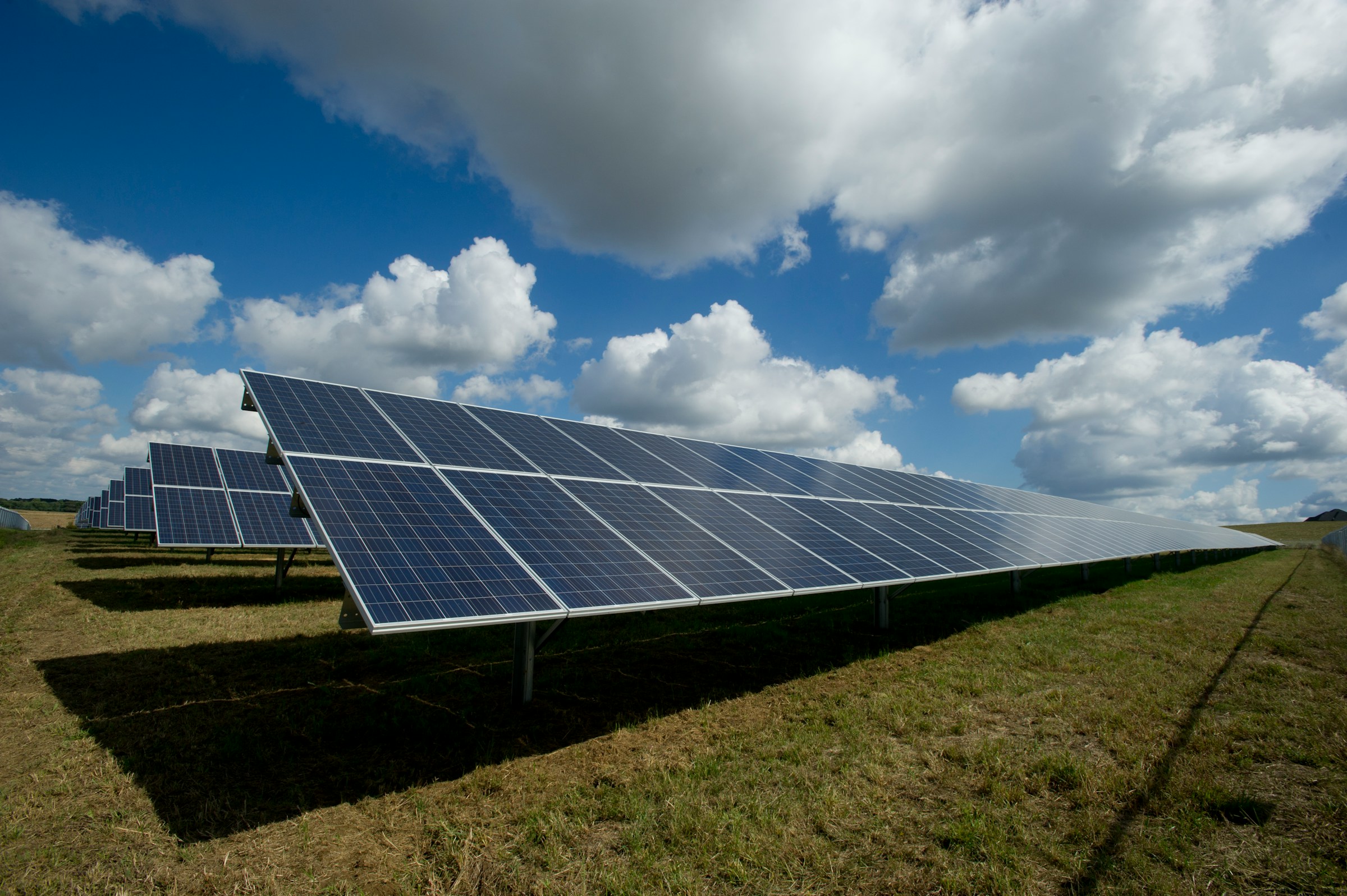
Located in Tukums municipality, the approximately €35 million installation will use the same grid connection and shared infrastructure as the 174MW photovoltaic development. Construction is scheduled to begin during 2026, with commercial operation expected in 2028.
At full rated output, the battery’s 215MWh energy capacity corresponds to roughly two hours of discharge. Its actual operating duration will vary according to market conditions, network requirements, state of charge, equipment limits, and the combination of services allocated to the plant.
Electricity can be absorbed during periods of high production or lower system demand and returned when generation falls or demand increases. Because the battery is co-located with a large solar project, it can also reshape the photovoltaic export profile within the limits of the shared connection.
The Tume solar farm will produce most heavily during daylight hours, with output rising and falling according to irradiance and cloud conditions. Storage allows part of that production to be shifted towards later periods, while retaining the option to provide balancing, reserve, or other network services.
Shared infrastructure changes the electrical design
Combining generation and storage behind a common point of connection can increase the utilisation of existing network capacity. Solar output dominates during daylight, whereas the battery can charge, discharge, or remain available for system services across a wider operating window.
The connection does not permit both assets to export unrestricted maximum output simultaneously. A central plant controller must keep the combined flow within the agreed import and export limits while coordinating inverter output, battery charging, reactive power, and any curtailment instructions.
Protection and control studies must account for bidirectional power flow and multiple inverter-based resources operating behind the same interface. Transformer ratings, switchgear duties, metering arrangements, communications, harmonics, voltage control, and fault behaviour all need to be assessed as parts of one integrated electrical system.
Commercial arrangements will determine whether the battery charges from the solar farm, the wider grid, or both. Those options affect metering, settlement, renewable-energy accounting, network charges, and the range of markets available to the project.
A two-year construction and commissioning programme reflects the work required beyond installing battery enclosures. Civil engineering, equipment manufacture, substation interfaces, cabling, fire systems, auxiliary supplies, control integration, testing, and grid-code compliance must all be completed before energisation.
Baltic storage moves towards portfolio scale
Tume forms part of a broader Ignitis storage programme across the Baltic region. The group is developing three systems in Lithuania near the Kelmė and Mažeikiai wind farms and the Kruonis pumped-storage site, with combined capacity of approximately 291MW/584MWh.
Following the Baltic states’ integration with the continental European synchronous area, regional power systems require greater access to balancing resources, frequency control, reserves, and flexible capacity. Those services must increasingly be supplied without relying on the previous operating relationship with the Russian and Belarusian networks.
Batteries will operate alongside interconnectors, demand response, conventional generation, pumped storage, and network reinforcement. The balance between those resources will depend on the duration, frequency, and geographical concentration of the system imbalances being managed.
A growing volume of European battery development and supply agreements shows developers moving towards portfolio procurement, repeatable equipment platforms, common controls, and long-term service structures rather than treating each site as an isolated installation.
Standardisation can reduce design and procurement time, yet local network conditions continue to shape each project. Short-circuit levels, voltage limits, communications protocols, fire rules, planning conditions, ambient temperatures, and access arrangements cannot be resolved solely through a common battery enclosure.
Latvia’s seasonal climate will place particular demands on heating, cooling, insulation, and auxiliary consumption. Cell temperature affects available power, efficiency, degradation, and the speed at which the system can move between charging, standby, and discharge.
Revenue stacking will determine the Tume battery’s operating pattern once it enters service. Wholesale price shifting, balancing, reserve services, congestion management, and solar export optimisation compete for the same capacity, requiring state-of-charge margins that preserve both commercial flexibility and network obligations.
Shared infrastructure provides a clear connection advantage, but it also places coordinated control at the centre of the design. The battery, solar farm, substation, and network interface must operate as a unified electrical system even where their commercial functions remain separate.
By targeting operation in 2028, Ignitis is positioning Tume for a Baltic market containing materially more renewable generation and a greater requirement for controllable flexibility. Its operating performance will depend on how effectively the shared connection, battery controls, and solar output are coordinated under changing market and system conditions.

