IN Brief:
- Ignitis and emsys VPP are adding Baltic balancing-market functionality to an existing virtual power plant used for a roughly 650 MW portfolio.
- The expanded platform is intended to support automatic and manual frequency restoration reserves, with Litgrid technical integration and prequalification still required.
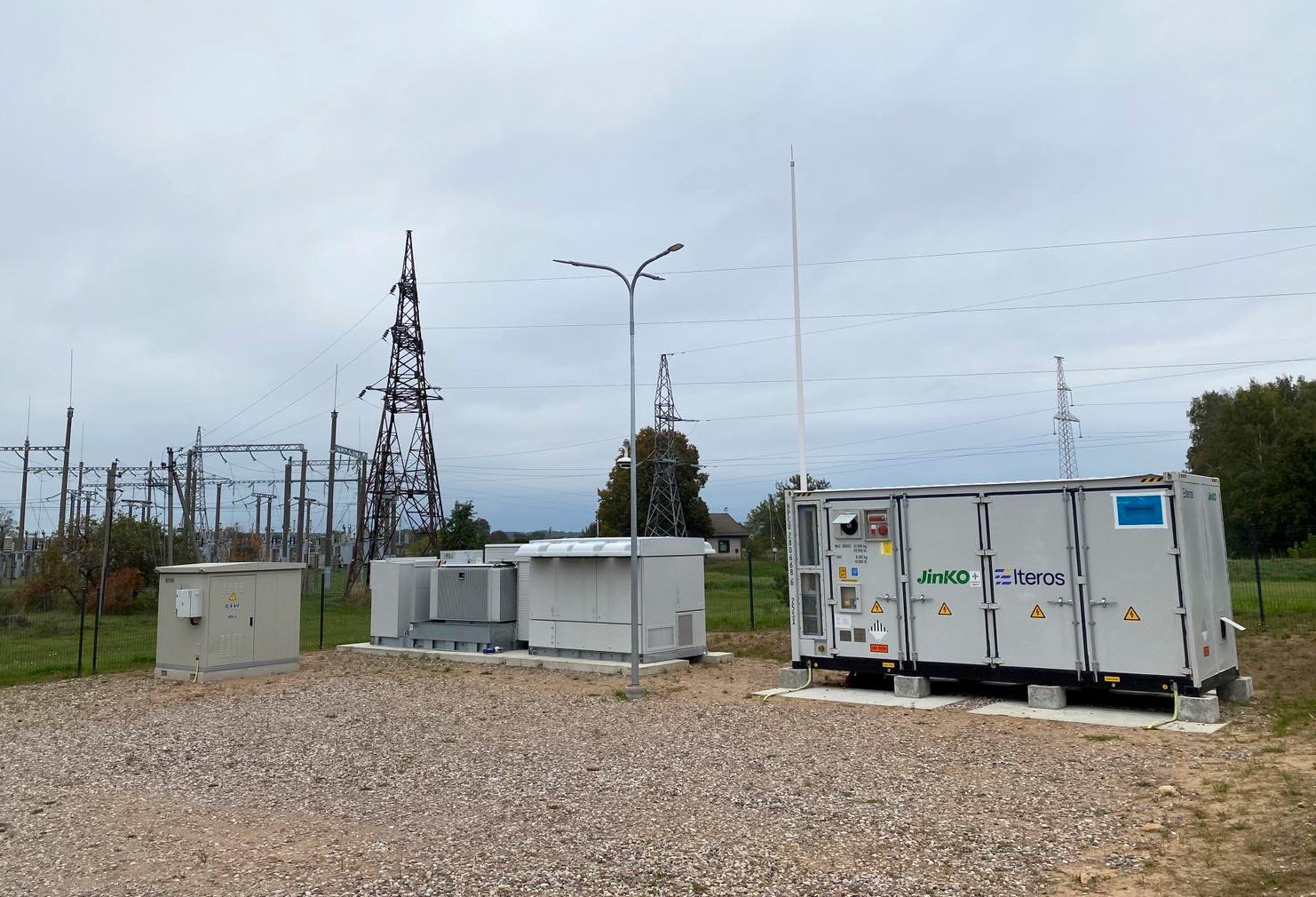
- An associated 2 MW Lithuanian battery photograph illustrates the technology but is not the total capacity integrated or qualified through the programme.
Ignitis and Germany’s emsys VPP are extending their virtual power plant partnership to enable battery storage assets to participate in Lithuania’s balancing markets. The platform upgrade adds functions for automatic and manual frequency restoration reserves to software already used for electricity trading and renewable generation forecasting. This is a development in control and market integration, rather than confirmation that connected batteries have completed Litgrid’s individual technical prequalification or begun supplying those reserves.
The companies have worked together since 2024. Their existing virtual power plant supports direct marketing of an Ignitis portfolio of approximately 650 MW, with forecasting for wind and solar generation among its functions. Battery assets are already being traded in the intraday electricity market. The new development is intended to let flexible resources respond to balancing instructions as well, subject to the appropriate controls, connection procedures and tests.
A virtual power plant links multiple physical electricity assets through software, rather than gathering them at one generating site. The platform receives information about their available capacity and operating conditions, combines that information with forecasts and trading schedules, and can issue dispatch requests to eligible equipment. Batteries add a controllable source of both consumption and injection: they can charge when excess electricity is available and discharge when the system needs more power. Their ability to respond depends on remaining stored energy, inverter limits and operating commitments already made in other markets.
Balancing services address short-term differences between predicted and actual generation and demand. Lithuania’s transmission system operator, Litgrid, must maintain a stable 50 Hz system frequency as part of the synchronised European network. When supply is unexpectedly insufficient, positive balancing action increases net power available to the system. When supply exceeds demand, negative action reduces net injection or increases consumption. A battery can provide either type of action in suitable conditions, but the same megawatt of capacity cannot be assumed simultaneously available for incompatible commitments.
The expansion covers automatic frequency restoration reserve (aFRR) and manually activated frequency restoration reserve (mFRR), which serve different response and dispatch arrangements. Automatic restoration uses control instructions to adjust participating plant as the system seeks to correct imbalances. Manual reserve is activated through a separate instruction process, with delivery requirements set by the relevant market and transmission-system rules. Neither product should be confused with frequency containment reserve, which responds sooner to changes in system frequency. The partners have identified the intended products, but they have not disclosed completed service accreditation for individual batteries.
Before an asset can supply those services, its control arrangements must connect appropriately to Litgrid and it must complete the required prequalification. That work is separate from the fact that batteries can already trade energy intraday. A successful wholesale trade records a scheduled energy transaction; a reserve commitment adds an obligation to preserve and deliver a specified response if the system operator activates it. Communications reliability, measured power delivery, metering quality and the ability to honour the promised operating range are consequently central to integration.
Charge management becomes especially important when a battery is expected to provide services in both directions. A fully charged installation has limited scope to absorb additional energy, while a depleted one cannot discharge for long. Control software must therefore consider state of charge and forecast obligations when identifying the reserve volume that can be made available. The partners have not disclosed a total megawatt figure for the batteries that will be qualified through this expansion, nor a schedule for every individual asset to complete the process.
The capacity offered through the expanded battery programme has not been quantified. A 2 MW battery in Druskininkai appears in the supporting project imagery, but its rating cannot be extrapolated to the full virtual power plant or taken as confirmation of an accredited reserve volume. Equally, the approximately 650 MW already managed by the platform represents an existing direct-marketing portfolio, not 650 MW of newly qualified batteries. Service registrations and metered delivery will establish the actual scope of participating assets as the upgrade is deployed.
Ignitis and emsys VPP say the system could subsequently be extended to other flexible resources, including wind and solar facilities. Those additions would introduce different operating constraints, because variable generation must be assessed against forecast output and any curtailed headroom rather than a battery’s stored energy. The current technical programme is focused on batteries and on the two frequency-restoration reserve products, without a claim that such future resources are already integrated and prequalified.
Software integration must now be matched by completed technical interfaces, control testing and prequalification for batteries entering Litgrid’s reserve arrangements. Their available capacity will vary with state of charge and obligations in other electricity markets, so a nominal installed rating will not by itself determine the reserve volume offered at any given time. Ignitis and emsys VPP have confirmed the platform’s intended new capabilities, while the number and combined power of batteries approved to provide balancing services remain to be reported.