
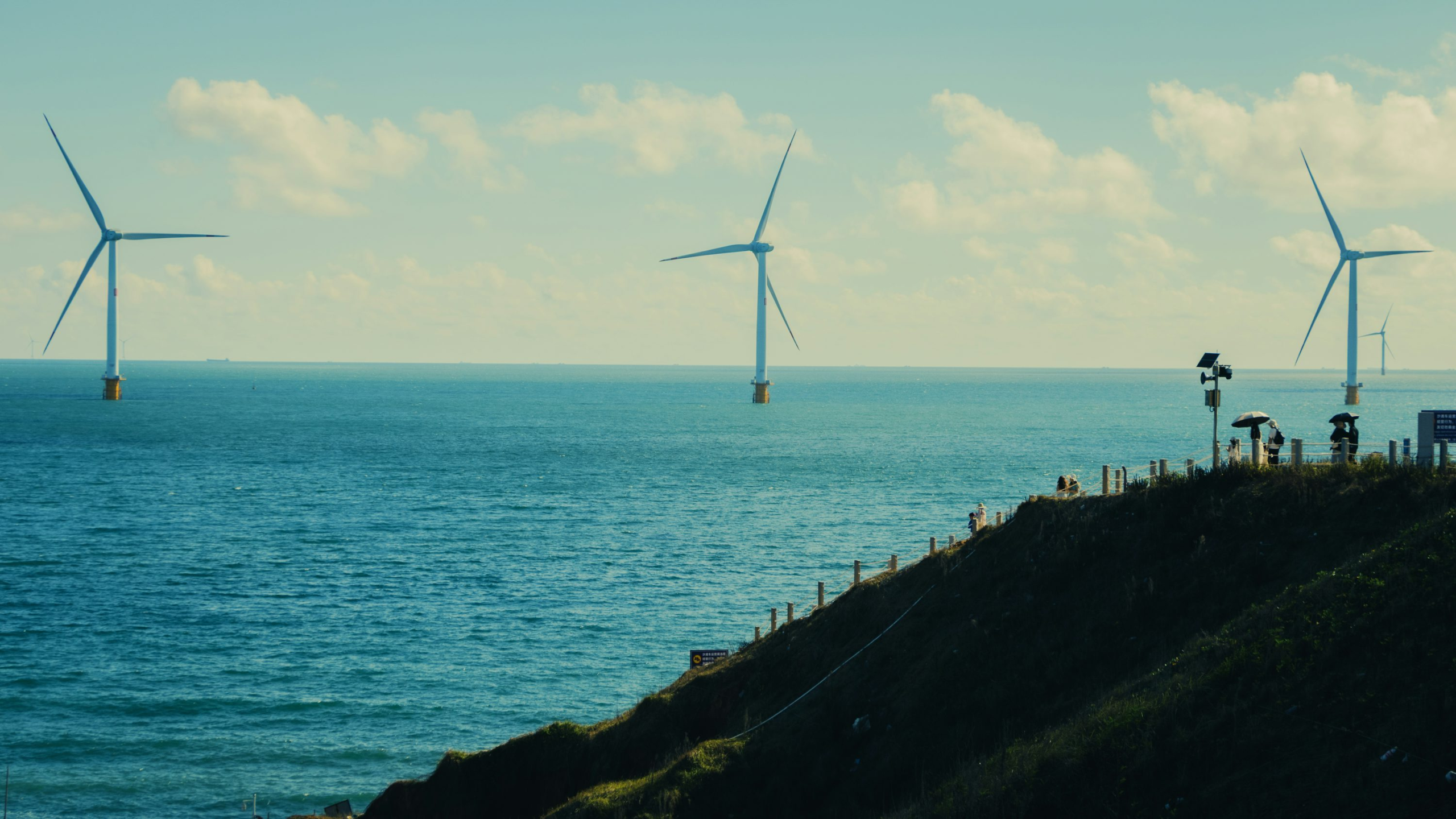
IN Brief:
- He Dreiht comprises 64 Vestas V236-15.0MW turbines with 960MW of total generation capacity.
- Cadeler completed the campaign using Wind Orca and Wind Keeper, with the latter carrying a 2,200-tonne main crane.
- The project now moves from turbine installation into commissioning, electrical integration, and operational handover.
Cadeler has completed turbine installation at EnBW’s 960MW He Dreiht offshore wind farm in the German North Sea, bringing the main heavy-lift phase to a close after 64 Vestas V236-15.0MW machines were installed. The campaign is the first commercial-scale deployment of Vestas’ 15MW offshore platform.
Wind Orca began turbine installation in April 2025 before Wind Keeper took over the remaining scope during the first quarter of 2026 under Cadeler’s long-term agreement with Vestas. The handover also made He Dreiht the first offshore wind installation campaign completed by Wind Keeper following the vessel’s entry into Cadeler’s fleet and a major upgrade.
Wind Keeper carries a 2,200-tonne main crane and is designed for both turbine installation and longer-term operations and maintenance work. Offshore installation vessels are being pushed towards higher lifting capacity as turbine nacelles, towers and blades increase in size, while deck layout, jacking performance and weather tolerance have to keep pace with the heavier components.
He Dreiht lies around 90km northwest of Borkum and about 110km west of Helgoland. Once fully operational, its 64 turbines will provide 960MW of installed capacity, equivalent to the annual electricity consumption of around 1.1 million households. Completion of the installation campaign moves the project into the less visible but equally demanding work of commissioning, electrical integration and operational handover.
Each turbine must pass electrical and mechanical checks before full export, while the array network, offshore electrical systems, export infrastructure and onshore connection have to operate as one coordinated plant. Protection settings, communications, metering and control functions become central as individual generating units are brought into service and the project moves from a construction sequence to a grid-connected power station.
The project is also an industrial test for the V236-15.0MW platform. Prototype performance establishes that a turbine can operate; serial deployment tests whether manufacturing, logistics, installation procedures, spares planning and service support can be repeated across dozens of units without eroding the economics that justified the larger machine in the first place.
Germany’s offshore fleet has already passed 10GW of operating capacity, with further projects moving through construction and investment decisions. Operating offshore capacity reached 10.8GW during the first half of 2026, placing He Dreiht within a broader build programme that is increasing demand for converter platforms, export cables, foundations, specialist vessels and onshore reinforcement alongside turbines.
The handover between installation and commissioning also transfers pressure from marine logistics to electrical completion. Cable terminations, turbine transformers, protection functions and supervisory controls have to be checked against project settings before progressive energisation can continue. Faults found at that stage can still require offshore intervention, but the resources involved are different from the heavy-lift spreads used during turbine assembly.
Serial deployment also gives manufacturers and operators a larger evidence base for reliability. Common faults across a 64-unit fleet can expose a design, manufacturing or commissioning issue quickly, while consistent performance can validate maintenance intervals and spare-parts assumptions. The first commercial fleet of a new turbine platform therefore generates operational evidence that a prototype, however heavily instrumented, cannot reproduce on its own.
Larger machines reduce the number of turbines and foundations required for a given project capacity, but they also concentrate more output and more schedule risk into each installation. A delayed lift can disrupt vessel sequencing, commissioning teams and subsequent campaigns because the specialised fleet is commonly committed across several projects and countries years in advance.
He Dreiht’s commercial structure adds another layer. The project was developed without a conventional fixed subsidy, increasing exposure to power-market revenues, long-term offtake arrangements, availability and operating costs. The value of a 15MW turbine is consequently tied to more than rated output: serial production, installation, commissioning and maintenance have to deliver sufficient reliability to justify the higher consequence of an individual unit being unavailable.
The operating phase will change the project’s risk profile again. Heavy-lift exposure falls once construction ends, while remote monitoring, planned maintenance, component reliability and access planning become dominant. Fewer, larger turbines can reduce unit count and some balance-of-plant requirements, but the loss of one machine removes more megawatts from service than with an earlier generation of offshore turbines.
Cadeler’s final lift closes one of the project’s most visible engineering phases. The next measure of He Dreiht will be whether 64 large generating units, their electrical infrastructure and the export system can be commissioned into a dependable 960MW plant without the serial-deployment assumptions behind the V236 platform being undone by availability or integration problems.

