
IN Brief:
- Gižai will occupy about 35 hectares and operate at 330/220/110/10kV.
- The project introduces 220kV operation to Lithuania's transmission system for the first time.
- Harmony Link is planned as a 700MW AC connection, with completion targeted by the end of 2030.
Litgrid has opened procurement for the Gižai 330/220/110/10kV transformer substation, which is intended to become Lithuania’s largest transmission substation and provide the domestic grid interface for the planned Harmony Link with Poland. The successful contractor will prepare the detailed technical design and carry out construction of the facility in the Vilkaviškis district.
Litgrid expects the contract to run for 54 months and currently plans to sign it in the third quarter of 2027, keeping delivery aligned with the target of completing Harmony Link by the end of 2030. The procurement has been arranged so preparatory and construction work can begin once the necessary permits are available, with design and physical delivery overlapping where practical.
That sequencing reflects the relationship between Gižai and the wider interconnector programme. The new cross-border circuit cannot be integrated into Lithuania’s transmission system until its domestic switching, transformation, protection, and control interfaces are ready, making the substation a critical part of the electrical route rather than an ancillary project.
At about 35 hectares, Gižai will be a substantial installation. Its voltage configuration is also new for Lithuania because the project will introduce 220kV operation to the national transmission system for the first time.
Electricity arriving from Poland at 220kV will be transformed to the 330kV and 110kV levels already used within Lithuania. The station will consequently operate as a voltage-conversion and switching hub, connecting the cross-border circuit with different layers of the domestic grid.
Harmony Link itself has changed substantially from its earlier concept. Litgrid and PSE agreed in 2025 to pursue a 700MW, 220kV alternating-current onshore connection in place of the earlier plan centred on a subsea high-voltage direct-current link.
Moving to an AC land connection shifts more of the project towards overhead-line and conventional substation engineering, but it still requires detailed system studies, protection coordination, voltage management, transformer design, switching equipment, and cross-border operating arrangements. Gižai is the location where many of those interfaces converge on the Lithuanian side.
Once Harmony Link is complete, it and the existing LitPol Link are expected to provide up to 1,200MW of combined transmission capacity between Lithuania and Poland. An additional circuit will increase the routes available for cross-border exchange and reduce reliance on a single electrical connection between the Baltic region and continental Europe.
The project follows the Baltic states’ synchronisation with the Continental European electricity system in February 2025. Synchronisation changed the region’s operational relationship with neighbouring networks, but stronger physical interconnection remains important for electricity trading, maintenance planning, system security, and management of contingencies.
Gižai will therefore combine several engineering functions within one site. It must receive the 220kV circuit, transform power into Lithuania’s established voltage levels, provide switching flexibility, and support protection and control schemes capable of operating correctly across an international transmission boundary.
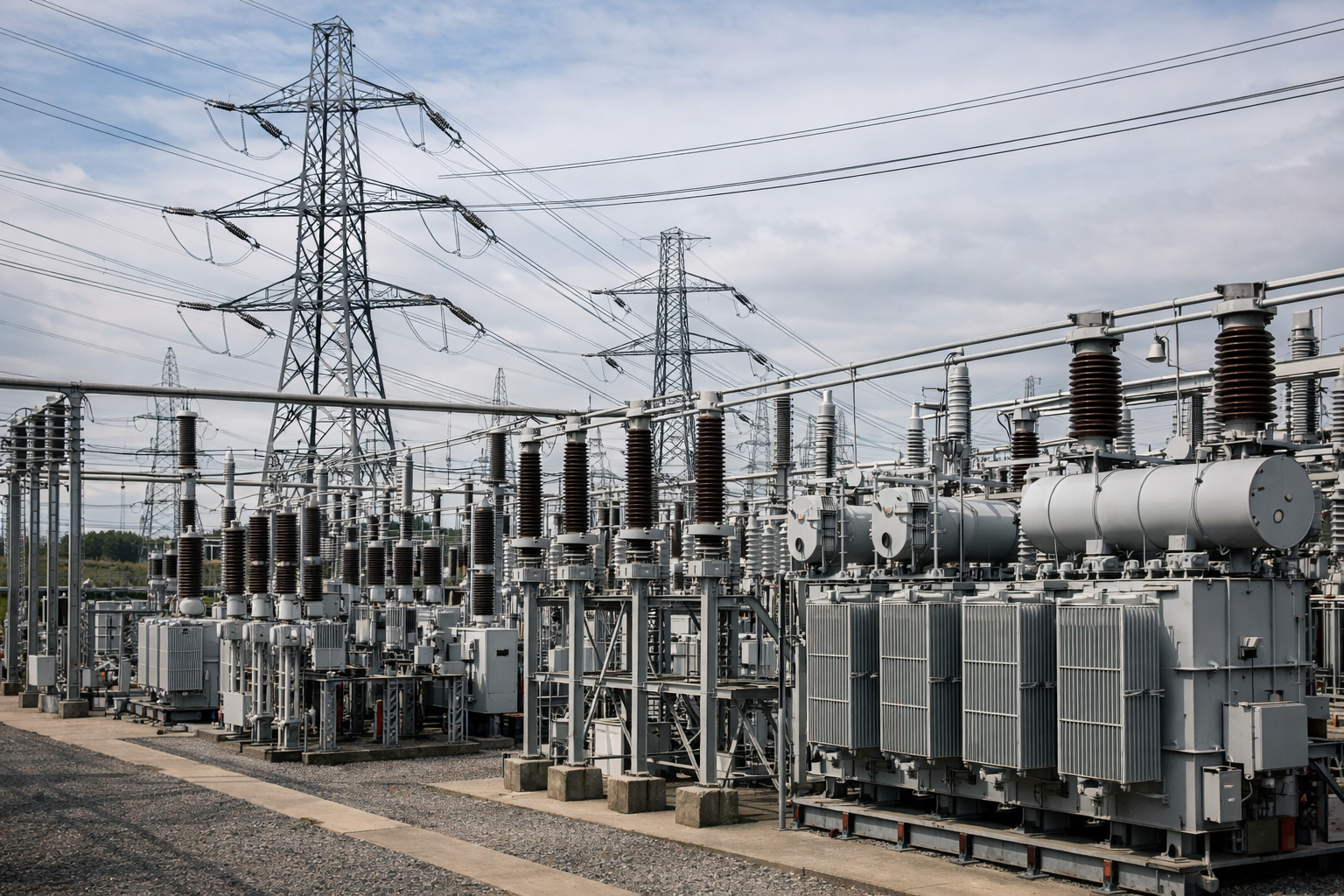
The site’s footprint reflects the equipment and electrical clearances required for that combination of voltage levels. A station of this scale can contain several busbar systems, transformer compounds, line bays, protection and control buildings, auxiliary supplies, communications infrastructure, earthing grids, access roads, and extensive high-voltage connections between them.
Project preparation also includes an unusual civil constraint. Survey work has been undertaken to identify and remove unexploded wartime ordnance from the planned substation area before major construction begins, adding a site-clearance requirement to an already complex transmission programme.
Litgrid has supplied conceptual design proposals with the procurement documents. The selected contractor will develop those proposals into a detailed technical design, which will then be reviewed by the transmission operator and independent experts as the construction programme progresses.
Parallel design and construction can compress delivery times, but it increases the importance of interface control. Decisions on equipment footprints, cable routes, transformer positions, protection architecture, busbar arrangements, and civil works must remain coordinated while the technical design continues to mature.
The 700MW rating will remain Harmony Link’s most visible figure, yet the interconnector cannot operate until that capacity has a functioning national-grid interface. At Gižai, the cross-border programme becomes a 35-hectare electrical engineering project involving four voltage levels, new transformation capacity, switching, protection, control, and the physical integration of another international circuit into Lithuania’s grid.

