IN Brief:
- Germany's 1 October second-segment tender currently offers 296.269MW for solar installations on buildings and noise barriers.
- The ceiling remains €0.10/kWh and the present minimum bid size is 1,001kW.
- Solarpaket I would increase 2026 volumes and lower the minimum bid threshold if European Commission approval arrives in time.
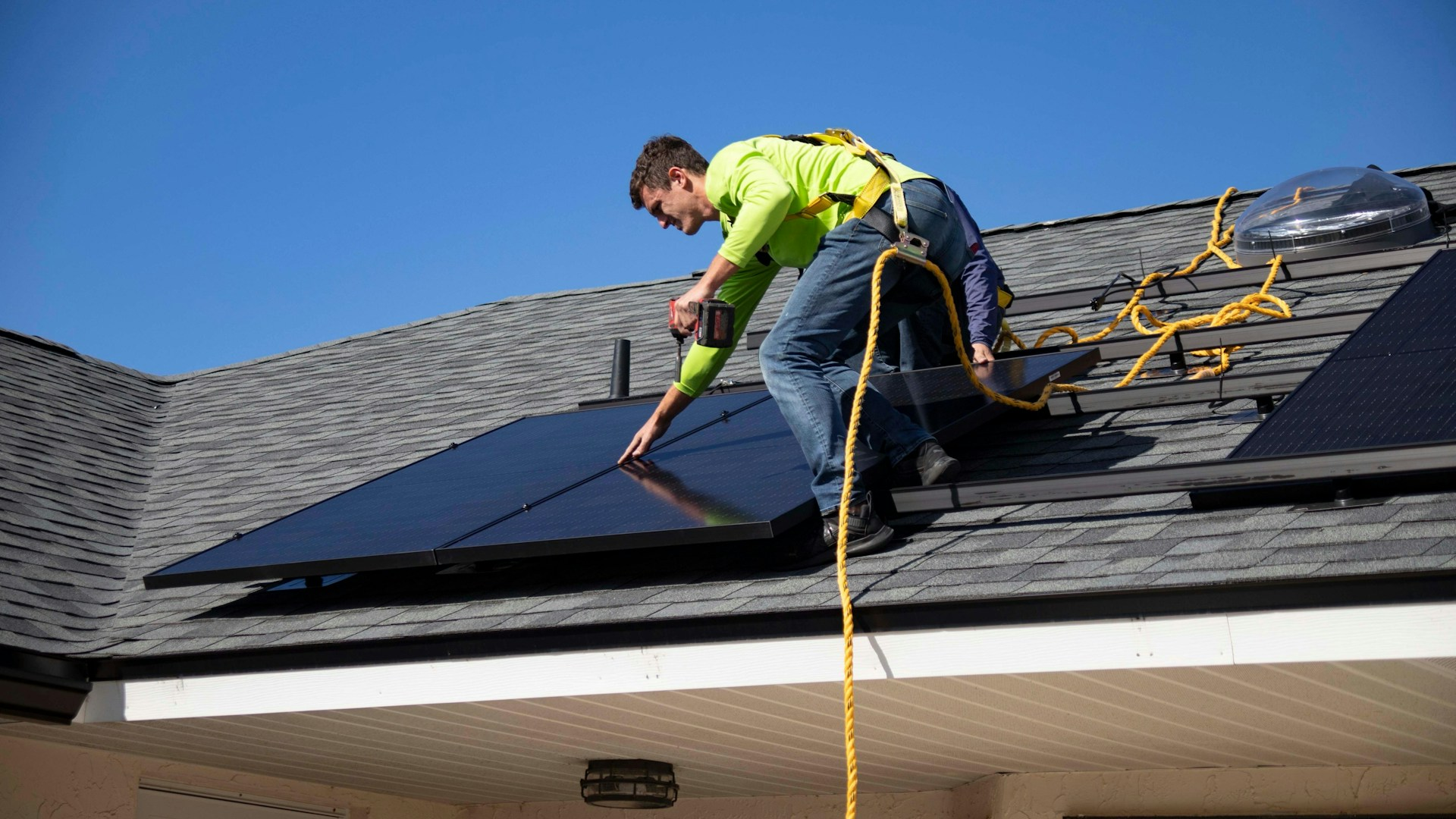
Bundesnetzagentur has opened Germany’s next second-segment solar tender with 296.269MW available for photovoltaic installations on buildings and noise barriers.
Bids are due on 1 October 2026 under a pay-as-bid process, with a maximum bid value of €0.10/kWh. The published rules currently retain a minimum bid size of 1,001kW, keeping the round focused on larger commercial and industrial installations rather than small rooftop systems.
The auction is being launched while part of Germany’s Solarpaket I reform still awaits European Commission state-aid approval. Without that clearance, the October round will proceed on the published 296.269MW volume and existing minimum bid threshold.
Solarpaket I would raise the annual second-segment tender volume to 2.3GW during 2026 and lower the minimum bid size to 751kW. Bundesnetzagentur has made clear that those changes cannot be applied until the required Commission approval is in place.
Previous rooftop rounds remained undersubscribed
The new tender follows two rounds in which submitted capacity failed to cover the amount available. In June, 296MW was offered but 125 bids totalling 238MW were submitted, leaving the auction undersubscribed despite a stronger response than in February.
Seventeen June bids were excluded and 108 projects totalling 209MW received awards. Successful bids ranged from 8.40 to 10.00 cents/kWh, while the volume-weighted average reached 9.72 cents/kWh, close to the permitted ceiling.
February showed the same broad pattern. Ninety-eight bids representing 177MW were submitted against approximately 283MW of available capacity, leaving a substantial proportion of the tender volume without bids.
Those results suggest that the obstacle in Germany’s larger rooftop segment is not simply the level of support. Commercial and industrial roofs bring project-specific constraints that ground-mounted schemes can often avoid, including structural capacity, roof condition, fire strategy, landlord and tenant agreements, access, existing electrical infrastructure, and the suitability of the site’s grid connection.
The electrical work behind the meter can also be significant. Larger rooftop arrays may require switchboard upgrades, new transformers, protection changes, export-control systems, metering, monitoring, and revised cable routes before the project can operate at its intended capacity.
These costs are not standardised across buildings. A module and inverter package may be broadly repeatable, but each existing property brings its own structural and electrical history, which can affect both development time and the price at which a project remains viable.
The tender threshold could widen the market
Reducing the minimum bid size from 1,001kW to 751kW would open the mechanism to more medium-sized commercial roofs. That could expand the bidder pool, but it would not automatically resolve structural suitability, connection constraints, or the economics of individual buildings.
A larger annual tender volume would have a similar limitation. More available capacity creates room for additional projects, yet competition only increases if enough developments are technically mature and commercially ready to submit bids.
The contrast with Germany’s ground-mounted solar market is useful. Utility-scale projects can often benefit from larger contiguous sites and more standardised layouts, whereas rooftop installations have to fit around existing buildings, electrical services, operational requirements, and roof lifecycles.
Rooftop solar still offers system advantages where generation can be located close to commercial or industrial demand. A well-matched installation can reduce imported electricity at the site and use existing built space rather than new land, while storage or load control may improve the value of the connection further.
For distribution operators, however, large embedded generation changes local power flows. Export can affect voltage, transformer loading, protection coordination, and reverse flows on networks that were historically designed around demand moving in one direction.
The October tender will therefore test two things at once: whether bidder participation continues to recover after the February and June undersubscription, and whether the Solarpaket I provisions clear the final regulatory hurdle in time to change the auction rules.
Until then, developers have to prepare against the framework already published — 296.269MW of volume, a €0.10/kWh ceiling, and a 1,001kW minimum bid. The tender’s eventual subscription level will show whether those conditions are sufficient to bring more large-rooftop projects through the remaining structural, electrical, and grid-connection constraints.