
IN Brief:
- German photovoltaic generation supplied 12.0355TWh to the public grid in July.
- The previous monthly record had been established one month earlier in June.
- Solar supplied a preliminary 31.6% of German electricity demand during the month.
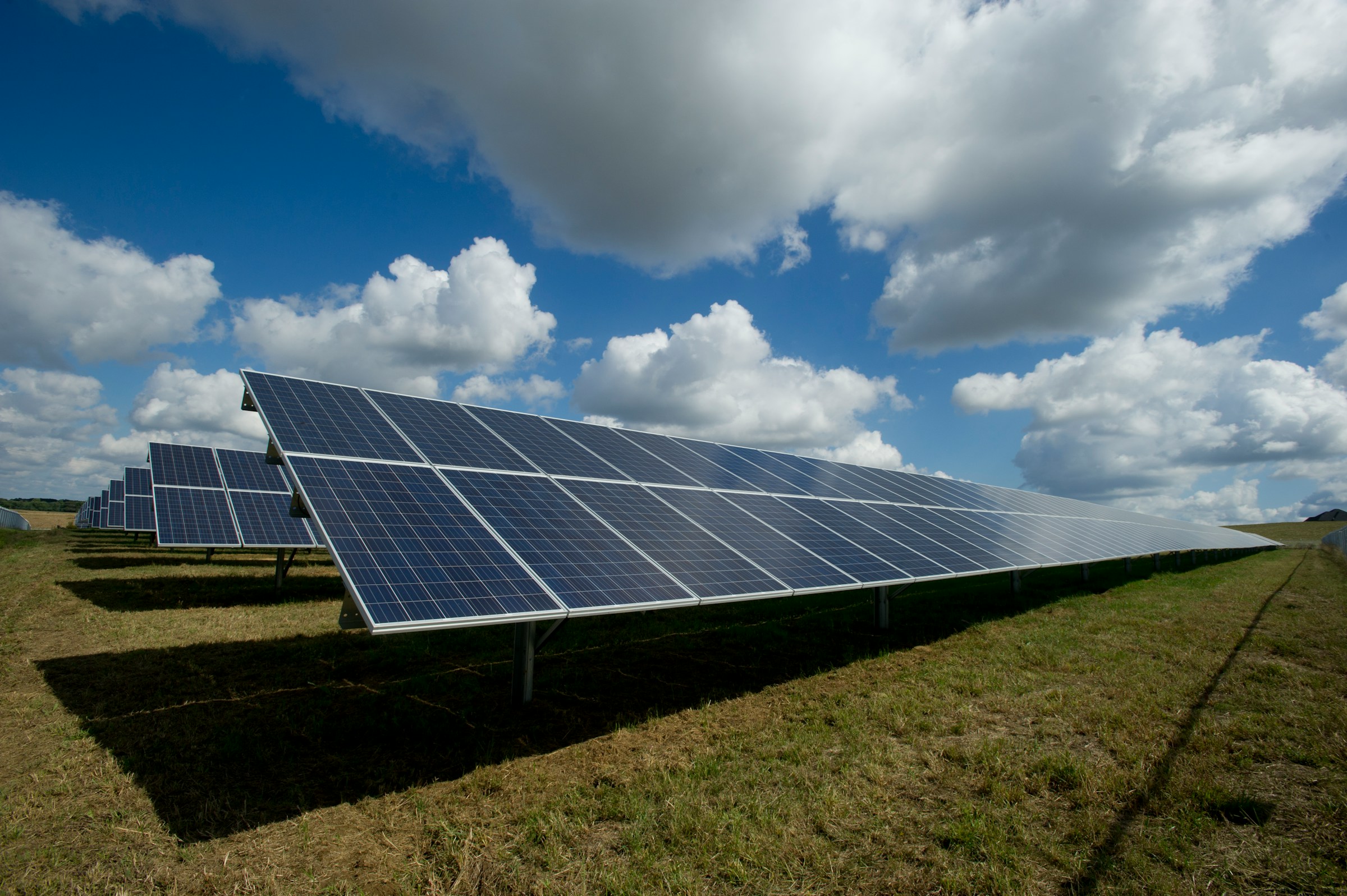
Fraunhofer ISE’s Energy-Charts platform recorded more than 12TWh of German photovoltaic output feeding the public electricity grid during July, establishing a second consecutive monthly solar generation record.
Photovoltaic installations supplied 12.0355TWh during the month, surpassing the previous record set in June. The result was also substantially above the 8.376TWh reported for July 2025.
Germany’s installed photovoltaic capacity had increased from a little over 107GW in July 2025 to around 125GW one year later. The larger fleet was accompanied by strong solar conditions, with approximately 272 sunshine hours during July, around 30% above the long-term average and well ahead of the 189 hours recorded in the same month last year.
The output increase cannot therefore be attributed to capacity additions alone. More modules were available to generate, while the weather allowed those modules to operate for longer and, during clear periods, closer to their available output.
Photovoltaics supplied a preliminary 31.6% of German electricity demand during July. Solar had already exceeded a 30% monthly demand share in May and June, making the summer of 2026 the first period in which that threshold was maintained across three consecutive months.
The record demonstrates the scale now reached by photovoltaic generation, but it also sharpens the distinction between monthly energy and instantaneous power. Twelve terawatt-hours across a month is a large volume, yet much of it is produced within a narrower band of daylight hours.
Network operators must balance generation and demand continuously rather than on a monthly basis. On a bright summer afternoon, output can rise across millions of distributed and utility-scale installations, while evening demand continues after photovoltaic production falls.
The resulting profile increases the value of flexible generation, demand response, battery storage, pumped hydro, cross-border trading, and controllable industrial loads. It also places greater emphasis on accurate forecasting because a small percentage error becomes significant when applied to a solar fleet exceeding 100GW.
Forecasting systems combine weather models, satellite observations, historical plant behaviour, installed-capacity registers, and live network measurements. Their task is complicated by behind-the-meter generation, where electricity consumed on site does not appear as exported power on the public network.
The 12.0355TWh figure concerns electricity supplied to the public grid rather than the complete output of every German photovoltaic system. Self-consumed electricity is treated separately, and metering arrangements differ across installation types.
That distinction matters for system planning. Lower measured demand during sunny periods can reflect local solar generation rather than reduced underlying consumption, while networks must remain ready for demand to return when clouds arrive or daylight ends.
High solar volumes can reduce operation of gas, coal, and other dispatchable generation during the day. Those assets may then be required to ramp later unless storage, imports, demand flexibility, hydroelectric generation, or other resources cover the transition.
Some conventional generators may also be needed for reserves, voltage support, fault current, inertia, or restoration capability. These services can increasingly be supplied through power electronics and grid-forming equipment, but deployment and operating rules must keep pace with the changing generation mix.
Inverters connecting solar installations are therefore becoming more important to grid behaviour. Modern plants can provide reactive power, voltage control, active-power limitation, frequency response, and remote dispatch where equipment specifications, connection rules, communications, and testing require those functions.
Germany’s distribution networks carry much of the photovoltaic fleet. Local cables and transformers designed around one-way consumption can encounter reverse power flows when generation exceeds nearby demand, particularly in areas with dense rooftop or ground-mounted deployment.
Reinforcement is one response, but network operators can also use active management, controlled export, voltage regulation, storage, and flexible consumption to increase the capacity of existing infrastructure. Each approach distributes cost and operational responsibility differently between generators, consumers, network companies, and system operators.
The record will also affect wholesale-market operation. Abundant midday generation can depress prices and reduce the value captured by solar projects exposed directly to the market. Revenue increasingly depends on location, output profile, contract structure, curtailment, and the ability to shift electricity into tighter hours.
Co-located batteries can improve that profile by charging during high-output periods and exporting later, although their economics depend on connection rights, cycling costs, efficiency, degradation, and the spread between charging and discharging values.
Germany now operates a photovoltaic fleet capable of supplying almost one-third of monthly electricity demand during favourable conditions. Further records are likely as capacity grows, but the more consequential measure will be whether networks, storage, flexible demand, market rules, and inverter controls develop quickly enough to use the additional midday output.

