IN Brief:
- The HYpact-145g is available to order, with a 145 kV rating and 40 kA short-circuit capability.
- GE Vernova claims at least 50% less space than a conventional air-insulated substation design.
- Its g³ insulation contains fluoronitrile, so SF₆-free does not automatically mean unrestricted use under future EU F-gas rules.
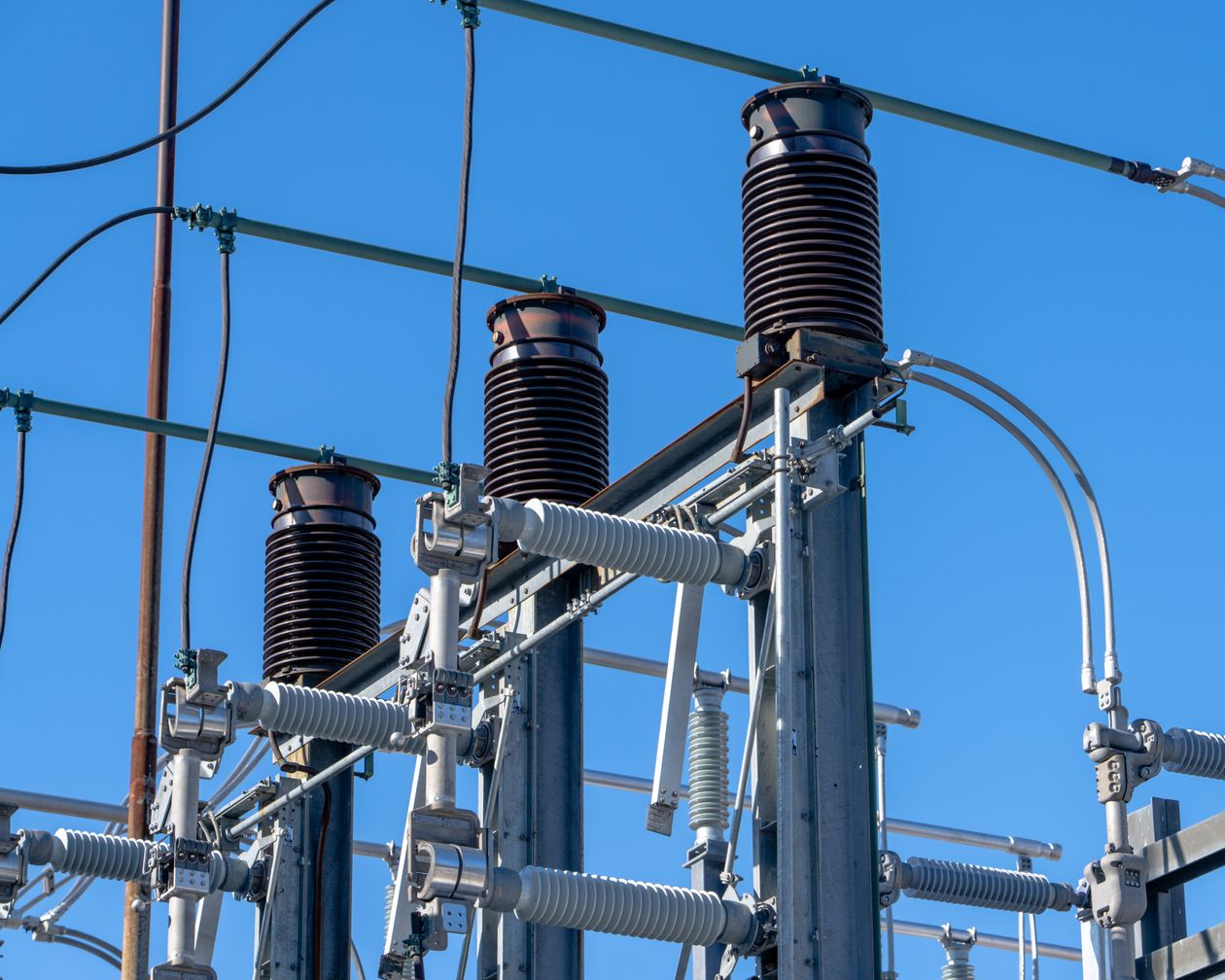
GE Vernova has launched its HYpact-145g compact switchgear for 145 kV transmission substations, combining gas-insulated and air-insulated elements in a single assembly. Announced at a conference in Cologne on 17 November, the equipment has a 40 kA short-circuit rating and replaces sulphur hexafluoride (SF₆) with the company’s g³ insulating mixture. GE Vernova says orders are open, with manufacture planned at its Kassel plant in Germany.
High-voltage switchgear must interrupt fault current, isolate circuits and provide safe earthing arrangements without compromising insulation clearance or access for maintenance. Circuit breakers disconnect a faulted circuit, while disconnectors and earthing equipment establish the conditions for subsequent work. In older substations, the area available for these functions can be constrained by established busbar layouts, buildings and neighbouring assets, making a compact replacement more difficult than specifying a smaller breaker alone.
HYpact-145g combines components that use a controlled gas-insulated environment with equipment connected through conventional air-insulated arrangements. Housing selected live parts within an insulated enclosure reduces some of the clearances that an entirely air-insulated design would need. GE Vernova says the resulting configuration can occupy at least 50% less space than a conventional air-insulated substation design. The comparison is a manufacturer design estimate; actual savings will depend on bay layout, connections and site boundaries.
SF₆ has long been used in high-voltage switching because it offers strong dielectric insulation and effective arc interruption within relatively compact equipment. It also has a high global-warming potential, making containment, leak monitoring and controlled recovery important throughout a device’s working life. Replacing the medium changes the gas-handling requirements but does not remove the need to verify breaker performance, seal integrity or maintenance arrangements.
The replacement medium, known as g³, contains carbon dioxide, oxygen and a smaller proportion of the fluoronitrile C₄F₇N. GE Vernova describes its global-warming impact as approximately 99% lower than an SF₆-based alternative. That figure concerns the insulating mixture as specified by the manufacturer; it is not a measured reduction in the lifecycle emissions of an entire completed substation, which also depend on manufacture, installation and operation.
The fluoronitrile component is material to future regulatory assessments. Although the product is SF₆-free, g³ is not a mixture without fluorinated compounds. Article 13 of Regulation (EU) 2024/573 sets restrictions from 1 January 2028 on putting into operation high-voltage switchgear above 52 kV and up to 145 kV, with short-circuit current up to 50 kA, where fluorinated greenhouse gases with a global-warming potential of one or more are used in the insulating or breaking medium. The legislation contains procurement and other derogations; an SF₆-free description alone is not enough to establish whether a particular future European installation qualifies.
A procurement specification must therefore account for the expected commissioning date as well as the equipment’s declared gas composition, global-warming potential and applicable exemptions. A unit ordered before a regulatory deadline could still be due to enter service after it. The relevant requirement concerns putting equipment into operation, while the permitted treatment of individual projects depends on the regulation’s conditions and documented procurement evidence.
The new system builds on the manufacturer’s earlier 145 kV SF₆-free dead-tank circuit breaker and more than a decade of development using g³ technology. The hybrid assembly extends that work beyond the breaker itself, bringing switching and associated connection functions into an integrated configuration. Its nominal voltage and short-circuit rating define the advertised equipment class; the suitability of a particular installation also depends on insulation coordination, system fault levels, loading requirements and the substation’s switching arrangement.
Optional low-power instrument transformers provide current and voltage signals for protection, metering interfaces and control functions. GE Vernova positions the option as part of a more digital substation arrangement, but no customer-specific relay architecture or communications interface has been announced for HYpact-145g. Those choices would need to be resolved in the secondary-system design alongside conventional primary-equipment ratings.
The product is being introduced as utilities face competing requirements to reinforce networks, replace ageing assets and accommodate new connections without always acquiring additional land. Replacing a conventional bay with more compact equipment may reduce the space needed for foundations, busbar arrangements and safety clearances, but the practical saving depends on the layout of the entire yard. Access for maintenance, cable terminations and the integration of existing protection systems remain part of the engineering assessment.
A full-scale HYpact-145g model is being shown at the Power Transmission and Distribution Technology conference in Cologne on 17–19 November. GE Vernova has not identified a first customer or delivery date. Its immediate commercial milestone is order availability; installed performance and actual footprint savings will depend on the first site designs and subsequent commissioning tests.