
IN Brief:
- Rețele Electrice România has modernised the 110/20kV Freidorf substation for RON26 million.
- The work covered 20kV switchgear, neutral treatment, secondary systems, and digital protection equipment.
- Two 25MVA transformers can support a substantially larger customer base during network contingencies.
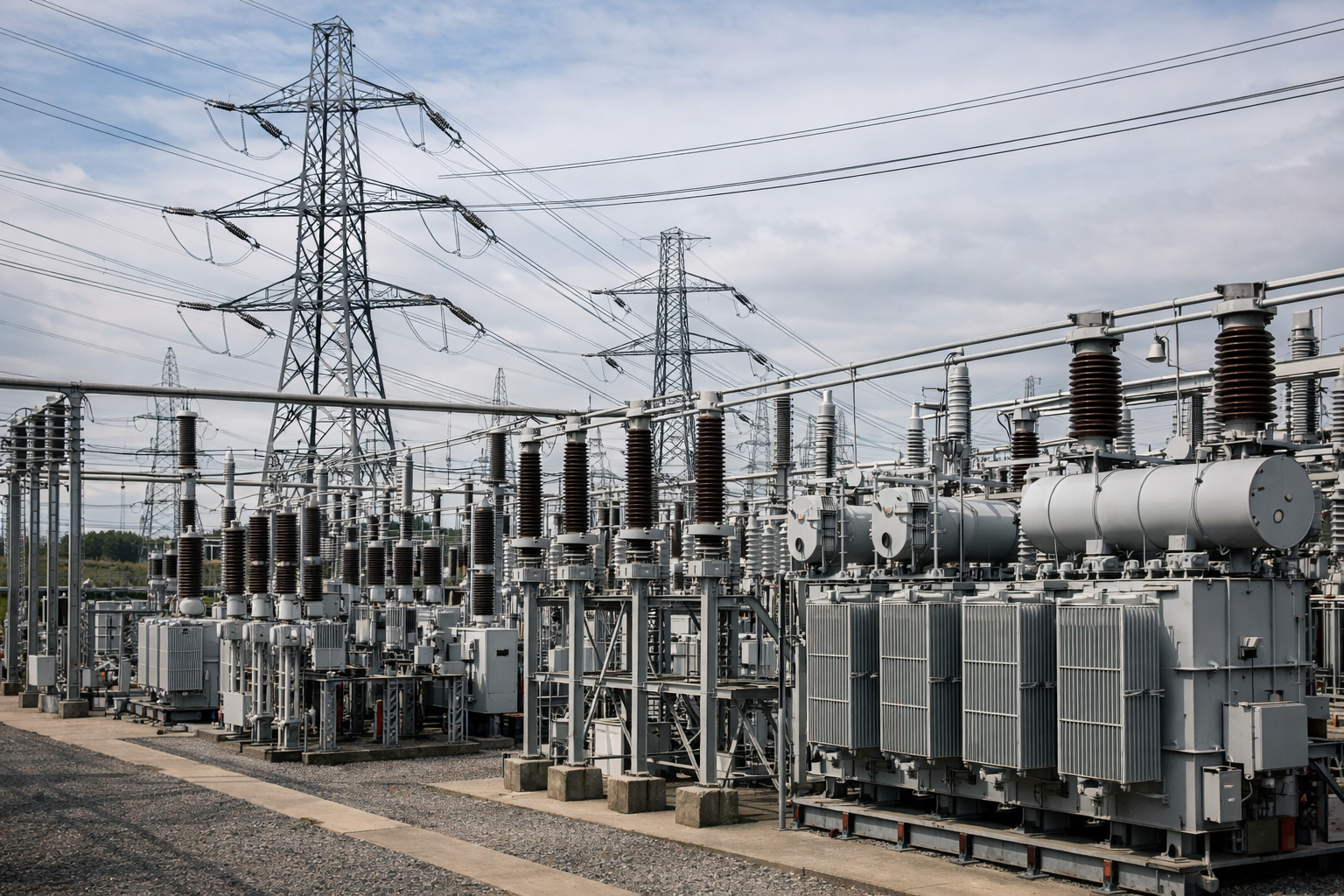
Rețele Electrice România has completed a RON26 million modernisation of the 110/20kV Freidorf transformer substation in Timișoara.
Originally commissioned in 1979, the installation supplies approximately 9,000 customers during normal operation but can support as many as 60,000 when neighbouring substations are unavailable or the network is reconfigured during a contingency. Its two 25MVA transformers and 17 medium-voltage bays therefore provide both routine capacity and an important source of operational resilience.
The modernisation covered primary equipment, 20kV switchgear, auxiliary service systems, neutral-treatment equipment, arc-suppression coils, secondary circuits, and protection. Electromechanical relays have been replaced by digital devices that provide more detailed event records, improved communications, flexible settings, and closer integration with remote control systems.
Because Freidorf can accept transferred load during faults, maintenance, or outages elsewhere, its effective role extends beyond the customers normally connected to it. That capability depends on transformer headroom, feeder interconnection, busbar arrangements, protection grading, and the thermal condition of surrounding circuits.
Renewal of the arc-suppression equipment also strengthens management of earth faults on the medium-voltage network. Correctly tuned neutral treatment can limit fault current, reduce equipment damage, and allow transient faults to clear without unnecessary interruption, while modern monitoring can provide a more accurate picture of network capacitance and residual current.
Digital protection extends visibility and asset life
Across Europe, distribution operators are modernising substations originally designed around predictable demand and one-way power flow. Those sites must now accommodate embedded generation, storage, electric-vehicle charging, electrified heating, and increasingly active network management while maintaining protection performance under a wider range of operating conditions.
Replacing electromechanical relays renews obsolete equipment, but the larger operational gain comes from disturbance records, waveform capture, communications, multiple setting groups, and remote diagnostics. These functions can shorten fault investigation and support condition-based maintenance, provided time synchronisation, firmware control, access permissions, and data retention are managed consistently.
Protection coordination remains an engineering exercise rather than a software upgrade. New relays must be graded against upstream transmission protection and downstream feeder devices, including reclosers, transformer protections, and interfaces with distributed generation. Minimum and maximum fault levels, transformer vector groups, neutral arrangements, and changing network configurations all need to be represented within the settings.
A similar renewal programme at Austria’s Ernsthofen transmission substation has combined replacement of ageing plant with continuity of service at a strategically important node. Freidorf operates at a different voltage level, yet both projects illustrate the difficulty of rebuilding substations that cannot simply be removed from service for an extended period.
The difference between Freidorf’s routine customer base and its contingency capability also shows why average loading provides an incomplete measure of substation value. Spare transformer capacity and interconnected feeders may appear underused during normal conditions, but they become essential when supply has to be transferred around a faulted or isolated section.
Commissioning work must confirm that the renewed installation behaves correctly across both ordinary and abnormal network states. Primary injection, secondary injection, intertripping checks, transformer differential tests, circuit-breaker timing, polarity verification, communications testing, and supervisory-control checks all contribute to the final assurance process.
Digital protection introduces dependencies on auxiliary supplies and communications equipment that must be maintained with the same discipline as primary plant. Station batteries, chargers, network switches, time sources, gateways, and remote-terminal units form part of the protection and control chain, while cyber controls must prevent unauthorised access without delaying legitimate operational work.
As Romanian networks absorb additional renewable generation and changing demand, modernised substations will provide more data and greater control. Their primary contribution will still rest on dependable switching, correctly coordinated protection, transformer availability, and the ability to redistribute load safely when another part of the system is unavailable.
With its principal electrical and control systems renewed, Freidorf is positioned to remain a significant 110/20kV node in western Timișoara. Its performance during transferred-load conditions will provide the clearest demonstration of the resilience created by the investment.

