IN Brief:
- Mayo County Council has approved SSE’s revised 80MW/320MWh Mullafarry battery project.
- The four-hour design allows up to 64 battery units beside the existing 104MW Tawnaghmore Power Station.
- Final delivery remains subject to SSE’s investment decision, with construction expected to take up to two years.
SSE Renewables has secured planning consent from Mayo County Council for a revised battery energy storage project at Mullafarry in north Mayo, doubling the scheme’s energy capacity while retaining its 80MW power rating.
The approved design provides 320MWh of storage, giving the battery a nominal four-hour duration. It allows up to 64 battery units, together with heating, ventilation and air-conditioning equipment and associated electrical infrastructure at an SSE-owned site in Killala Business Park, Tawnaghmore Upper.
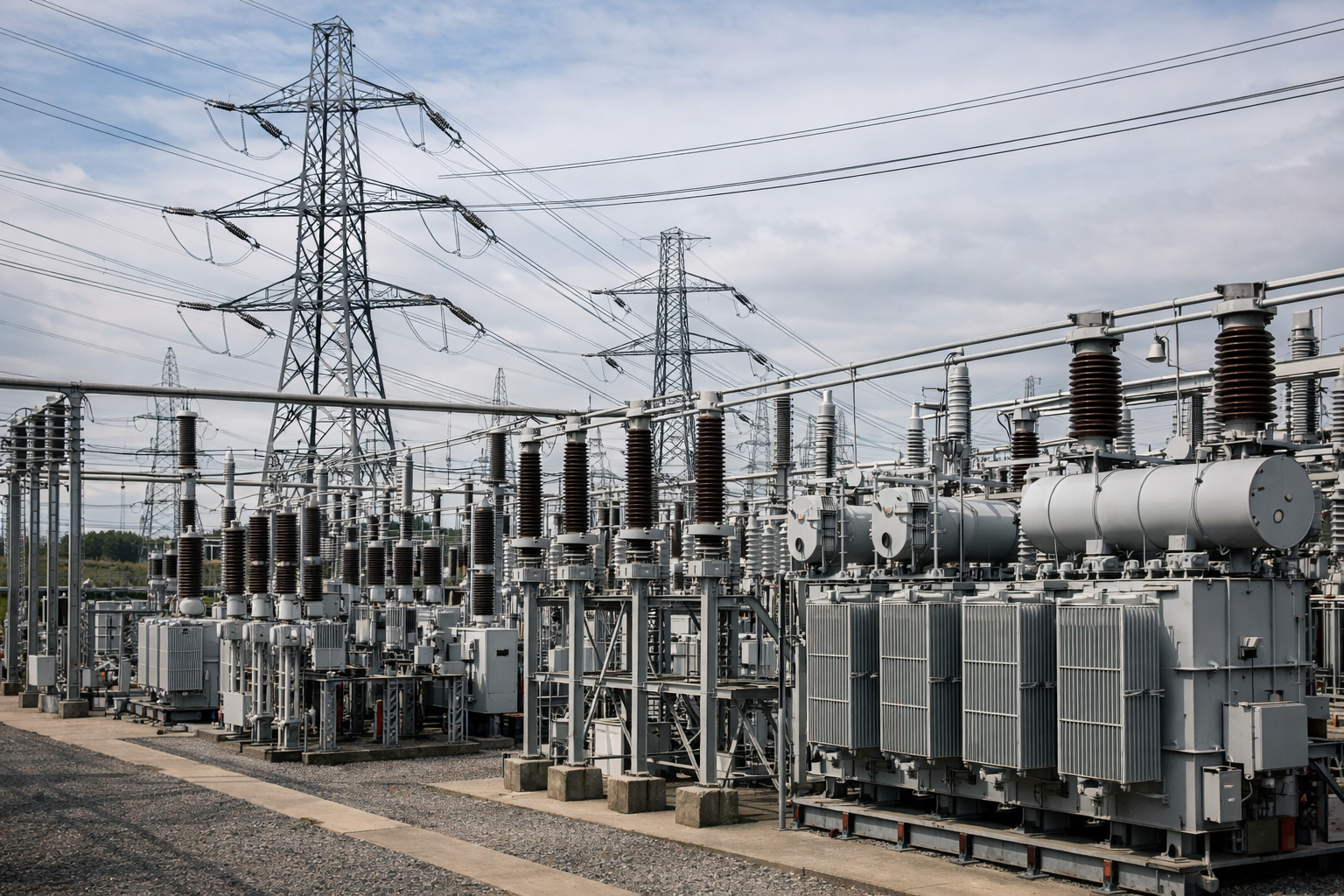
The project would sit beside SSE’s existing 104MW Tawnaghmore Power Station. That location places a new flexible electrical asset next to established power infrastructure, although construction remains subject to a final investment decision by SSE.
Mayo County Council had previously granted permission in April 2025 for an 80MW/160MWh system at the same site. SSE returned with a revised 80MW/320MWh configuration after changes in storage technology and system requirements, extending the planned discharge duration from two hours to four without increasing maximum power.
The distinction between megawatts and megawatt-hours is central to the revision. An 80MW/160MWh battery can theoretically sustain rated output for two hours, while an 80MW/320MWh system can sustain the same output for four hours, subject to usable state of charge, conversion losses, equipment availability, reserve commitments, and operating limits.
Longer duration broadens the range of periods over which the battery can shift energy. Very short-duration systems are well suited to fast frequency response and brief balancing events, while a four-hour asset can discharge through a longer demand peak or maintain support when renewable output remains low for several hours.
The project will still depend on rapid power electronics for charging and discharge, but the larger energy reservoir changes its operating options. Market optimisation can reserve part of the stored energy for system services while using the remaining capacity for energy shifting, provided the battery stays within its technical and contractual limits.
Up to 64 battery units will require a coordinated electrical and thermal design. The installation will need collection cabling, transformers, switchgear, protection, communications, fire-safety systems, auxiliary supplies, metering, and a control system capable of operating the plant as a single 80MW resource.
Heating, ventilation and air-conditioning equipment is part of that core operating system. Battery cell temperature affects efficiency, available power, degradation, charging rates, and safety behaviour, so thermal management has to keep the installation within specified limits through changes in weather and dispatch.
The power conversion system has a different task. It must control bidirectional energy flow between the battery and the AC network, regulate active and reactive power, respond to dispatch instructions, and remain within the grid-code conditions set for the connection.
Planning consent settles one development risk but leaves several delivery stages unresolved. SSE still has to complete detailed engineering, procure equipment, confirm the commercial case, manage construction, satisfy any remaining connection requirements, and commission the complete plant before it can provide services to the Irish system.
If the project proceeds, construction is expected to take up to two years. Site works, equipment manufacture and delivery, cable installation, switchgear, controls, testing, energisation, and final acceptance will have to be sequenced around the connection programme.
Battery projects are modular in appearance, but their grid interface is not. Every container may arrive as a factory-built unit, yet the installation only becomes a power-system asset when protection, metering, telemetry, controls, and the connection operate correctly together.
The revised 4:1 relationship between energy capacity and maximum power also affects how Mullafarry is counted in system planning. It is not a 320MW source of instantaneous power; its value lies in sustaining up to 80MW for a longer period. Confusing those figures overstates the project’s peak contribution while understating the importance of duration.
That longer duration is increasingly relevant as Ireland adds variable renewable generation. Wind and solar can produce large volumes of electricity when conditions are favourable, while storage can move part of that energy into periods when output falls or demand rises. The usefulness of any individual battery still depends on its location, connection, market access, and availability.
Tawnaghmore Power Station already gives SSE a generation presence at the site, and the proposed battery would add a different form of flexibility beside it. Conventional generation produces electricity from fuel; the battery shifts electricity already produced elsewhere and can change from import to export much faster than most thermal plant.
The final investment decision will determine whether the revised consent becomes physical infrastructure. Costs, connection conditions, equipment procurement, expected market revenues, and construction sequencing now sit between the planning approval and an operational 320MWh asset.
Mullafarry has cleared the local planning stage with twice the energy capacity of its earlier design. The next milestones are procurement, construction, energisation, and proof that the four-hour configuration can perform reliably as part of Ireland’s changing electricity system.