
IN Brief:
- Foresight Solar is revamping nine UK sites totalling more than 150MW, around 20% of its domestic portfolio.
- Panel and inverter upgrades are expected to increase annual generation by up to 14GWh once the programme is completed.
- The work illustrates how ageing solar assets can be enhanced while retaining existing land, substations, and grid connections.
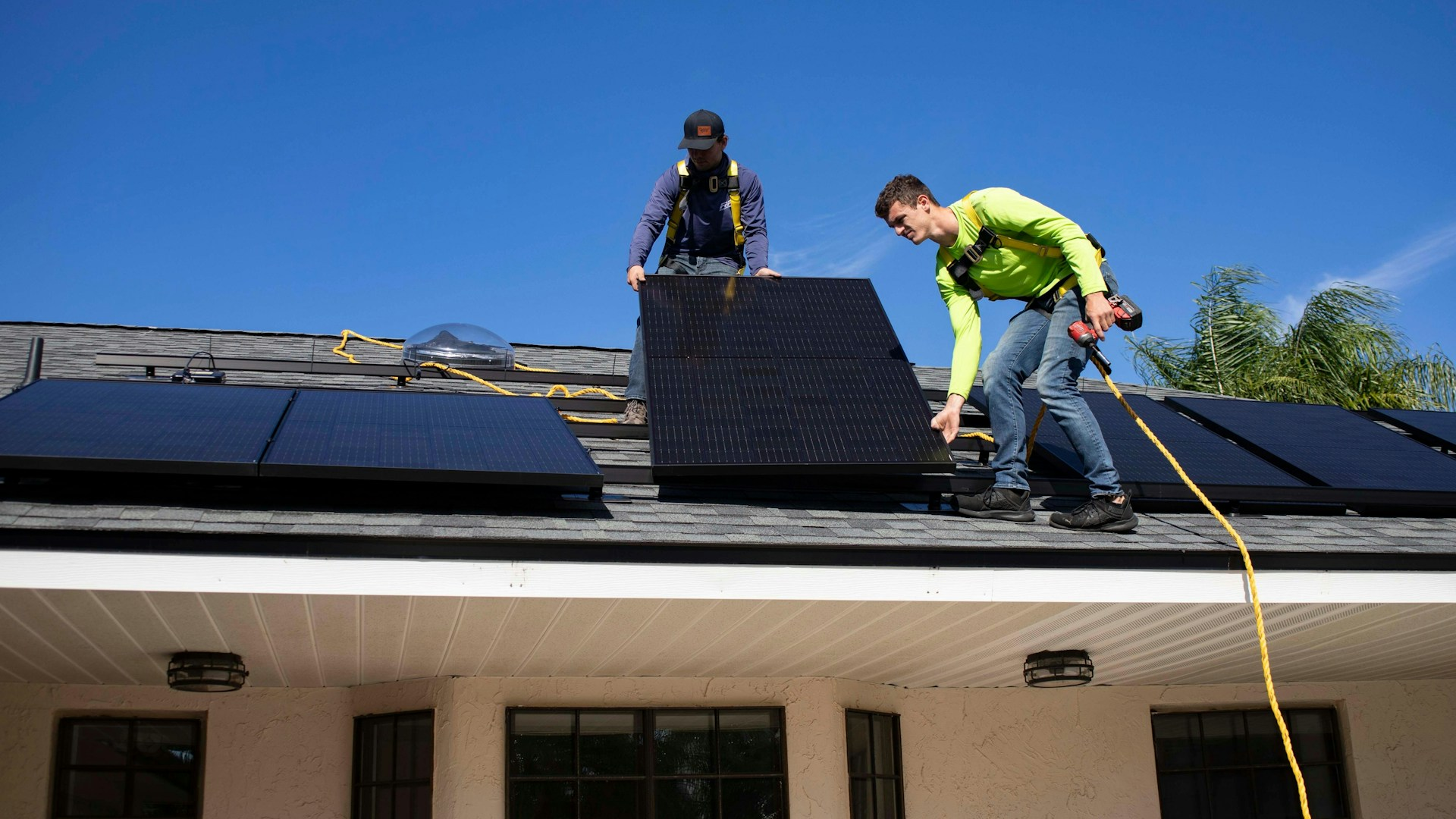
Foresight Solar is upgrading nine UK solar farms with combined capacity exceeding 150MW in a programme designed to recover output from ageing equipment and increase annual electricity generation by as much as 14GWh. The works involve replacing older photovoltaic modules and inverters and are expected to be completed by summer 2027.
The nine sites represent approximately 20% of Foresight Solar’s UK portfolio. Rather than adding a new greenfield development pipeline, the programme aims to increase production from assets that are already consented, connected, and operating. The company forecasts that the completed works could generate up to £2.5 million of additional annual revenue.
Two completed sites demonstrate the type of intervention involved. At the 8MW Abergelli plant, older inverters have been replaced, while the 7MW Pen Y Cae solar farm has received newer and more efficient photovoltaic panels. Pen Y Cae subsequently produced 1,195MWh during July, its highest monthly generation recorded to date.
The work reflects a transition now facing the earlier generation of British utility-scale solar assets. Photovoltaic modules are commonly associated with operating lives measured in decades, but a solar farm includes equipment with different ageing profiles. Inverters, switchgear, transformers, connectors, monitoring systems, communications, and auxiliary equipment can require repair or replacement well before the physical site reaches the end of its useful life.
Inverters are particularly exposed because they are active power-electronic devices operating continuously under electrical and thermal loading. Their role includes converting DC electricity from the photovoltaic strings into grid-compatible AC output, but modern units also carry increasingly sophisticated protection, voltage-control, reactive-power, and communications functions.
Replacing an older inverter can therefore improve more than conversion efficiency. New equipment can recover availability lost through ageing or obsolescence and provide better monitoring or controllability, although it still has to work with the existing modules, cabling, transformers, protection settings, SCADA, and connection agreement.
Module replacement presents a related opportunity. Newer photovoltaic panels can produce more power from a given physical area than equipment installed during the earlier years of the UK’s solar build-out. Owners can therefore recover degradation or increase energy yield within an established site footprint, provided the revised DC design remains compatible with inverters and the existing grid connection.
The export agreement remains an important constraint. Installing higher-output modules does not automatically allow a solar farm to send more instantaneous power onto the network. Transformer ratings, inverter limits, cable capacity, protection settings, and the network operator’s agreed export limit still define how the site can operate.
That is why revamping differs from straightforward capacity expansion. The objective is typically to generate more electricity over the year by improving efficiency and availability while retaining much of the existing infrastructure. Roads, fencing, land agreements, grid connections, substations, and portions of the balance of plant can remain in service rather than being duplicated through a new development.
For older assets, the grid connection alone can carry considerable strategic value. New renewable projects in Britain can face constrained connection capacity and lengthy reinforcement programmes, while an existing site has already cleared those hurdles. Recovering additional energy from an established connection can therefore be more practical than seeking equivalent production from a separate greenfield scheme.
Foresight Solar says the required replacement panels and inverters have already been secured for the wider programme and that established engineering and construction relationships will be used to deliver the works. Procurement certainty is useful because replacement programmes can become difficult when the original equipment is obsolete and compatible spares are no longer manufactured.
The sites are also being prepared for operation beyond their original Renewables Obligation subsidy periods, which will expire progressively over the next decade. That changes the economics of asset management. Equipment replacement has to be judged increasingly against merchant electricity revenues, remaining operating life, maintenance cost, and the value of retaining an established connection rather than principally against the original subsidy regime.
Foresight Solar expects the nine-site programme to add up to 14GWh of generation each year, equivalent to roughly a 2% increase in production in its core market. That is a relatively modest percentage, but it is being obtained from infrastructure that already exists rather than from another 150MW of newly consented generation.
The programme therefore illustrates how the engineering market around solar changes as the installed fleet ages. The first wave was dominated by development, module installation, and new grid connections. A growing share of the work now concerns inverter replacement, module degradation, controls, component availability, performance monitoring, life extension, and decisions over whether an ageing site should be repaired, revamped, repowered, or eventually retired.
Foresight’s nine UK sites are now entering that second phase. The visible technology remains photovoltaic generation, but the commercial value increasingly depends on extending the life and performance of the less conspicuous electrical equipment around it while preserving grid connections that have become progressively harder to reproduce.

