IN Brief:
- European Energy brought 167MW/545MWh of storage into operation during the first eight months of 2026.
- Seven batteries are operating in Denmark, Lithuania, and Latvia, all co-located with renewable generation.
- Further deployment is planned in Denmark, Australia, Poland, Lithuania, Latvia, the UK, and Germany.
European Energy has brought 167MW/545MWh of battery storage into operation during the first eight months of 2026, establishing seven operating systems across Denmark, Lithuania, and Latvia.
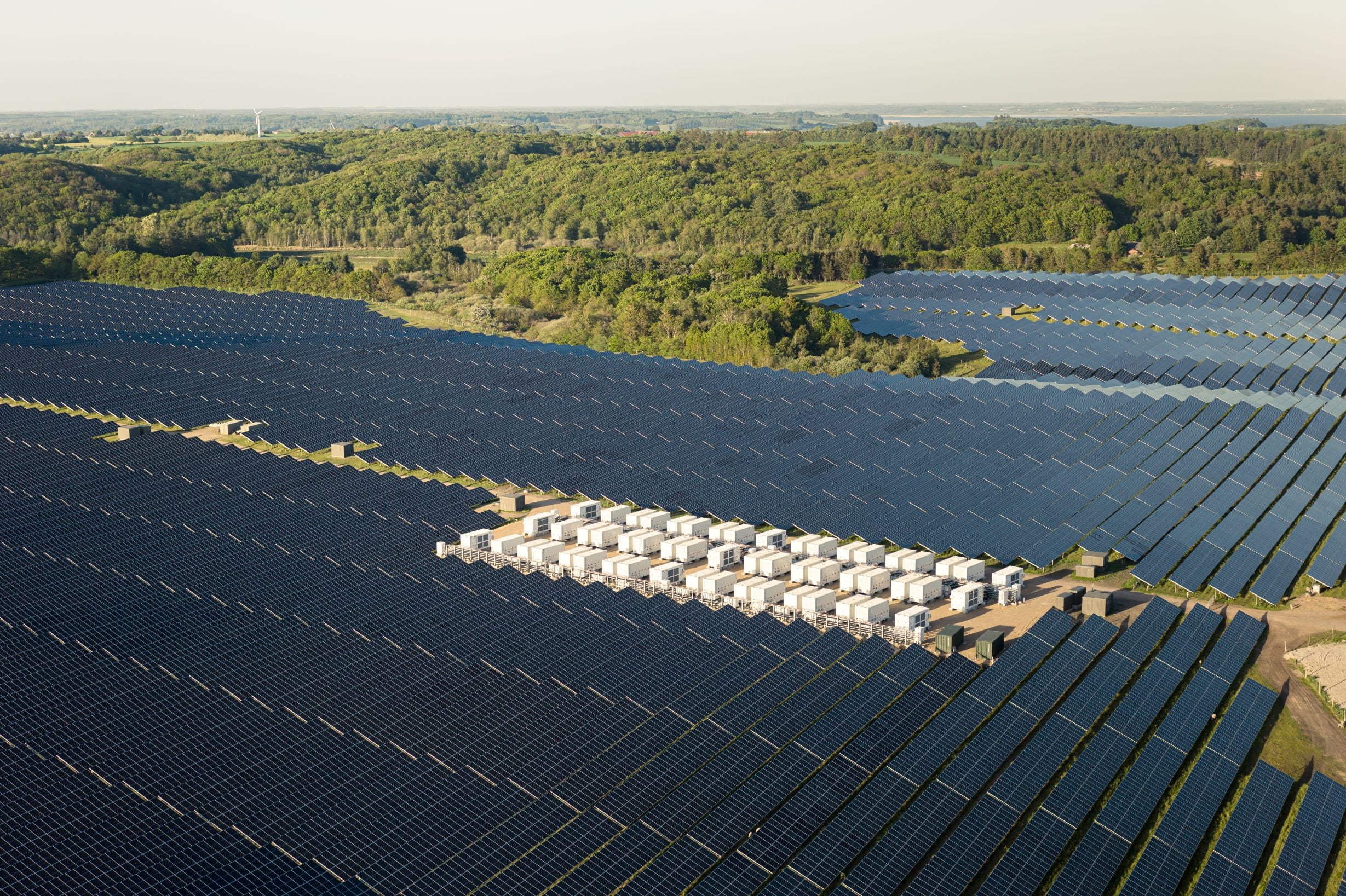
The batteries are located at Kvosted, Agersted, Stouby, Kragerup, and Måde in Denmark, Anykščiai in Lithuania, and Saldus in Latvia. All have been co-located with renewable generation, allowing storage to be added where grid connections, generation assets, and local market arrangements are already understood.
Aggregate energy capacity of 545MWh against 167MW of power is equivalent to just over 3.2 hours at full fleet output, although individual system durations vary. The portfolio gives European Energy a material block of dispatchable capacity that can operate separately from the instantaneous output of the wind and solar projects beside it.
The developer plans further BESS deployment in Denmark, Australia, Poland, Lithuania, Latvia, the UK, and Germany. That will expose the operating model to different grid rules, market structures, renewable profiles, and connection constraints rather than replicating one commercial arrangement across every site.
Co-location changes how a connection is used
A battery added to a renewable project can alter the timing of grid exports without increasing the site’s renewable resource. Electricity can be retained during periods of high production or weak prices and discharged later, subject to the battery’s state of charge, losses, network limits, and market commitments.
That flexibility can make better use of a connection that is not continuously loaded to its maximum rating. It can also reduce curtailment where renewable output temporarily exceeds the site’s export capability, although storage cannot remove a persistent structural grid constraint once the battery is full.
Controls therefore become central to the value of a hybrid installation. The operating system has to coordinate generation, charging, discharging, network limits, market prices, and any ancillary-service commitments while respecting battery warranties and maintaining enough headroom for later dispatch.
European Energy is already applying that approach at Måde, where wind generation, battery storage, and electrolysers are operated as one hybrid site. Electricity can move between export, storage, and hydrogen production rather than following a single fixed route from generator to grid.
A related model is emerging at Indian Queens in Cornwall. The project combines 68MW of solar with a 47.5MW/95MWh battery on a shared grid connection, using storage as part of the connection strategy as well as a separate flexible asset.
Those examples show why co-location increasingly sits at the intersection of generation engineering and network planning. A shared connection may improve utilisation of scarce capacity, but it also requires supervisory controls capable of ensuring that combined exports remain within agreed limits under changing weather and market conditions.
Operating data now informs the next pipeline
The seven commissioned systems give European Energy something a development pipeline cannot provide: comparable field data. Availability, auxiliary demand, round-trip efficiency, thermal behaviour, inverter faults, degradation, maintenance requirements, and actual dispatch patterns can now be measured across multiple projects.
Those figures should feed directly into later procurement and finance. Repeated installation allows assumptions made during development to be tested against real equipment performance, while differences between sites can expose whether problems arise from hardware, commissioning, controls, local operating conditions, or market strategy.
The ownership model may also vary. European Energy says batteries can be retained in its operating portfolio, combined with renewable generation in hybrid assets, or divested as part of wider project transactions. A repeatable technical platform therefore has to support different financing and ownership structures without becoming tied to one revenue model.
Scale will test how repeatable that model really is. The company is planning projects across several European markets and Australia, each with different connection procedures, grid-service products, planning rules, and price signals.
The first 545MWh remains small beside European Energy’s wider renewable portfolio, but it has already crossed the boundary between planned storage and operating plant. That distinction becomes increasingly important as developers announce multi-gigawatt pipelines that may still face connection, procurement, financing, and commissioning constraints.
Seven live systems now give European Energy a basis for standardising designs and comparing performance before the next group reaches operation. Whether that experience produces faster commissioning, better availability, and more efficient use of network capacity will determine the value of the portfolio more reliably than the size of the development pipeline alone.