
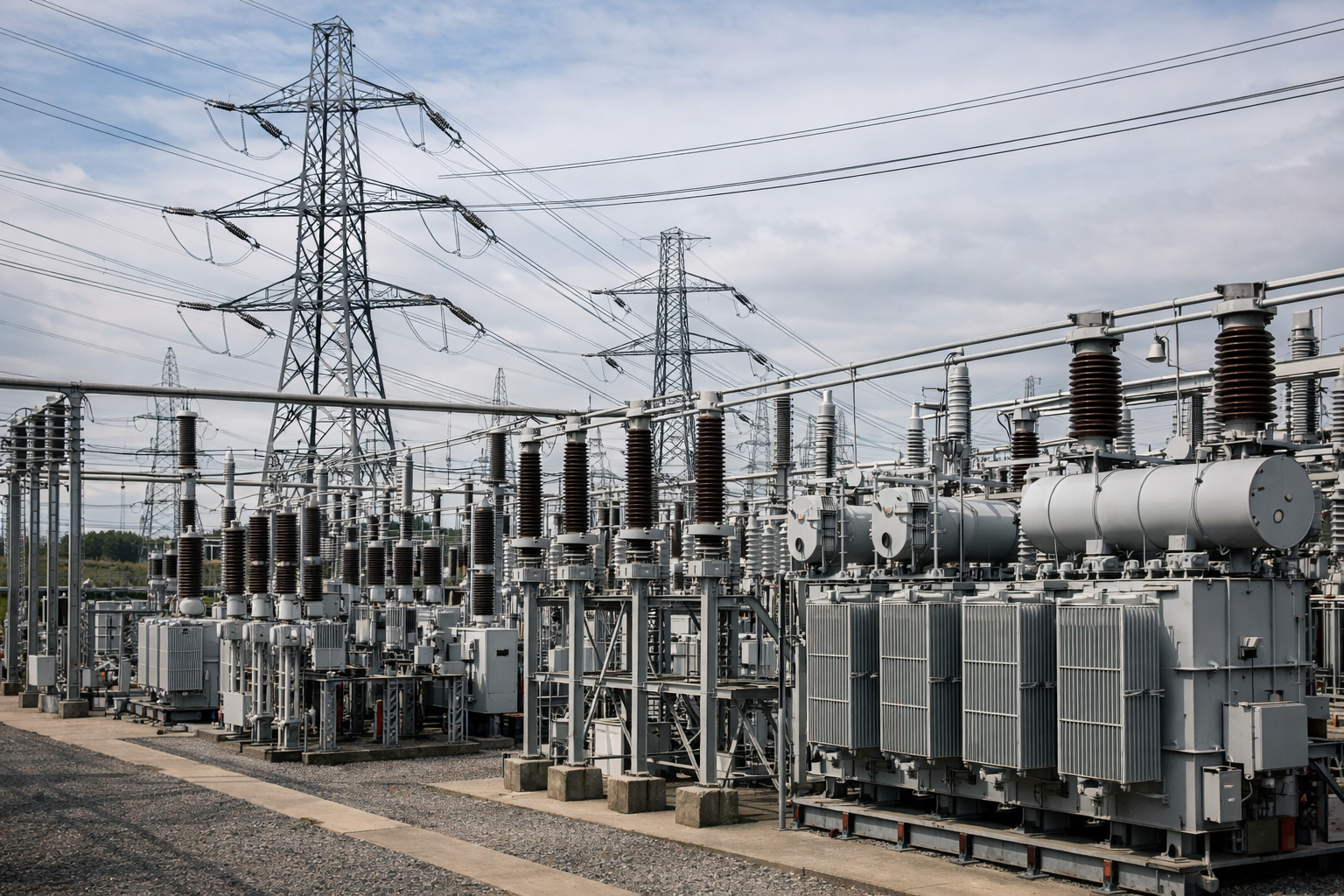
IN Brief:
- RWE is building a 236MW/470MWh battery at the former Hambach open cast mine in Germany.
- Kallista Energy and Envision Energy are developing a 193MW/386MWh installation in northern France.
- Both projects will provide rapid flexibility as renewable generation increases across continental Europe.
RWE has started construction of a 236MW/470MWh battery energy storage system at the former Hambach open cast mine in North Rhine Westphalia, while Kallista Energy and Envision Energy are advancing a 193MW/386MWh project in northern France.
Together, the two installations represent 429MW of power and 856MWh of stored energy. Both have durations of approximately two hours, positioning them for balancing services, wholesale market participation, rapid response, and the movement of electricity between short periods of surplus and scarcity.
At Hambach, the first of 128 lithium ion battery containers has arrived at a three hectare construction site near Niederzier. RWE plans to commission the system during 2027, adding a grid support function to land formerly associated with lignite extraction and conventional generation.
The battery will absorb electricity during periods of lower demand or excess generation and return it when system conditions tighten. RWE also expects the installation to provide balancing energy and, subject to the final control configuration and market arrangements, inertia related services that support frequency stability.
Hambach already contains a 50MWac photovoltaic installation coupled with a 4.1MW/8.1MWh battery. A separate nearby scheme combines 14.8MWac of solar generation with 80MWh of storage, giving the area a growing concentration of renewable generation, flexible assets, and established grid infrastructure.
In France, Kallista Energy began construction of the Neuilly en Thelle battery in Hauts de France during July. Envision Energy will supply the complete storage system and provide lifecycle support, using lithium iron phosphate cells manufactured by AESC at its regional gigafactory.
Omexom and Skyray are involved in project delivery, while Agregio Solutions will optimise the asset across electricity and reserve markets. Commercial operation is planned before spring 2028, with the battery intended to provide frequency regulation through mechanisms operated by RTE alongside wider market services.
Storage delivery moves from pipeline to construction
European battery development has expanded quickly, although the difference between announced capacity and deliverable infrastructure is becoming more pronounced. Land, planning, grid access, financing, fire strategy, equipment supply, route to market arrangements, and commissioning must all align before a project can provide usable flexibility.
Both installations have moved beyond early development, with physical construction under way, principal equipment selected, and operational roles taking shape. Connection delivery, energisation, performance testing, and market qualification remain substantial stages before either system can operate commercially.
Germany’s battery market has grown alongside renewable generation, intraday price variation, balancing requirements, and regional grid constraints. France retains a large nuclear fleet, but its expanding renewable capacity and changing demand patterns create a parallel need for assets capable of responding quickly to plant availability and system conditions.
Two hour batteries occupy a defined part of that flexibility requirement. They can respond much faster than most conventional generation and move meaningful quantities of electricity across short periods, but they cannot replace long duration storage, flexible demand, interconnection, or dispatchable generation during prolonged shortages.
Commercial performance will depend as much on controls, forecasting, trading, and operating discipline as on installed cell capacity. Batteries may technically provide several services, but each market applies rules covering qualification, metering, response speed, availability, state of charge, and settlement.
A further 2.2GWh of European battery capacity has moved towards construction through recent financing agreements, with lenders placing greater weight on capacity payments, optimisation contracts, and clearly defined revenue structures.
Grid forming controls and synthetic inertia are also moving higher on procurement agendas as inverter based generation replaces synchronous plant. Conventional grid following inverters depend on an existing voltage waveform, while grid forming equipment can establish and support voltage and frequency references within defined operating limits.
Whether either project ultimately provides those functions at scale will depend on the selected power conversion equipment, network requirements, control software, and verification with the relevant system operator. Nameplate descriptions alone do not establish the behaviour of the completed installation during faults or disturbed grid conditions.
Location remains equally decisive. Batteries connected near renewable generation, constrained network areas, industrial demand, or strong transmission nodes can provide different combinations of commercial and system value. Hambach uses an established energy landscape, while the French project draws on a regional equipment supply chain and proximity to the national transmission system.
Long term performance will rely on the integration of transformers, switchgear, inverters, cells, protection systems, civil works, communications, thermal management, and market controls. Each component must remain maintainable as cells age, software changes, and operating requirements develop.
The projects will add substantial short duration flexibility when commissioned, but their delivery also reflects a broader shift from development volume towards physical power system assets. Construction, connection, qualification, and reliable operation will determine how much of Europe’s announced storage pipeline becomes dependable grid capacity.

