
IN Brief:
- Enexis has secured €500m from the European Investment Bank.
- The 2026 programme includes 2,800km of medium-voltage and 1,800km of low-voltage cable.
- Physical reinforcement will be combined with digital network-management investment.
Enexis has secured €500m of European Investment Bank financing to support a major expansion of electricity distribution infrastructure across the Netherlands during 2026.
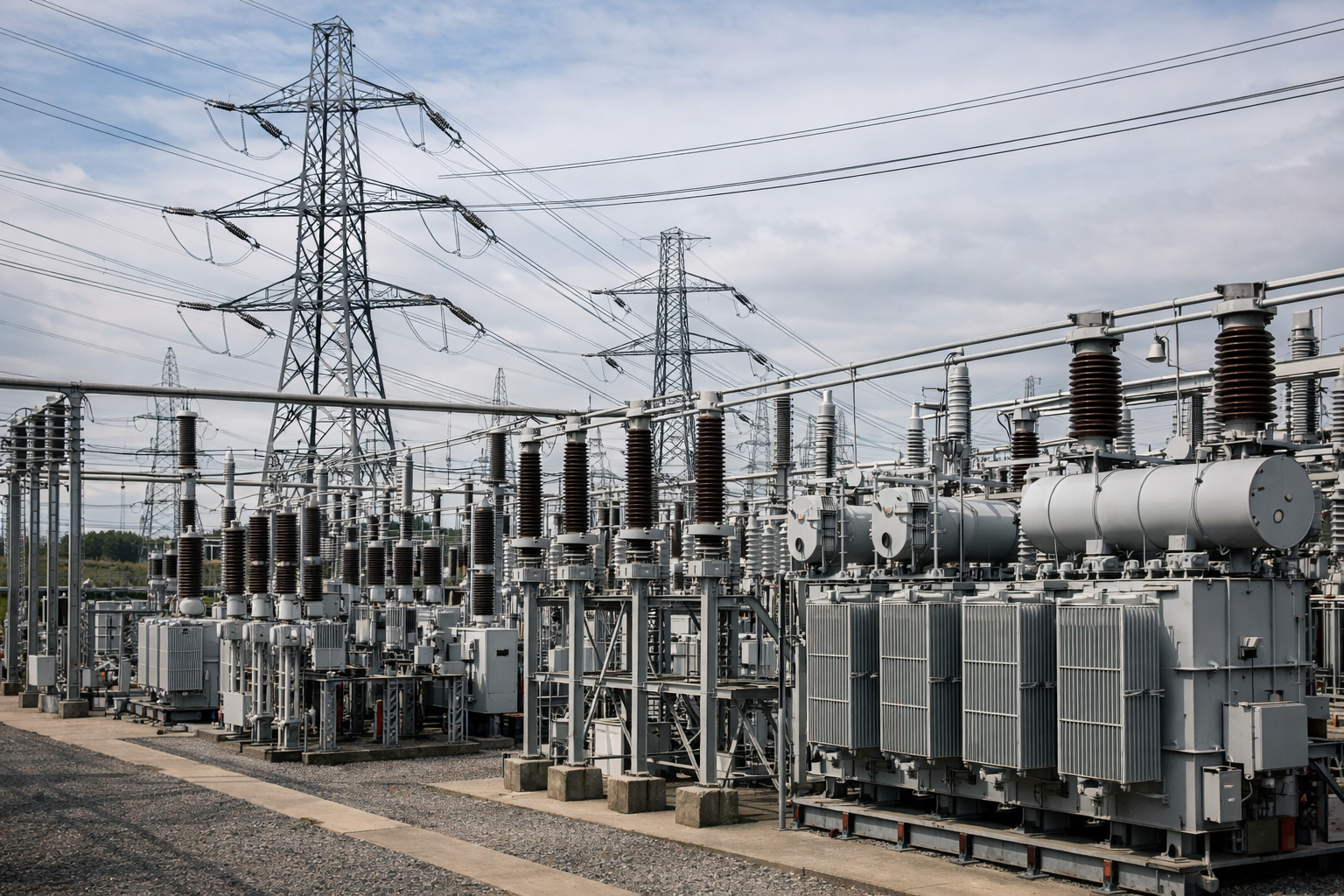
Covering approximately 2,800km of medium-voltage cable and 1,800km of low-voltage cable, the programme will add or replace a combined 4,600km of network. Investment will also fund transformer stations, higher-capacity connections, and digital systems used to monitor and manage electricity flows.
Work will be carried out across Groningen, Drenthe, Overijssel, North Brabant, and Limburg, where urban, industrial, agricultural, and renewable-generation areas create markedly different loading conditions. The programme ranges from local low-voltage reinforcement to larger medium-voltage projects serving industrial electrification and generation connections.
Enexis operates around 117,900km of electricity network and supplies approximately three million customers. Increasing volumes of renewable generation, heat pumps, electric transport, and industrial electrical demand have contributed to connection restrictions across parts of its operating area.
Congestion moves deeper into distribution networks
Although transmission constraints remain prominent in national energy planning, Dutch congestion has spread through substations, medium-voltage feeders, and local distribution interfaces. New demand and generation can therefore face restrictions even where the wider regional system appears to have sufficient aggregate capacity.
Adding cable capacity remains fundamental, yet reinforcement now tends to arrive as a coordinated package rather than as a sequence of isolated civil projects. New circuits require substation bays, transformers, switchgear, protection, communications, earthing, and suitable operating arrangements, while relieving one constraint can expose another elsewhere in the electrical route.
Given the length of the programme, delivery will place sustained demand on cable manufacturers, installation crews, excavation contractors, jointing specialists, and test engineers. Much of the work must also be integrated with operational networks, requiring outages to be carefully sequenced so that security of supply is maintained while existing assets are replaced or reconfigured.
Transformer availability remains a separate constraint across European distribution programmes because utilities, renewable developers, data centres, industrial sites, and charging operators are competing for common manufacturing capacity. Multi-year investment visibility can support factory planning, but long lead times still require early specification, limited design variation, and close coordination between network operators and suppliers.
Digital control alongside physical reinforcement
As network loading becomes less predictable, Enexis is pairing construction with digital management systems that can provide more detailed information on voltage, loading, reverse power flow, and local peaks. Monitoring at secondary substations and feeders allows operating decisions to rely less heavily on broad planning assumptions.
Greater visibility can support flexible connections, active network management, faster fault location, and more targeted maintenance. Similar work is bringing data and flexibility control together through the integration of Schneider Electric network technology with Kraken’s flexibility platform, as distribution systems move from passive delivery towards more active coordination of connected resources.
Software cannot substitute for adequate conductors, transformers, or switchgear, but it can improve how existing and newly installed capacity is used. Better operational data can identify where spare headroom remains, whether demand can be shifted during constrained periods, and when reinforcement has become unavoidable.
The financing structure also reflects the timing challenge facing distribution operators. Capital must often be committed before the full volume of future demand or generation has connected, while customers need firmer connection dates before proceeding with their own investments.
Long-term institutional finance can bridge that gap, provided planning, procurement, civil engineering, and commissioning progress at the required rate. Delays in permits, materials, land access, or specialist labour can otherwise leave approved funding without corresponding energised capacity.
Enexis’s 2026 programme will not remove every Dutch connection restriction, although it establishes a substantial block of deliverable work across several voltage levels. Its combination of cable expansion, transformer capacity, larger connections, and digital control reflects the increasingly integrated form of distribution-system modernisation across Europe.

