
IN Brief:
- ELESELA reached financial close for the Klaipėda standalone storage project on 17 July.
- Artea Bank is providing non-recourse finance and ZOE Energy Storage is the turnkey integrator.
- The 20MWh project is scheduled for grid connection and commissioning from 20 January 2027.
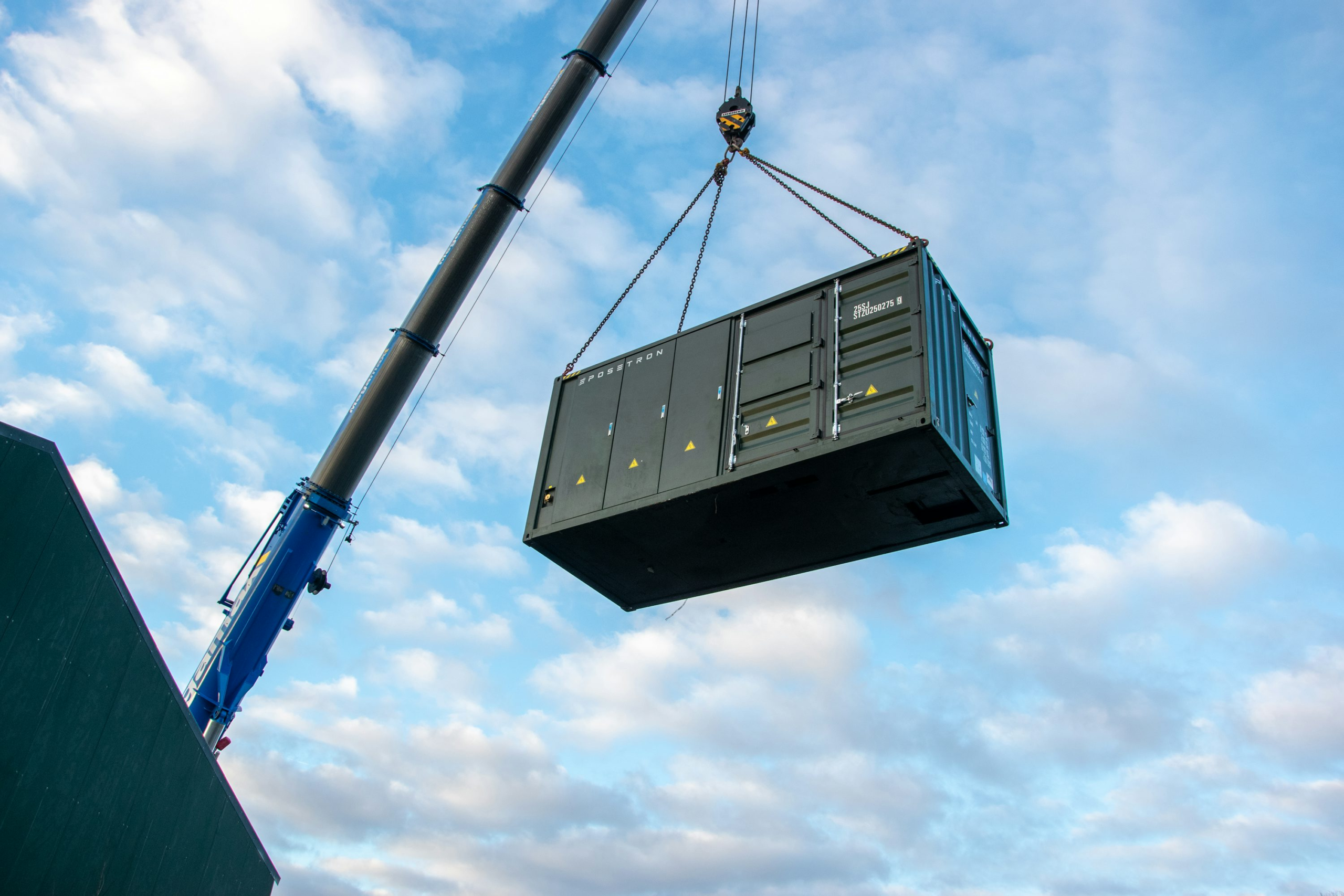
UAB ELESELA has reached financial close on a 20MWh standalone battery storage project in Klaipėda, with Artea Bank providing non-recourse financing and ZOE Energy Storage appointed as turnkey system integrator.
The financing was completed on 17 July and disclosed publicly on 26 August. It will fund construction and procurement of storage equipment, while ZOE’s scope covers supply, installation, and commissioning of the battery system.
Grid connection and the start of commissioning are scheduled for 20 January 2027. The published project information does not provide a MW power rating, preventing a reliable calculation of the battery’s nominal discharge duration.
That distinction is necessary because 20MWh describes the amount of stored energy rather than the rate at which the plant can import or export it. Two batteries with the same energy capacity can provide very different system services if their inverter and connection ratings differ.
The project is being developed as a standalone asset rather than as storage physically tied to a particular wind or solar farm. Once commissioned, it can charge and discharge according to network conditions and its commercial operating strategy, subject to the capacity and technical limits of its connection.
Financial close shifts attention to delivery
Non-recourse financing places greater emphasis on the project’s own contracts, expected cash flows, equipment performance, and risk allocation than financing backed broadly by a sponsor’s balance sheet. The detailed financing terms have not been disclosed, so the precise revenue assumptions and lender protections behind the Klaipėda transaction remain private.
The public milestone nevertheless removes one of the main conditions required before construction spending can accelerate. Equipment procurement and site works now have a defined financing route, while responsibility for integrating the complete storage system sits with ZOE.
System integration extends beyond supplying battery racks or containers. A grid-connected BESS requires power conversion equipment, transformers, switchgear, protection, communications, fire protection, thermal management, auxiliary supplies, metering, and plant-level control.
Each package has to operate as part of one electrical system. Battery management must remain coordinated with inverter limits, state-of-charge calculations, site controls, protection settings, and the dispatch commands ultimately received by the plant.
The timetable to January 2027 leaves a concentrated delivery period. Civil works, equipment transport, cabling, transformer installation, communications, energisation, protection tests, and grid-code verification all have to be completed before commercial operation can begin.
The Lithuanian market adds a particular system context. Lithuania, Latvia, and Estonia synchronised with the Continental Europe Synchronous Area on 9 February 2025 after disconnecting from the Russia-controlled IPS/UPS system.
Synchronisation altered the way frequency and reserves are managed across the Baltic power systems. Local balancing resources, cross-border interconnection, generation, demand response, and storage now operate within the Continental European framework rather than the previous Russian-controlled synchronous area.
Litgrid permits qualifying electricity storage operators to become balancing service providers where they hold the required authorisations, contracts, and prequalification. That creates a technical route for batteries to provide reserve and balancing capability, although ELESELA has not disclosed which services the Klaipėda project will pursue.
The absence of a public MW rating makes restraint particularly important when considering its likely role. A higher-power battery with 20MWh of energy would be suited to shorter, more intensive response, while a lower-power system could sustain output for longer. The connection agreement and inverter specification will define that balance.
Commercial dispatch will also have to account for degradation and efficiency. Cycling a battery more frequently can increase gross trading opportunities but consumes part of its lifetime throughput, while round-trip losses mean stored electricity must normally be returned at a sufficiently higher value to justify the cycle.
Standalone storage provides more freedom than a battery tied operationally to one renewable plant, but it also relies entirely on market and system value rather than being justified by a specific generation asset. Revenues may come from balancing, reserve, wholesale spreads, or other flexibility arrangements as market rules permit.
Competition between those revenue streams tends to increase as additional batteries connect. A project financed today therefore needs an operating case robust enough to tolerate changing prices and service volumes rather than depending indefinitely on one unusually profitable market product.
For the Klaipėda scheme, the immediate engineering task is more straightforward: turn a financed 20MWh development into a compliant electrical installation within the announced programme. ZOE now carries responsibility for the storage integration, while Artea’s financing allows procurement and construction to proceed.
The next useful specifications will be the battery’s MW rating, connection capacity, equipment configuration, and eventual market qualification. Until those emerge, the project can be described accurately as a financed 20MWh standalone storage development — no invented duration or revenue stack required.

