
IN Brief:
- EDP Renewables North America has completed the 92MW/368MWh Sandrini BESS in Kern County, California.
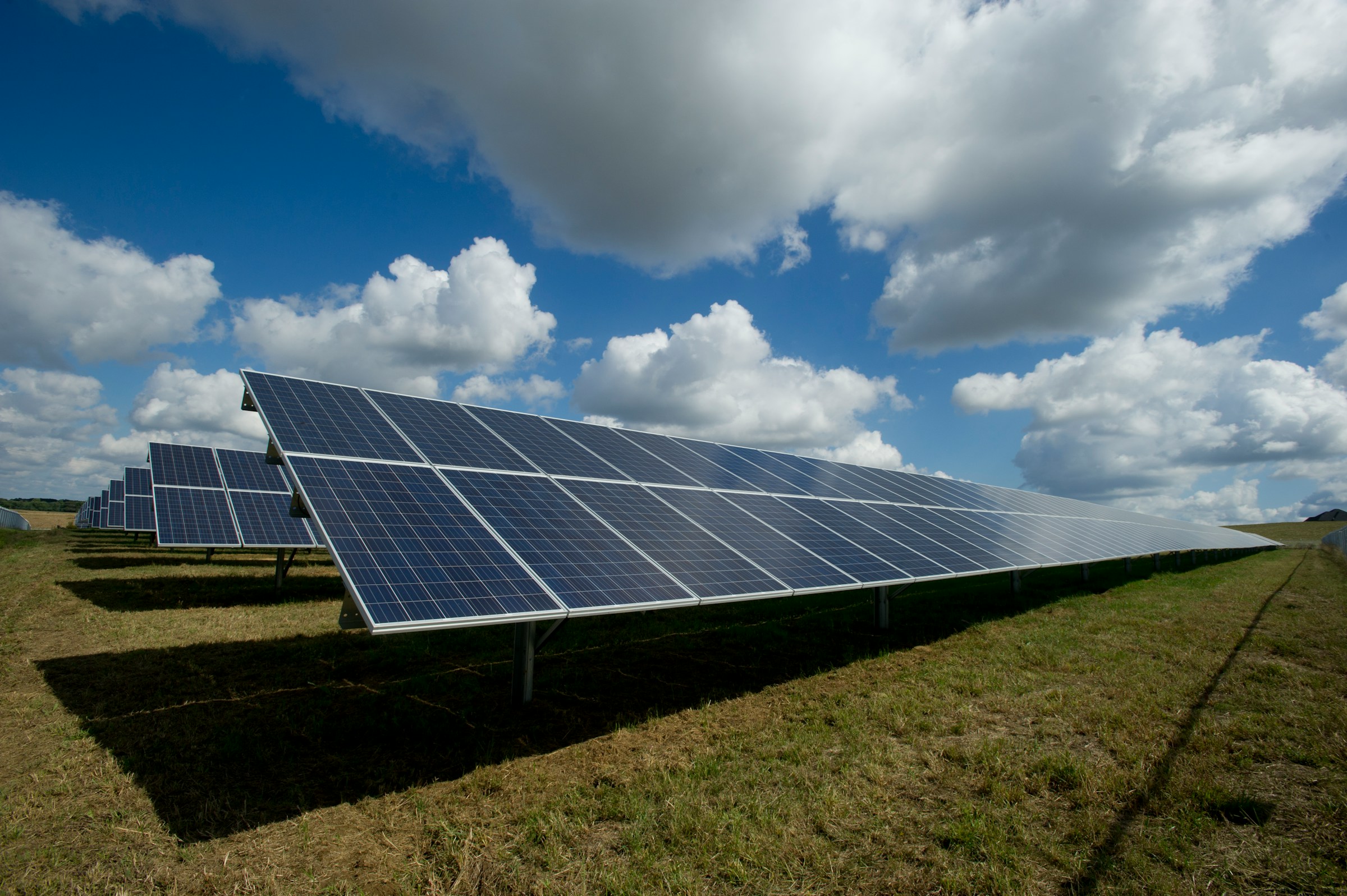
- The nominal four-hour battery is co-located with the 300MW Sandrini Solar facility.
- Redwood Coast Energy Authority has an energy storage service agreement covering 100% of the battery capacity.
EDP Renewables North America has completed the 92MW/368MWh Sandrini Energy Storage project in Kern County, California, adding a nominal four-hour battery alongside the existing 300MW Sandrini Solar facility. Redwood Coast Energy Authority has an energy storage service agreement covering 100% of the battery’s capacity.
The 368MWh energy rating means Sandrini can nominally sustain its full 92MW discharge for four hours before allowing for operating reserves, conversion losses, state-of-charge limits, and degradation. That duration gives the project substantially more energy-shifting capability than shorter batteries designed predominantly around rapid grid-support services.
Co-location with the solar plant establishes a straightforward operating case. Photovoltaic output is concentrated during daylight hours, while electricity demand can remain high after solar production falls. The battery can absorb energy during the stronger generation period and return it later, changing the time profile of electricity delivered from the site.
RCEA is separately purchasing 100MW from the 300MW Sandrini Solar facility, while its storage agreement covers the complete battery capacity. Completion therefore converts the BESS from a contracted future resource into operating infrastructure capable of supporting the authority’s electricity portfolio.
The relationship between the two power ratings is important. Sandrini Solar can produce up to its applicable plant limit as sunlight conditions allow, while the battery can import or export at up to 92MW. Plant controls have to coordinate those assets against the electrical limits of the site rather than treating the storage installation as an independent system simply because it has a separate commercial agreement.
During periods of high solar production, charging the battery can extend use of the site’s generation into later hours. Depending on the connection arrangement, storage may also reduce the amount of energy that has to be exported immediately when solar output is strongest. The battery can then discharge when direct photovoltaic generation has fallen.
That operating pattern does not create additional electricity and does not make the 300MW solar plant dispatchable around the clock. It shifts a finite block of energy through time. At full rated output, the battery’s nominal four-hour duration defines the upper limit of that sustained shift before recharge is required.
The four-hour design creates a larger physical installation than an equivalent 92MW system with shorter duration. Additional battery cells bring more DC equipment, cooling, fire protection, monitoring, auxiliary loads, and maintenance requirements, while the power-conversion equipment still has to deliver rapid and accurately controlled AC response at the grid interface.
Battery management is therefore as important as headline capacity. Cell temperatures, voltage, state of charge, and degradation have to remain inside operating limits, while the plant-level controller coordinates charging and discharging against contractual requirements and network conditions.
Protection and communications provide another layer. The installation has to detect electrical faults, isolate affected equipment, maintain reliable telemetry and metering, and respond correctly to abnormal grid conditions. A battery capable of moving 92MW rapidly can be useful to the system only if that response remains predictable and compliant at the connection point.
Commercial operation adds a longer-term challenge. Frequent cycling gradually reduces usable battery capacity, meaning the 368MWh figure will not remain unchanged indefinitely without lifecycle intervention. Operating strategy, warranty conditions, temperature management, depth of discharge, and eventual augmentation all affect how much useful energy the site can deliver years after commissioning.
The full-capacity RCEA agreement means availability has contractual significance. Maintenance cannot be planned purely around short-term market opportunities, and the operator needs sufficient operational margin to meet service obligations even as individual battery modules age or equipment is taken out of service.
EDP says Sandrini Energy Storage supported approximately 50 jobs during construction. The combined solar and storage development supported about 250 construction jobs and is expected to generate more than $25 million in local tax revenue. The figures reinforce that the storage element forms part of a larger generation and infrastructure site rather than a standalone container installation.
EDP Renewables North America now reports approximately 1,230MW of gross operating wind, solar, and storage capacity in California. Its portfolio in the state includes the combined Sandrini site as well as the larger Scarlet solar and storage development, illustrating how batteries are increasingly being added alongside utility-scale photovoltaic generation rather than developed solely as independent grid assets.
The engineering logic is increasingly familiar in high-solar systems. Photovoltaic capacity can produce large amounts of electricity around midday, while the system’s requirement for controllable resources grows as that output falls later in the day. Storage changes the timing of part of the renewable production without requiring another fuel supply.
Its usefulness remains bounded by duration. Sandrini’s four-hour battery can move a meaningful amount of energy into the evening, but once its stored energy is exhausted it needs to recharge. Transmission capacity, generation elsewhere on the grid, and longer-duration resources remain necessary for periods when system requirements extend beyond the battery’s operating window.
Completion is nevertheless a material shift from development to physical operation. The 92MW/368MWh specification, four-hour duration, solar co-location, and full-capacity RCEA agreement now describe an installed power-system asset rather than a proposed project.
Sandrini’s value will ultimately be measured by how consistently that equipment performs over repeated daily cycles. The solar panels provide the visible generation, but the battery’s controls, thermal systems, inverters, protection, and lifecycle management determine how effectively 368MWh of stored energy can be moved from one part of the day to another throughout years of commercial operation.

