IN Brief:
- Edisun Power has agreed to acquire SMARTENERGY Group's business operations for just under CHF440 million.
- SMARTENERGY will finance the purchase through a vendor loan intended to be offset against newly issued Edisun Power shares.
- The enlarged business will focus on renewable power for data centres, Power-to-X, and solar and wind projects incorporating storage.
Edisun Power Europe has agreed to acquire the business operations of SMARTENERGY Group for just under CHF440 million, consolidating renewable development activities that have already supported much of the listed company’s operating business.
The agreement was signed on 23 August after shareholders approved the proposed structure at Edisun Power’s annual general meeting on 29 May. Edisun Power Europe said it has conducted the majority of its business through SMARTENERGY Group for many years, making the transaction a consolidation of an established operating relationship rather than an acquisition of an unrelated portfolio.
SMARTENERGY will provide a vendor loan equal to the purchase price, which Edisun Power puts at just under CHF440 million. The current structure envisages that liability being offset against payment for 2,016,943 new registered Edisun Power shares issued at CHF218.05 each.
The capital increase is expected to follow shortly. SIX Swiss Exchange has permitted the listing of the new shares to be deferred for up to six months, with Edisun Power expecting them to be admitted during the fourth quarter of 2026.
Shareholders have also approved changing the company’s name to SMARTENERGY AG and moving its registered office to Wollerau, with both steps expected by the end of the year. The more substantial change, however, sits in the type and scale of energy projects the consolidated business intends to pursue.
Development shifts towards large electrical loads
Edisun Power has identified three areas for future growth: renewable energy for data centres, synthetic aviation fuels and other Power-to-X applications, and photovoltaic and wind projects combined with energy storage. Each brings generation development closer to large electrical loads and the infrastructure required to connect them.
Data centres make the connection challenge particularly visible. Securing enough renewable energy on an annual basis does not guarantee that a campus can obtain the instantaneous network capacity required for operation, particularly where proposed computing loads run into hundreds of megawatts.
Developers therefore have to consider grid connection, substation capacity, network reinforcement, power quality, backup arrangements, and storage alongside the generation itself. A renewable portfolio with secured grid rights can consequently carry more practical value than a much larger pipeline whose connection dates remain uncertain.
Power-to-X projects present a related problem from the opposite direction. Electrolysers and other conversion processes can create concentrated electrical demand, while their economics depend heavily on power price, utilisation, and access to low-carbon generation.
Where the industrial process can vary its load, it may also absorb electricity during periods of strong renewable production or lower market prices. That makes the electrical design and operating strategy part of the commercial model rather than a service considered after the plant has been developed.
Storage broadens the project structure
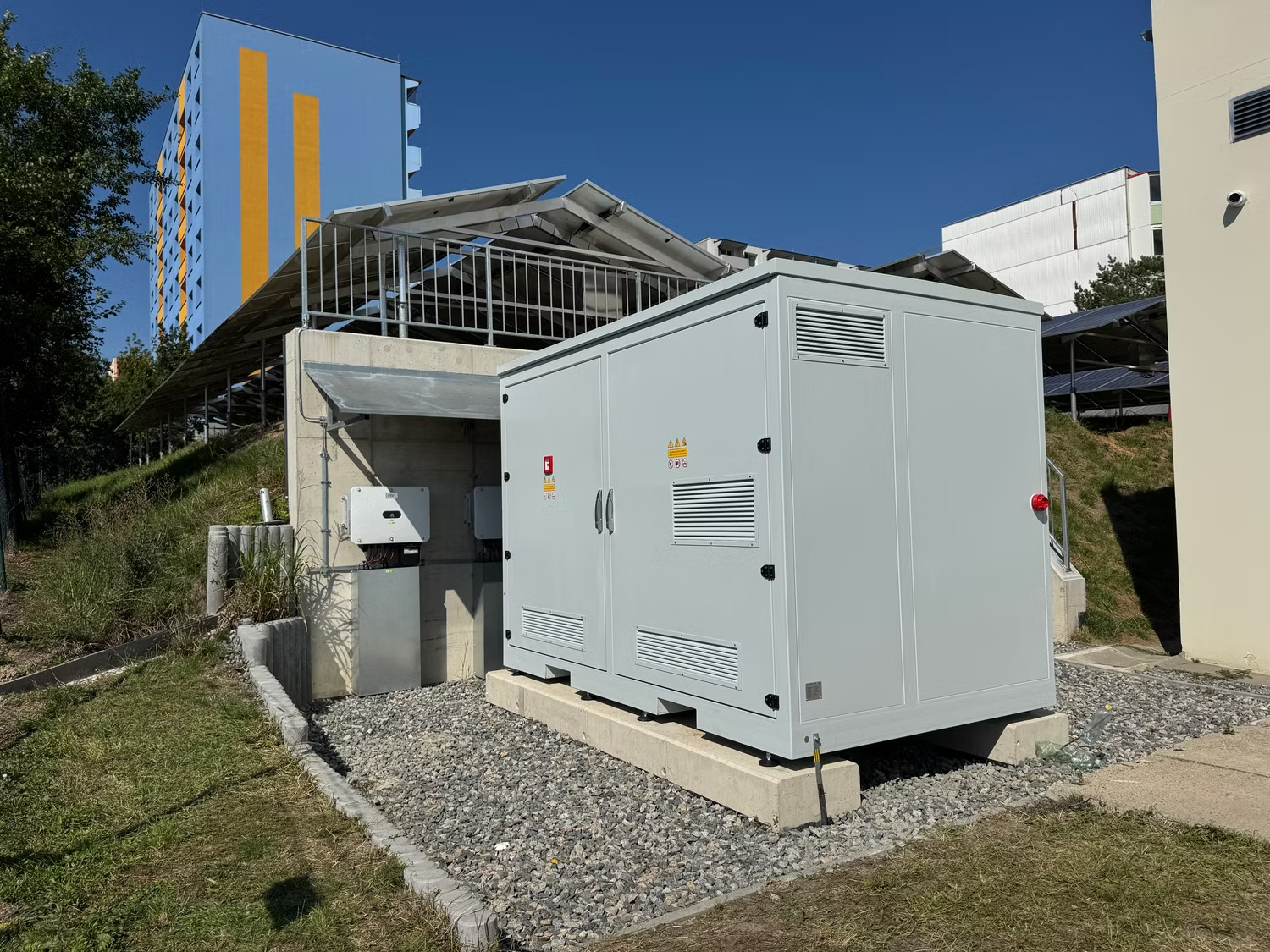
Energy storage gives the enlarged group another option when matching generation, grid capacity, and consumption. Batteries can shift electricity between trading periods, provide fast-response grid services, and manage some connection constraints, although duration, degradation, cycling strategy, and local network conditions determine how useful an individual installation will be.
The emphasis on storage also marks a progression from Edisun Power’s historical position as an owner of photovoltaic generation assets. Developing generation alongside storage and large industrial loads introduces more complex electrical and commercial relationships, particularly where a project combines several revenue streams or operates behind a constrained grid connection.
The transaction itself does not add a megawatt of connected generation or storage. Edisun Power still has to convert development rights into permitted, financed, constructed, and commissioned assets, and the familiar constraints remain: grid queues, equipment procurement, project finance, permitting, construction capacity, and energy-market exposure.
That distinction is increasingly relevant when renewable businesses are valued partly on development pipelines. A project with site control and early-stage studies is materially different from one holding a firm connection agreement, while an asset under construction carries a different risk profile again.
Consolidating development activity inside the listed entity should make that progression more visible to investors and place project origination, execution, and operating assets within the same structure. It also brings Edisun Power’s corporate identity into line with a strategy extending beyond stand-alone photovoltaic ownership.
The CHF440 million purchase price therefore describes a corporate restructuring rather than the value of new electrical capacity arriving immediately on the system. The operational test will come through the projects that follow — particularly whether renewable generation, storage, and new data-centre or Power-to-X loads reach viable grid connections on commercially useful timescales.