IN Brief:
- DS1 has contracted to construct Energix Lithuania’s 330MW photovoltaic park at Jonava.
- The 376-hectare site comprises 25 fields and is planned to incorporate around 445,000 modules, 72 central inverters, and 250km of 30kV cabling.
- Construction is under way, with DS1 targeting completion in the fourth quarter of 2027.
DS1 has secured the construction contract for Energix Lithuania’s 330MW photovoltaic park at Jonava, with work already under way on a large, geographically dispersed solar installation in central Lithuania. The contractor expects to complete the project in the fourth quarter of 2027. The contract covers a solar park spread across 376 hectares and 25 separate fields, with the installation extending over a distance of almost six kilometres.
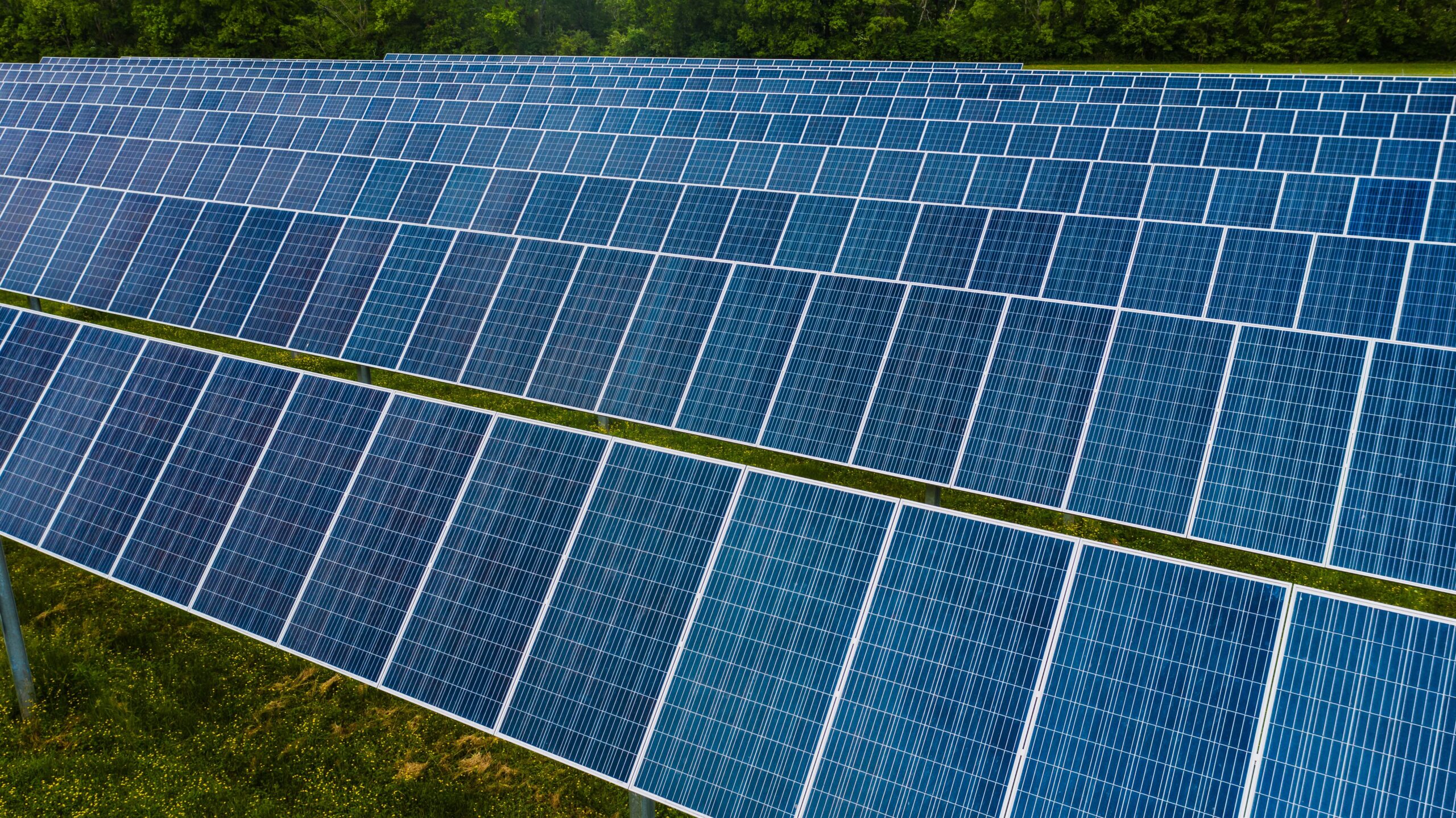
The project will require about 445,000 photovoltaic modules mounted on 8,467 support structures, according to DS1’s construction update. Its design includes 72 central inverters, approximately 4,180km of direct current cabling, and another 250km of 30kV cable for medium voltage collection. Those quantities describe the work behind the 330MW headline rating: extensive electrical circuits must be installed across 25 fields and coordinated before output can reach the grid.
The solar farm is being developed by Energix as part of its Lithuanian expansion. Its wider Jonava cluster also includes a planned onshore wind component and energy storage development, but the newly disclosed DS1 contract specifically concerns the 330MW photovoltaic park. The European Investment Bank has separately described the broader cluster as combining 330MW of solar generation with a 142MW wind farm. These are distinct generation assets, and the new construction award should not be treated as a contract for the entire hybrid development.
Delivering a site divided into 25 fields requires careful sequencing of the electrical and civil works. Photovoltaic modules are installed on mounting structures, connected into DC strings and groups, and routed to power conversion equipment. The layout determines how much cable is needed, the voltage drop across individual circuits, and the scope of installation and testing before energisation. DS1’s reported cable volumes suggest that a large part of the work will involve managing distributed electrical infrastructure across the site.
Seventy-two central inverters will convert direct current from the photovoltaic arrays into alternating current for collection and export. The inverters also form part of the plant’s control interface, allowing output to be regulated within equipment and network limits. DS1 has not specified their individual power ratings, supplier, or detailed control configuration. The aggregate 330MW project figure cannot therefore be divided across the 72 units and treated as confirmation of a particular inverter model or installed alternating current rating.
Medium-voltage collection infrastructure forms another substantial workstream. DS1 reports approximately 250km of 30kV cabling, which will carry electrical output from the conversion infrastructure towards the project’s connection arrangements. Cable design and installation must account for current carrying capacity, insulation, losses, earthing, and the conditions under which circuits are laid. Protection and monitoring systems must also support safe isolation and fault handling across an installation whose electrical components are spread over multiple fields.
Earlier project information shows that Energix has also been progressing transmission infrastructure in the Jonava area. DS1 previously described work on the Madlinava 330kV switchyard, including changes to the existing Panevėžys–Jonava overhead line. The company has not established in its new solar contract statement that all of those works are part of the same package. The earlier high-voltage work provides useful background to the network development taking place around the renewable generation scheme, not evidence that the solar EPC award includes every transmission asset.
Energix has identified Jonava as a significant part of its move into the Lithuanian market. Its previous project disclosures outlined a combination of photovoltaic, wind, and storage assets, with the individual elements at different stages of development. A separate energy storage agreement discussed in October with LG Energy Solution also referred to potential collaboration at Jonava, but it was non-binding. There is no basis to treat that prospective battery arrangement as a completed procurement under DS1’s newly announced solar construction contract.
The planned fourth-quarter 2027 construction completion leaves an extensive programme of module installation, power conversion, collection cabling, protection, and testing. Before energisation, work across each field will have to be checked for correct polarity, insulation integrity, continuity, and safe operation of the protective systems. DS1 has not given a separate grid energisation or commercial operation date, making the stated 2027 milestone a construction target rather than confirmation of when electricity exports will commence.
Jonava’s electrical layout will also affect construction sequencing. Array installation can advance in different fields while cable routes, inverter locations, and 30kV collection circuits are coordinated to avoid rework and to create safe boundaries for testing. The large quantities disclosed by DS1 help explain the delivery challenge without implying that every field will be commissioned simultaneously. The final sequence will depend on the installation plan, network works, and approval of the relevant electrical tests.
DS1 describes Jonava as its largest photovoltaic construction assignment to date. The contractor has signed the Energix Lithuania agreement and begun site work, while the wider renewable energy cluster retains separate wind and prospective storage components. Progress towards the Q4 2027 target will be visible in the installation of structures, modules, inverters, and cable systems, followed by the testing required to bring the 330MW solar installation into service.