IN Brief:
- DemoSATH’s 2 MW twin-hull floating turbine will remain at the BiMEP test site off Spain through 2027.
- Kumagai Gumi joins Saitec and Kansai Electric under an agreement covering further monitoring, construction research and decommissioning studies.
- The partners will compare measured platform loads and motion with predictive models to inform subsequent commercial designs.
Saitec Offshore Technologies, Kansai Electric Power Company and Japanese contractor Kumagai Gumi have agreed to keep the 2 MW DemoSATH floating wind turbine operating off Spain’s Basque coast through 2027. Kumagai Gumi joins the project for a new research phase covering construction methods and eventual decommissioning, while extended monitoring will help the partners refine engineering models for larger floating wind developments. The cooperation gives the existing grid-connected demonstrator a longer experimental role rather than adding new generating capacity.
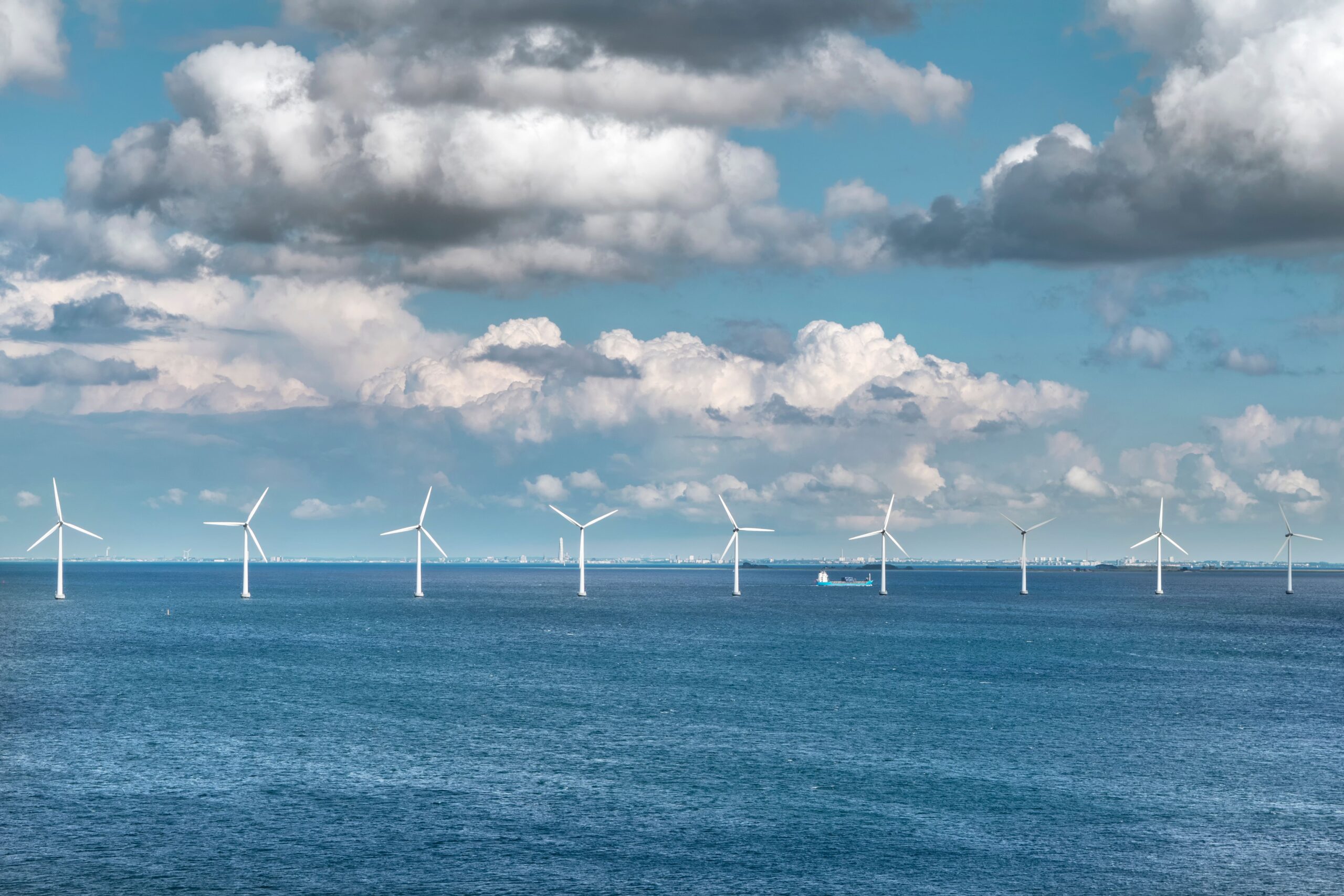
DemoSATH consists of a wind turbine mounted on a concrete twin-hull floating structure based on Saitec’s SATH technology. It is moored approximately 3.2 kilometres off the coast near Armintza, Bizkaia, in water around 85 metres deep. The platform was constructed and assembled at the Port of Bilbao before being moved offshore. It began exporting electricity to Spain’s grid in 2023, providing a full-scale operating installation rather than only a model, tank-test article or demonstration concept.
Saitec’s SATH design uses a concrete twin-hull floating foundation with a mooring arrangement that permits the structure to respond to waves, wind and changing turbine loads. These forces act on the platform, tower and rotor as an interconnected mechanical system. The mooring lines transfer load towards seabed anchors and constrain movement, while the floating structure must remain within acceptable motion limits for the turbine and its electrical export connection. Designers therefore assess foundation response and turbine control together rather than treating them as separate components.
The extension will increase the range of real operating conditions recorded by the installation, which has already encountered waves reaching about 13 metres in the Cantabrian Sea. Such measurements are valuable because floating-platform motion depends on interacting wave periods, wind loading, currents and mooring response. The next phase will use these observations to refine predictive models and component monitoring. Additional measurements will support comparisons between platform loads in severe weather and those recorded during more moderate operating conditions.
Instrumentation on the prototype records structural, dynamic and operational behaviour alongside electrical generation. Such data can be used to refine predictions of motion, stress, fatigue and response to extreme weather. Models employed during design rely on assumptions about hydrodynamic forces, structural stiffness, mooring behaviour and turbine controls; comparisons with offshore measurements allow engineers to identify where their calculations agree with measured performance and where further adjustment is required. The announced programme includes expanded monitoring of key components, data analysis and predictive modelling.
Kumagai Gumi’s contribution will focus on practical construction and removal methods for floating wind structures. Repeated production requires decisions on concrete fabrication, reinforcement, formwork, quality assurance and efficient assembly at suitable port facilities. Moving completed platforms offshore depends on towage arrangements, stability during transit and installation weather windows. Eventual decommissioning adds the reverse sequence of electrical disconnection, mooring release, recovery and safe handling of major components. These are workstreams to be evaluated through the agreement, not completed industrial processes.
For deeper offshore sites, floating support structures can avoid some of the foundation constraints faced by fixed-bottom turbines, but their station-keeping and export systems carry different engineering demands. The dynamic cable must tolerate platform motion while protecting the electrical connection, and fatigue life depends on the resulting cyclic mechanical loads. Mooring integrity, anchor conditions, corrosion and access for maintenance also influence inspection planning. DemoSATH’s extended operating data should help validate design assumptions for those interfaces before the technology is adapted to significantly larger turbines and arrays.
Environmental research will also continue at BiMEP, where the associated DemoSATH Lab programme has examined marine biodiversity and potential aquaculture coexistence. Monitoring around a single prototype can help identify responses near the installed structure, but ecological assessment for a wind farm must also consider its wider seabed footprint, cables, operating vessels and cumulative effects. These environmental studies will sit alongside the mechanical and operational tests as the partners prepare designs for future sites.
The demonstrator began feeding electricity into Spain’s grid in September 2023 and later received prototype certification from Bureau Veritas. More than three years of operating experience now supports comparison between predicted and observed behaviour at sea. The additional 2027 period is intended to extend that evidence base across further operating and environmental conditions. RWE participated in the initial demonstration phase, while the new three-party research agreement is between Saitec, Kansai Electric and Kumagai Gumi.
Keeping DemoSATH in service through 2027 allows the consortium to examine reliability, load prediction, repeatable construction and eventual recovery of floating platforms using one installed turbine. Kumagai Gumi’s industrial-delivery expertise complements the existing foundation and power-system research. The next measurable outputs will be validated operating records and engineering methods capable of informing the design of subsequent commercial projects, rather than any immediate increase in the prototype’s 2 MW grid-connected capacity.