
IN Brief:
- Researchers analysed electricity consumption at 96 UK data centres using UK Power Networks data.
- Onsite batteries meeting short peak loads reduced modelled maximum grid imports by approximately 10% to 15%.
- The study proposes connection, market-access, and demand-flexibility reforms to recognise data centres as active system resources.
WU Vienna’s Institute for Data, Energy, and Sustainability has examined how onsite battery systems could reduce the peak network demand created by UK data centres.
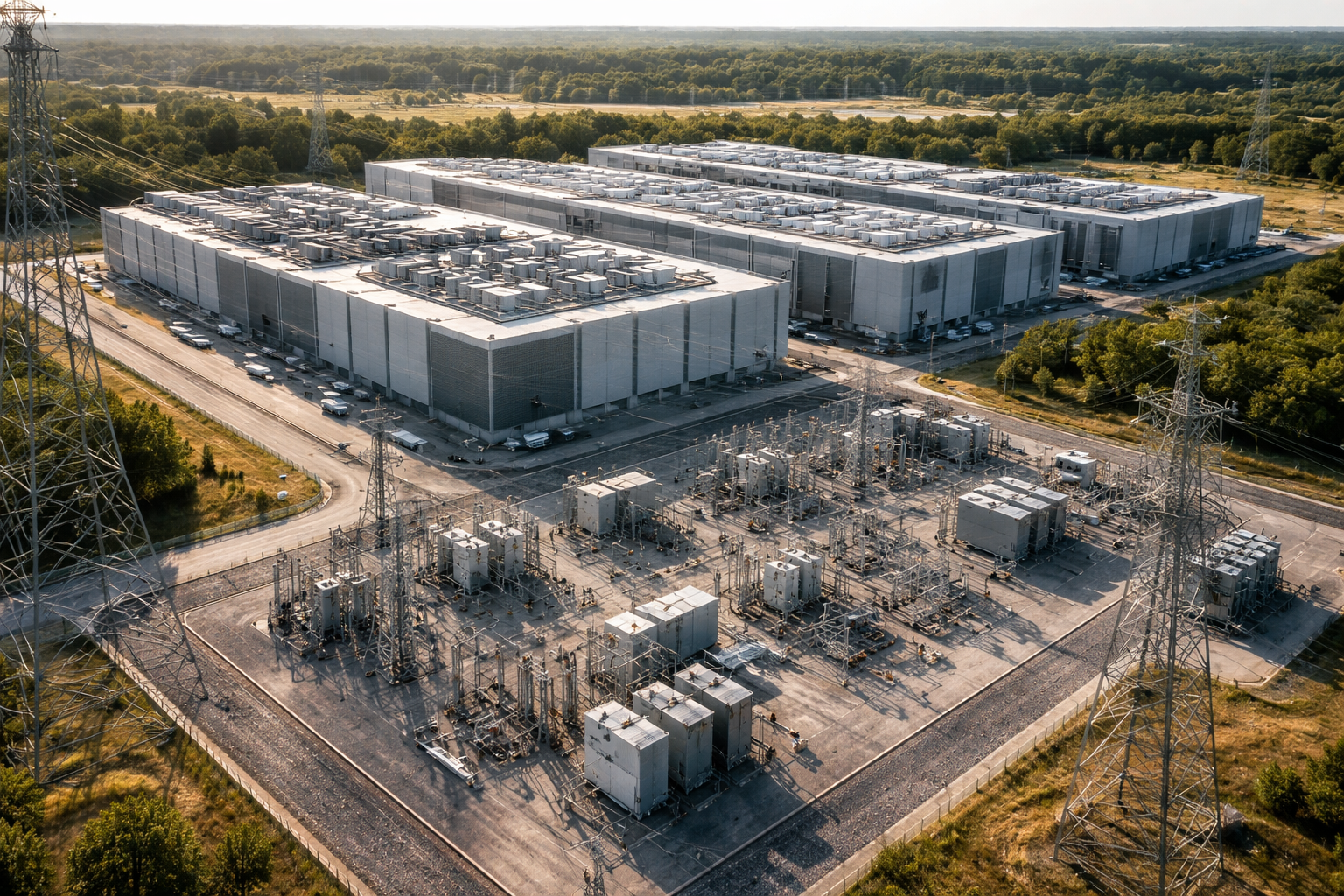
Using electricity-consumption profiles from 96 facilities and data supplied by UK Power Networks, the researchers modelled the effect of batteries meeting short periods of maximum load. Peak electricity imports fell by approximately 10% to 15% under the assessed operating strategies.
Total energy consumption does not fall by the same proportion because the battery shifts when electricity is imported rather than eliminating the underlying computing and cooling load. Conversion and storage losses may slightly increase total electrical energy use even as the highest demand recorded at the network connection declines.
Peak import remains a critical design parameter because cables, switchgear, transformers, substations, and upstream network assets must be rated for the maximum power that can occur. A facility may reach that level for only a limited number of hours, yet the connection must still accommodate it safely.
Reducing the coincident peak can therefore alter the reinforcement needed for a new development or expansion. The available saving will depend on existing network headroom, the duration and timing of the data-centre load, battery power and energy capacity, control strategy, and the security margin retained for equipment failure.
Many data centres already use batteries within uninterruptible power supply systems to bridge disturbances and support critical loads until standby generation or another supply path becomes available. Using those batteries for peak management requires their grid-facing role to remain subordinate to the primary resilience function.
Backup capacity acquires an operating duty
A battery cannot be fully committed to market or peak-shaving activity if that leaves insufficient stored energy for an outage. Operators need clearly defined minimum states of charge, recovery times, reserve margins, and control priorities that preserve the required level of supply continuity.
Some facilities may install separate systems for resilience and grid interaction, while others may allocate only part of a common battery’s capacity. The most suitable arrangement will vary according to service-level commitments, redundancy architecture, generator-start times, battery chemistry, and the commercial value of flexibility.
More frequent cycling changes maintenance and replacement planning. Batteries historically held near a standby state may face a substantially more active duty, requiring warranties, thermal management, degradation models, and inspection regimes suited to regular charging and discharging.
The research proposes connection rules that recognise controlled net demand rather than assessing projects solely against an unrestricted maximum load. It also supports greater use of onsite storage and clean generation, improved access to electricity markets, and the scheduling of computing tasks where operationally possible.
If a network offer depends on the battery remaining available, the import limit must be enforceable. Controls, metering, communications, and fail-safe arrangements would need to demonstrate that demand stays within agreed parameters when servers, cooling plant, or battery systems change operating state.
Such an arrangement resembles active network management for generation, where export is controlled to prevent local limits being exceeded. Applying the principle to large demand could allow faster or less expensive connections, although responsibility for managing part of the capacity constraint would move behind the customer’s meter.
Computing loads provide a second flexibility source
Battery dispatch is only one available control measure. Some computing tasks can be delayed or transferred between facilities, allowing electricity use to respond without interrupting services that require immediate processing.
The potential differs sharply between workloads. Real-time communications, financial transactions, and safety-critical applications have limited tolerance for delay, whereas batch processing, backups, model training, and other non-urgent tasks may offer greater scheduling flexibility.
Bringing electrical and computing controls together would create a more complex operating environment. Workload schedulers may need to consider electricity prices, network signals, cooling limits, equipment utilisation, latency, and contractual service requirements alongside conventional IT priorities.
Large power-electronic loads also interact with voltage and system strength. Previous work on data-centre exposure to voltage instability has demonstrated that adequate energy capacity does not by itself guarantee acceptable power quality.
Rapid changes in computing demand can create steep power ramps at the network interface. Batteries behind the meter can smooth those movements, while suitably rated converters may provide reactive power or voltage support where the connection agreement and equipment design permit.
The commercial case must account for wholesale optimisation, network services, degradation, efficiency losses, reserve obligations, integration costs, and any reinforcement avoided through controlled demand. Revenue cannot be assessed independently of the battery’s critical resilience role.
Network operators will also need visibility over aggregated behaviour. If many batteries respond to the same price signal, simultaneous charging could create a new system peak, making coordinated signals, import limits, and recovery schedules increasingly important.
The analysis of 96 facilities indicates that onsite storage can reduce data-centre peak imports by a material amount. Converting that reduction into dependable network capacity will require operating standards and connection agreements that treat flexibility as a firm electrical resource rather than an optional response.

