IN Brief:
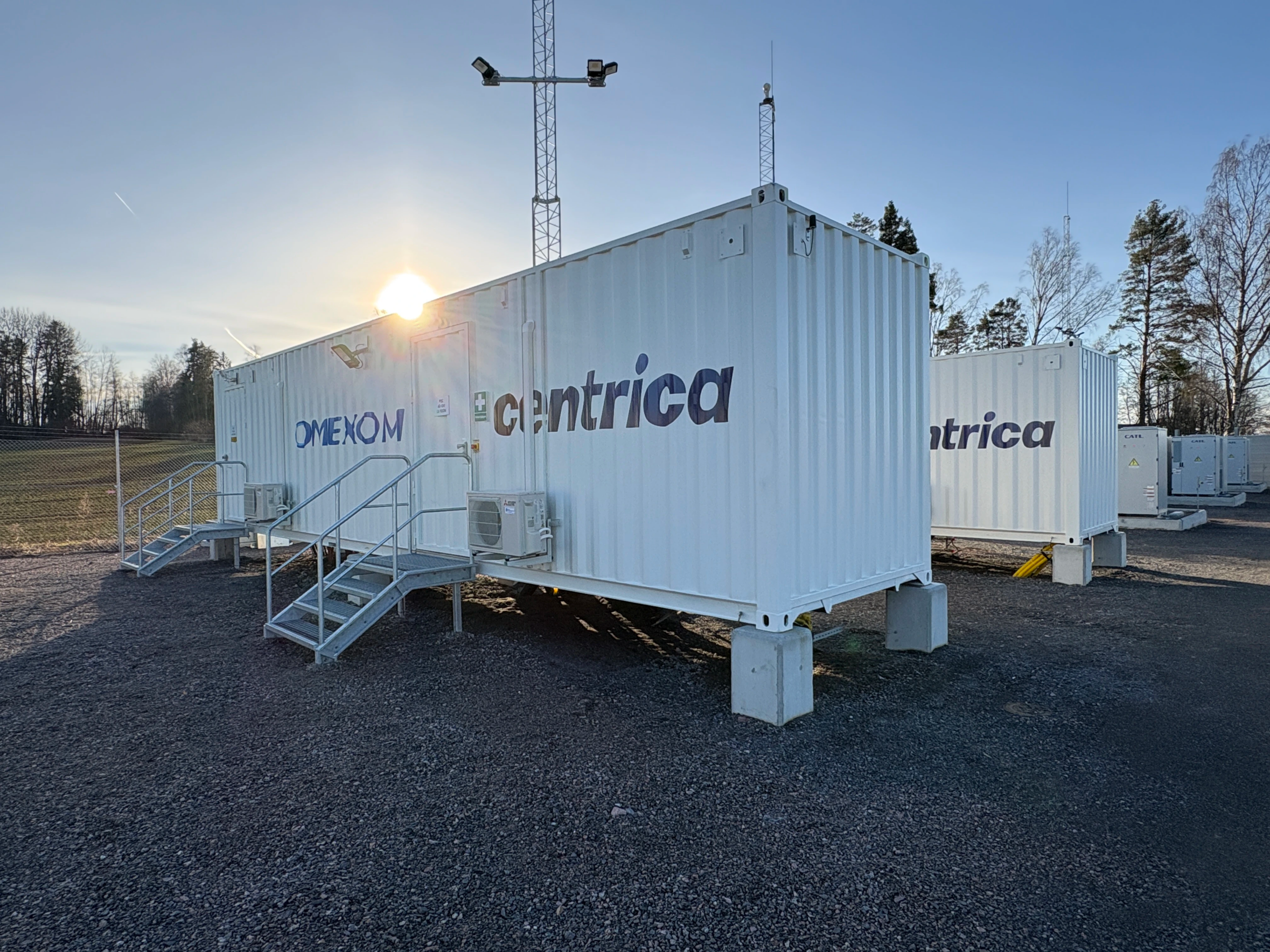
- Centrica has brought two battery energy storage systems online in Borlänge, Sweden, with combined power of 40MW.
- The assets were delivered with Omexom and are expected to provide around 21,900MWh of annual output.
- Centrica Energy will optimise the systems as part of a European BESS portfolio now standing at more than 770MW under contract.
Centrica has brought two battery energy storage systems online in Borlänge, Sweden, adding 40MW of flexible capacity to the country’s grid and extending the company’s operating footprint in European storage. The two assets were delivered in partnership with Omexom and were activated earlier this month. Together they are expected to provide around 21,900MWh of annual output, with Centrica saying the sites can supply the equivalent annual electricity demand of roughly 1,100 homes.
The new systems will be optimised by Centrica Energy, which now has more than 770MW of battery storage under contract across Europe. That detail is important because it places the Swedish projects inside a larger trading and operations platform rather than treating them as stand-alone assets. In battery storage, the engineering does not end with energisation. Dispatch strategy, software integration, market access, degradation management, and response performance are all part of the asset’s practical value once it enters service.
Borlänge is also a useful location for this type of deployment. The Nordic power system combines strong renewable penetration, interconnection, weather-linked variability, and a need for flexible balancing capacity that can move quickly. Battery projects fit that environment by responding to rapid shifts in production and demand, while also supporting frequency and flexibility requirements that become more visible as conventional generation falls back and more intermittent generation comes onto the system. In that sense, a 40MW project is no longer a novelty build. It is a working grid asset designed to operate as part of a wider balancing architecture.
Storage is moving into portfolio-scale operation
The deeper story is the move from isolated battery projects to managed fleets of flexible assets. Early storage deployment often focused on proving technical performance or capturing narrow market opportunities. That phase is giving way to something more operationally mature, in which developers and utilities are building storage portfolios that can be optimised across markets, geographies, and service types. A project such as Borlänge is valuable on its own, but it becomes more strategically useful when combined with a larger book of assets and a trading platform able to respond to local system conditions in real time.
That shift changes how storage is evaluated. Power rating still matters, but so do software capability, optimisation quality, contractual structure, and the ability to keep assets performing in volatile markets. The strongest storage operators are not simply adding megawatts. They are building repeatable operating models around forecasting, dispatch, maintenance, and revenue stacking. That is where battery projects increasingly begin to resemble conventional infrastructure rather than one-off clean-tech deployments.
It also reflects the broader direction of power-system engineering in Europe. As wind and solar move deeper into the generation mix, flexibility becomes a system requirement rather than a market add-on. Storage helps absorb excess renewable generation, discharge into tighter periods, and support grid stability where rapid response is needed. That role is becoming more valuable not because battery chemistry is new, but because the rest of the system is changing around it. Networks, market operators, and asset owners are all having to work with a more dynamic electricity profile.
Centrica’s Swedish projects therefore sit at the intersection of project delivery and portfolio strategy. They add modest but useful capacity in absolute terms, yet their significance lies equally in how they are operated and where they sit within a larger European fleet. The engineering challenge for storage is no longer proving that batteries can respond quickly. It is turning that speed into dependable, financeable, and scalable system value across multiple markets, and that is increasingly where the sector’s next phase will be judged.