IN Brief:
- BW ESS has acquired the 250MW/1,000MWh Yanco BESS from ACEnergy.
- CATL will act as system integrator, with ACLE Services delivering balance-of-plant works.
- Construction begins later in 2026, with commercial operation planned for 2028.
BW ESS has acquired the 250MW/1,000MWh Yanco battery energy storage project in New South Wales from ACEnergy, taking over a four-hour development that has already reached ready-to-build status.
The Riverina project will connect to the Yanco 132kV substation and is intended to provide firming capacity, energy shifting, and system-security services in Australia’s National Electricity Market. Construction is scheduled to begin later in 2026, with commercial operation planned for 2028.
ACEnergy developed the project through land acquisition, planning, grid connection, and the major commercial arrangements required to reach financial close. The sale therefore transfers an advanced project rather than an early-stage development carrying unresolved planning and connection risk.
BW ESS now assumes the next set of risks: procurement, construction, equipment integration, energisation, commissioning, and long-term operation. CATL has been appointed as system integrator, while ACLE Services will deliver balance-of-plant works, with both companies expected to support the project after commissioning.
Yanco combines 250MW of maximum power with 1,000MWh of energy capacity, producing a nominal four-hour duration. At full rating, the battery could theoretically sustain 250MW for four hours, although real operation will be constrained by usable state of charge, conversion losses, reserve requirements, degradation limits, and commercial dispatch.
Four-hour storage gives the asset a different operating profile from the one-hour batteries that dominated earlier phases of Australia’s storage build. Longer duration allows larger volumes of electricity to be moved between parts of the day, including through extended evening demand periods after solar generation declines.
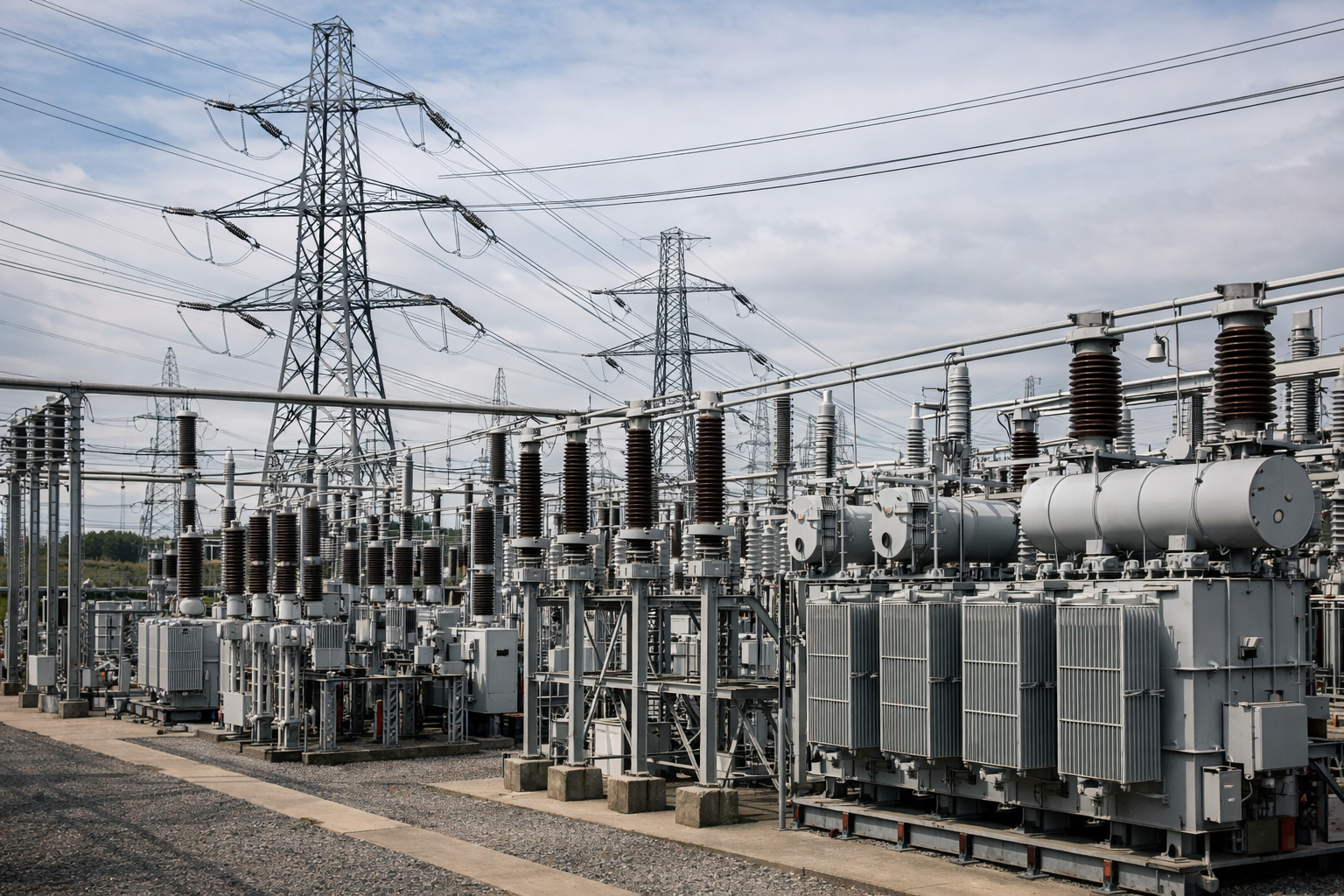
The 132kV connection will determine how that capability interacts with the wider network. A 250MW battery can change its import or export level rapidly, so transformer capacity, protection, metering, reactive power, voltage control, telemetry, and dispatch interfaces all have to be coordinated around the connection point.
CATL’s integration role extends well beyond battery-cell supply. The complete storage system must coordinate battery racks, management systems, thermal controls, power conversion, communications, supervisory controls, protection, and operating software so that the installation behaves as one controllable plant.
ACLE’s balance-of-plant work provides the infrastructure around that system, including civil works, transformers, switchgear, cabling, auxiliary supplies, communications, drainage, security, and connection equipment. Packaged battery containers cannot become an operational grid asset until that supporting infrastructure is built and tested.
The project also has a contracted revenue component through a capacity swap, providing a longer-term cash-flow element alongside merchant opportunities. Storage revenues can otherwise vary sharply with wholesale spreads, balancing prices, ancillary-service demand, and competition from other batteries.
Operating several revenue streams creates its own constraint because battery capacity is finite. Holding power and state-of-charge headroom for system services can limit energy arbitrage, while a deep commercial discharge may leave less flexibility available if reserve services are subsequently required.
Optimisation software therefore has to reconcile market value with physical condition. Every cycle contributes to battery degradation, and high utilisation does not automatically translate into better lifetime returns if near-term trading income is achieved at the expense of accelerated capacity loss.
Yanco’s location close to the South West Renewable Energy Zone gives the project a role in a region expected to add further variable generation. Storage can absorb electricity when supply is high and return it later, although it cannot replace transmission capacity where physical network bottlenecks prevent power from reaching or leaving the site.
The project can nevertheless alter the timing of network flows. Charging during periods of stronger renewable production and discharging when demand is higher can reduce some peaks and improve utilisation of existing generation, subject to the limits imposed by the connection and wider network.
BW ESS says it already has 1.3GWh of wholly or jointly owned capacity in commissioning, another 1GWh moving into construction, and a wider development pipeline of around 2GW across the National Electricity Market. Yanco therefore joins a portfolio being assembled around utility-scale storage rather than representing an isolated acquisition.
For ACEnergy, the sale continues a development model based on advancing large batteries through the stages where planning, land, connection, and commercial agreements create value before transferring ownership to long-term infrastructure investors.
Ready-to-build status means many development uncertainties have been reduced, but it does not mean delivery is routine. Equipment has to be manufactured, shipped, installed, and integrated; the 132kV interface must be completed; protection and controls need validation; and the entire 1GWh installation has to pass commissioning before commercial dispatch can begin.
The transaction therefore moves Yanco across a commercial boundary rather than a technical finish line. Its next meaningful milestones will be visible onsite — construction, energisation, testing, and finally proof in 2028 that a contracted four-hour battery can operate reliably within the National Electricity Market.