IN Brief:
- Around 70MW of Borkum I has been prequalified for negative secondary reserve.
- Remote-control infrastructure can reduce participating output automatically within five minutes of a transmission-system operator request.
- The arrangement adds balancing-market capability to a 200MW offshore wind farm operating since 2015.
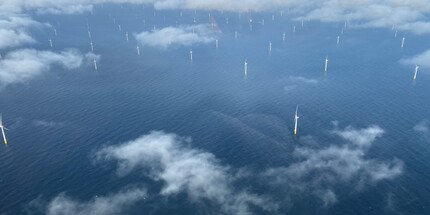
Trianel has opened around 70MW of its Borkum I offshore wind farm to Germany’s balancing market, allowing part of the 200MW asset to provide negative secondary reserve alongside its normal electricity production.
The capacity has been supplying the service since July 2026, with commercial marketing beginning on 22 July. When instructed by a transmission-system operator, participating output can be reduced automatically within five minutes to help rebalance generation and demand around the 50Hz system frequency.
A purpose-built remote-control system passes balancing calls to the wind farm in real time and implements the required reduction. Trianel says the architecture is redundant and highly available, reflecting the reliability required when an offshore generating asset takes on a dispatchable system-service role.
Borkum I comprises 40 Adwen AD5-116 turbines and has been operating since 2015. The approximately 70MW prequalified for balancing represents roughly one-third of installed capacity, while the wind farm has generated more than 6.59 billion kWh since entering service.
Offshore wind becomes controllable capacity
Negative secondary reserve gives an operating wind farm a different role from straightforward energy production. Instead of the grid simply accommodating variable offshore output, part of that generation becomes a resource that can deliberately reduce production when the system requires downward regulation.
The capability depends on more than turbine control. Telemetry, communications, dispatch interfaces, metering, availability data, and control logic have to operate as one chain, because the service is only useful if the instructed change can be delivered within the required timescale and measured accurately.
Available balancing volume will also vary with wind conditions. Negative reserve requires sufficient generation to be running before it can be reduced, so forecasting and real-time turbine availability determine how much headroom can credibly be offered at any point.
That operating discipline becomes more relevant as Germany’s offshore fleet expands. Nordseecluster A has already begun staged electrical commissioning, bringing another large offshore project towards full operation and adding further variable generation to a system that needs increasingly flexible balancing resources.
Existing assets can therefore contribute more than annual energy volume if their control systems are capable of providing ancillary services. For a mature wind farm such as Borkum I, software, communications, and reliable remote operation can extend the commercial role of equipment whose turbines and electrical infrastructure are already in place.
Multi-market operation raises the value of availability
Balancing participation creates another potential revenue source alongside wholesale electricity sales and power purchase agreements. The commercial value will depend on market prices, wind availability, and how much capacity can be committed without compromising other contractual positions, but the wind farm can now compete in a market that was historically dominated by more controllable generating technologies.
That places greater emphasis on technical availability. Deutsche Windtechnik agreed a ten-year maintenance contract for the 40 turbines in 2025, with an option for a further five years, linking long-term mechanical performance with an operating strategy that now includes system services as well as generation.
Failures in turbines, communications, or control equipment can consequently affect more than energy output. A unit unavailable during a balancing commitment reduces the capacity that can respond to dispatch, while poor telemetry or remote-control performance can prevent otherwise healthy generation from qualifying for the service.
The same principle applies to the wind farm’s electrical systems. Offshore substations, export connections, protection, control, and communications must remain dependable if the site is to shift rapidly between scheduled generation and instructed curtailment.
Trianel’s 70MW prequalification does not turn the entire wind farm into conventional dispatchable generation, nor does it remove the variability of the wind resource. It does show that existing offshore capacity can provide a controlled downward response when operating conditions permit, adding another tool to Germany’s balancing system without waiting for new generating plant to be built.
The next measure will be operational performance. Reliable delivery from the first 70MW would provide evidence for extending similar control arrangements across more offshore capacity, while repeated failures would quickly reduce the value of the service regardless of the wind farm’s nominal generation rating.