
IN Brief:
- Van Oord has completed all 111 monopile foundations for the 1.5GW Baltica 2 offshore wind farm.
- The campaign covered 107 turbine foundations and four offshore-substation foundations using Svanen and Aeolus.
- Electrical substations, cables, turbines, and onshore connection works now carry the project towards commissioning in late 2027.
Van Oord has completed installation of all 111 monopile foundations for the 1.5GW Baltica 2 offshore wind farm in Poland, closing one of the project’s largest marine construction packages and clearing the way for the next offshore electrical and turbine-installation phases.
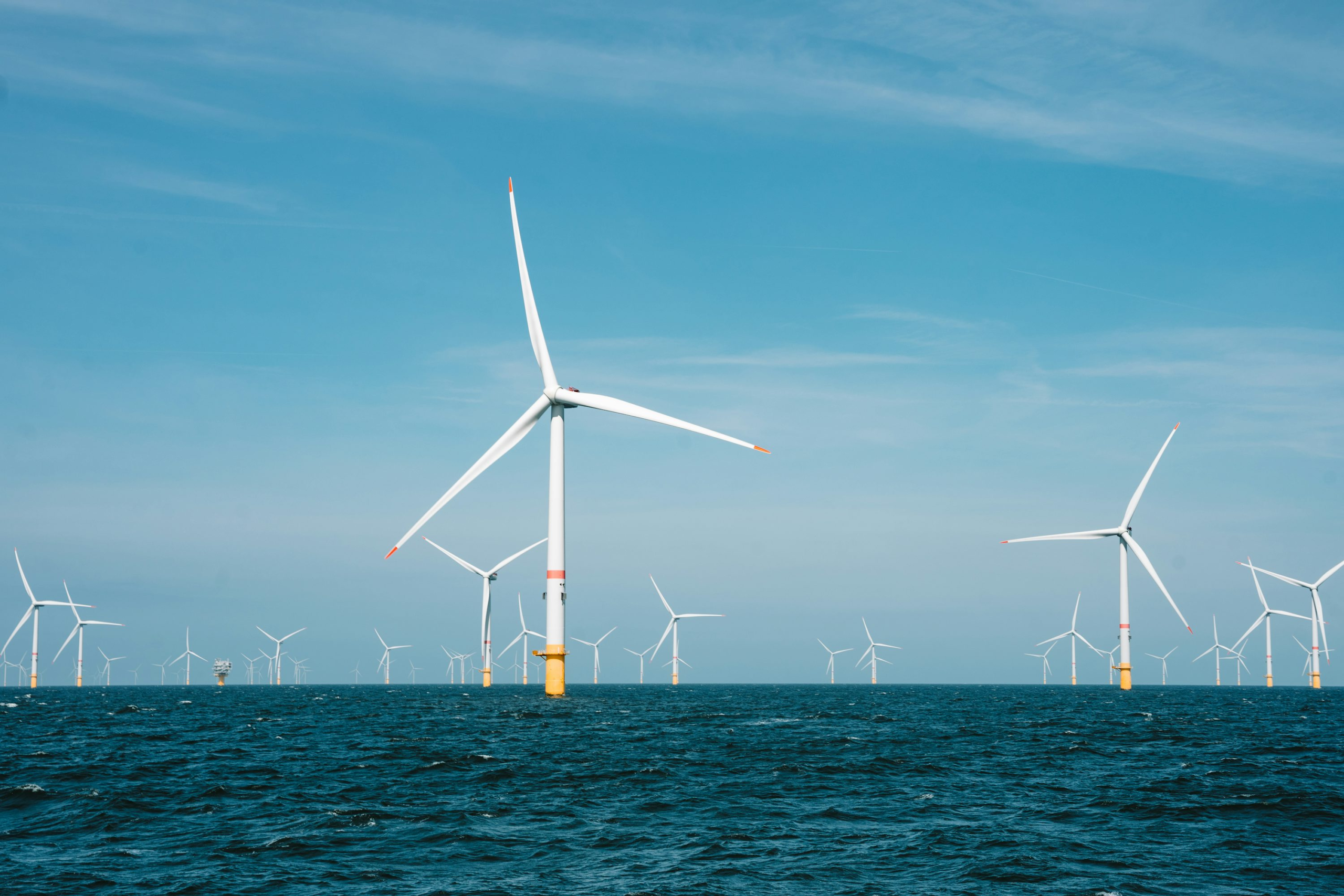
The campaign covered 107 foundations for wind turbines and four for offshore substations. Van Oord said the work was completed safely and on schedule using the installation vessels Svanen and Aeolus, with the two-vessel approach allowing activities to be carried out in parallel during a demanding Baltic Sea construction programme.
The monopiles are substantial structures, reaching up to around 100 metres in length, between approximately 9.5 and 10.5 metres in diameter, and around 1,900 tonnes in weight. Each has to be transported, handled, positioned, and driven within tight installation tolerances before secondary steel and the equipment above it can be added.
Baltica 2 is being developed jointly by PGE and Ørsted and will use 107 offshore wind turbines alongside four offshore substations. The project is scheduled for commissioning in the fourth quarter of 2027, with the developers describing it as the largest offshore wind farm currently under construction in Poland.
Foundation completion removes a major dependency, but it does not mark the end of offshore construction. The project still requires installation and commissioning of offshore substations, export cables, inter-array cables, turbines, and the onshore grid infrastructure needed to transfer up to 1.5GW from the Baltic Sea into Poland’s electricity system.
The sequencing of those packages is critical. Earlier project updates placed export-cable and offshore-substation work in 2026, followed by inter-array cable installation and turbine erection during 2027. Onshore substation and connection works in the Choczewo municipality have also been advancing in parallel, reflecting how little value a completed offshore turbine has until the electrical route to the transmission network is ready.
The four offshore substations are particularly important in that chain. They will collect power from groups of turbines and form part of the high-voltage system that moves electricity towards shore, with protection, transformation, control, and export-cable interfaces all having to operate as a coordinated network rather than as isolated pieces of offshore equipment.
Foundation work also has a direct bearing on the cable schedule because inter-array routes terminate at structures whose position and readiness must be confirmed before final electrical installation can proceed efficiently. Survey tolerances, seabed conditions, cable protection, secondary steel, access systems, and corrosion-control equipment all influence whether later contractors inherit a stable interface or another round of offshore remedial work.
The supply chain behind the 111 foundations is spread across several European locations. Steelwind Nordenham manufactured 34 monopiles and EEW Special Pipe Constructions supplied the remaining 77, while more than 400 secondary-steel components have been produced for the project. PGE and Ørsted have said more than 75% of those secondary-steel units come from Polish production facilities.
That domestic content matters for Poland’s wider offshore wind programme because Baltica 2 is one of the first projects large enough to test whether local manufacturers, ports, fabricators, electrical contractors, and logistics businesses can move from occasional offshore packages into repeatable industrial supply. The engineering requirements are exacting, particularly where welded structures, corrosion protection, marine access systems, and high-voltage equipment are expected to remain serviceable for decades.
For Van Oord, the completed campaign also follows its work on the Baltic Power project and strengthens its operating record in the emerging Polish market. Specialist vessel availability remains a constraint across European offshore wind, so a contractor able to coordinate foundation transport, installation, scour protection, and other marine packages has a commercial advantage when several projects are competing for the same construction seasons.
Weather remains another hard limit. Offshore programmes can absorb some disruption through parallel working and schedule contingency, but high winds, waves, visibility, and sea-state conditions can stop lifts or foundation installation regardless of how complete the onshore supply chain may be. The use of Svanen and Aeolus allowed Baltica 2 to maintain more than one operational stream rather than relying on a single installation vessel for every task.
The project developers had earlier expected foundation installation to continue into the fourth quarter of 2026. With all 111 monopiles now installed by late August, the physical foundation network is available for the secondary structures and electrical packages that follow, although Van Oord itself describes the campaign simply as having been delivered on schedule rather than making a claim about acceleration.
From a power-engineering perspective, the most important work now shifts upwards and landwards. Turbines must be mounted, array cables terminated, offshore substations energised, export circuits completed, and the onshore connection commissioned before the 1.5GW nameplate figure becomes usable generating capacity.
The monopiles are the largest pieces of steel in the sea, but they are only the first permanent layer of the electrical asset. Baltica 2 now has every turbine and substation foundation in place; the remaining programme has to turn those 111 positions into one functioning offshore power station by the end of 2027.

