IN Brief:
- Alstom has signed contracts worth more than €1.2bn covering 29 five-car battery-electric trains and long-term maintenance.
- Charging infrastructure will be installed at Hull, Scarborough, and Saltburn for operation across unelectrified route sections.
- Manufacturing is expected to begin in Derby in 2028, with fleet deliveries starting from 2032.
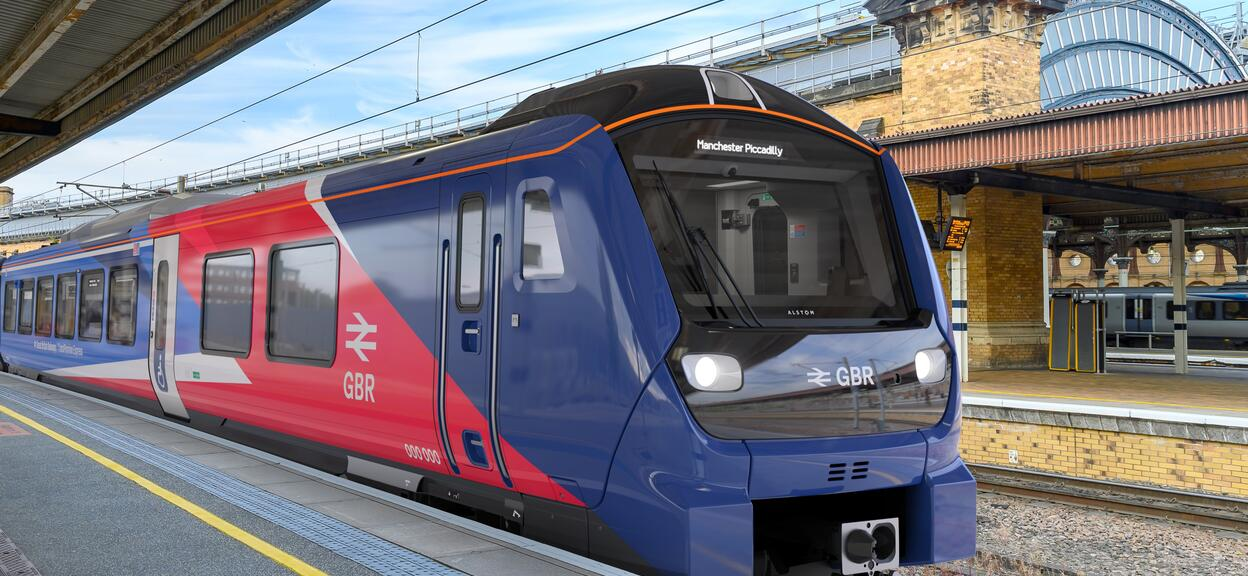
Alstom will install charging infrastructure at Hull, Scarborough, and Saltburn as part of contracts worth more than €1.2 billion to supply and maintain 29 battery-electric trains for TransPennine Express. The programme will introduce a new-build mainline battery-electric fleet while adding three charging locations to support operation beyond continuously electrified sections of the railway.
The rolling-stock contract is worth approximately €930 million and covers 29 five-car Adessia Stream battery-electric multiple units, while maintenance agreements are valued at around €230 million. Fleet deliveries are expected from 2032, with manufacturing scheduled to begin at Alstom’s Derby Litchurch Lane site in 2028.
For the electrical sector, the three charging installations are a significant part of the package. Alstom says infrastructure at Hull, Scarborough, and Saltburn will allow the trains to recharge during normal operations, enabling battery traction across sections where overhead electrification is unavailable.
The manufacturer describes the installation as a UK first on the mainline network, following a similar Alstom deployment in Ireland. Charging infrastructure, rolling stock, maintenance, and depot provision are being delivered within the same overall railway programme rather than procured as unrelated assets.
Rob Whyte, Managing Director UK at Alstom, said: “This agreement is a landmark moment for Britain’s railway.” The engineering significance extends beyond the trains themselves because battery operation depends on reliable high-power electrical infrastructure being available at the correct points in each service diagram.
Rail charging has different operating requirements from public vehicle infrastructure. Trains work to defined timetables and turnround periods, leaving limited flexibility to extend a charging session if energy transfer is slower than planned. The infrastructure must therefore provide sufficient energy within the available dwell time while maintaining reliability over repeated daily cycles.
Alstom has not published the charging power, connection voltage, train battery capacity, or detailed configuration of the Hull, Scarborough, and Saltburn systems. Those figures will determine the size of each network connection and the amount of electrical reinforcement required at the stations.
High-power charging can produce concentrated demand, particularly where several units need energy within a narrow operating window. Depending on local network conditions, installations can require transformers, switchgear, protection equipment, metering, control systems, cabling, and connection works extending beyond the charger itself.
The railway environment adds further requirements around safe isolation, earthing, equipment protection, access, and the interface between fixed infrastructure and rolling stock. Any failure that removes a charging point from service can affect train availability, making electrical reliability part of the timetable rather than a peripheral facility-management issue.
Battery condition must also be considered in the operating strategy. Repeated charge and discharge cycles affect cell temperature and degradation, so the timetable, charging rate, state-of-charge margin, and maintenance programme have to be balanced against the requirement to provide sufficient range across unelectrified sections.
The battery approach is being used on routes where conventional overhead supply is not continuous. It does not remove the advantages of fixed electrification on heavily trafficked corridors, where trains can draw power continuously without carrying sufficient stored energy for long gaps. Instead, the TransPennine programme uses onboard batteries and terminal charging to bridge sections that remain unwired.
Each new unit will be 121 metres long, provide around 300 seats, and operate at speeds of up to 110mph. The fleet will serve destinations including Liverpool, Manchester, York, Hull, Scarborough, and Saltburn and forms part of the wider investment associated with the Transpennine Route Upgrade.
Alstom expects the train order to support more than 350 jobs in Derby and over 5,500 roles across its UK supply chain, with at least £360 million of spending expected with British suppliers. The electrical infrastructure therefore forms one part of a broader manufacturing programme spanning traction systems, batteries, train control equipment, maintenance, and depot assets.
The long delivery horizon leaves several years for design, network connections, station works, factory production, train testing, and route proving. By the time the fleet begins entering service from 2032, the three charging locations will need to function as operational railway assets rather than experimental additions — because a battery train without dependable access to power at the end of its route is simply another source of timetable risk.