
IN Brief:
- The Enköping solar park contains 22,300 modules and 14.3MWp of installed capacity.
- Alight expects annual generation of around 16GWh.
- Part of the production will supply AkzoNobel under a long-term industrial PPA.
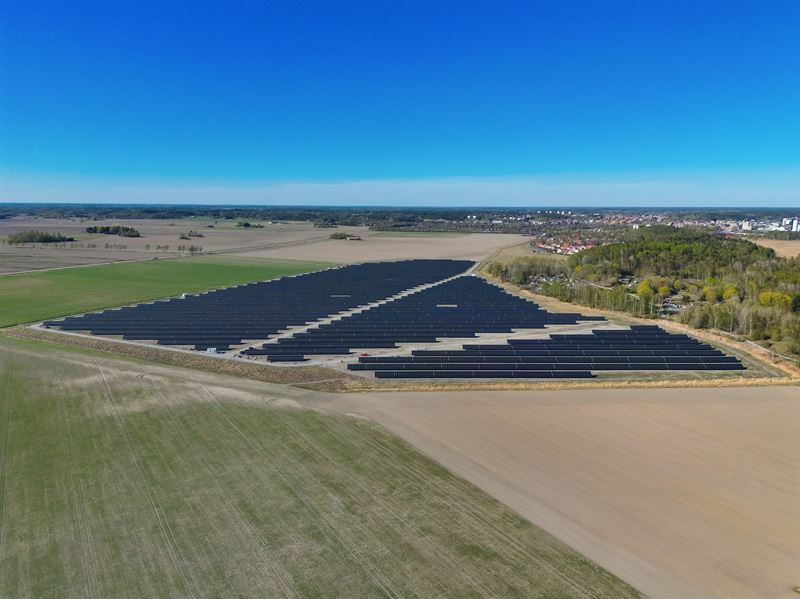
Alight has commissioned a 14.3MWp solar park outside Enköping in Sweden, bringing a new industrial PPA-backed generation asset into operation in electricity area SE3. The plant contains 22,300 photovoltaic modules and is expected to generate around 16GWh of renewable electricity each year.
Alight developed, owns, and operates the site, which is connected to the grid through Vattenfall. Part of its output will be supplied to AkzoNobel under a long-term power purchase agreement, with the renewable electricity expected to contribute to the manufacturer’s operations at Kristinehamn and Angered from the beginning of 2027.
The project is relatively modest beside utility-scale solar developments in southern Europe, but its engineering and commercial structure are relevant to the Nordic market. It combines a ground-mounted generating asset, a grid connection, and a long-term industrial offtake agreement, allowing the developer to secure a contracted revenue stream while the customer gains greater visibility over part of its future electricity supply.
The plant’s 22,300 modules imply an average module rating in the mid-600W range when the 14.3MWp DC capacity is divided across the array, although the project’s published information does not state the exact module type or inverter configuration. The final AC export capacity may therefore differ from the quoted peak DC rating, as is normal for photovoltaic plants where inverter sizing is optimised against expected irradiance and annual energy yield.
Alight expects the site to produce about 16GWh annually. Against 14.3MWp of installed module capacity, that equates to a specific yield of roughly 1,120kWh per installed kilowatt each year. The figure is consistent with the role of modern utility-scale PV in southern and central Sweden, where long summer daylight can compensate for lower winter irradiation but annual output remains strongly seasonal.
Seasonality is one reason the industrial PPA matters. A corporate buyer does not necessarily consume electricity at the same times that a solar project generates it, particularly in a Nordic system where daylight varies sharply through the year. The commercial contract therefore has to define how generated volumes, guarantees of origin, market settlement, and any shortfall or excess positions are handled rather than simply matching an annual generation figure with an annual factory load.
The Enköping park is expected to feed the wider Swedish network rather than operate behind the meter at AkzoNobel’s factories. Electricity delivered physically into the grid follows network flows, while the PPA provides the contractual relationship linking part of the project’s production with the industrial customer. That distinction is important when assessing renewable procurement because the electrical and contractual paths are related but not identical.
The location in SE3 also gives the project a system context beyond the PPA. Sweden’s bidding zones can experience different prices and network conditions because generation and demand are unevenly distributed and constrained by transmission capacity between areas. Additional generation close to southern and central demand can therefore have a different market value from identical output produced in a more weakly connected part of the system.
Alight says the solar park has been designed with space for vegetation between module rows and appropriate separation from waterways and other sensitive environmental features. The modules are mounted on structures with a maximum height of around three metres, while the whole area is fenced. Those details are conventional for ground-mounted PV but still matter to long-term operation because vegetation management, drainage, access, and ground conditions can influence maintenance costs and equipment availability.
Grid connection through Vattenfall is another practical milestone. European solar pipelines frequently contain projects that have secured land and planning status but remain dependent on a viable connection offer, reinforcement works, or completion of network studies. A commissioned plant has moved beyond those development risks into the operating phase, where inverter availability, module performance, curtailment, forecasting, and maintenance become the main variables affecting delivered output.
For AkzoNobel, the agreement also links power procurement with manufacturing demand. Long-term PPAs can reduce exposure to part of the volatility in wholesale electricity prices, but they are not equivalent to a fixed-price supply contract covering every hour of consumption. Industrial buyers still need arrangements for balancing, residual demand, profile mismatch, and periods when the contracted generating asset is unavailable or producing less than expected.
The Enköping project therefore represents a complete chain from development to operating generation rather than another announced solar pipeline. Its 14.3MWp capacity will not transform Sweden’s power balance on its own, but the combination of grid-connected PV and industrial offtake shows how new renewable capacity can be financed outside direct on-site generation. With the plant now commissioned, the useful measure will be how closely its realised annual output and production profile match the assumptions underpinning both the project economics and AkzoNobel’s procurement strategy.

