
IN Brief:
- Alcemi has acquired majority stakes in Romanian projects totalling 575MW/2.3GWh.
- The installations are planned for Medgidia and Șura Mare with four hour duration.
- Slovakia has commissioned a 36MW/72MWh battery using infrastructure at the former Nováky power station.
Alcemi has entered the Romanian battery market by acquiring majority interests in two four hour storage projects with a combined capacity of 575MW/2.3GWh.
The larger scheme is planned for Medgidia in Constanța County, southeastern Romania, and is rated at 300MW/1,200MWh. A second project at Șura Mare in central Romania is designed to provide 275MW/1,100MWh.
Working alongside Romanian partners Emil Pop and Andrei Pop, Alcemi will progress both developments through the remaining permitting, connection, financing, and procurement stages. Transaction values, equipment suppliers, construction dates, and expected commissioning programmes have not been disclosed.
The portfolio gives the UK headquartered developer an initial position in a market where solar deployment, connection reform, European funding, and rising demand for flexibility are supporting battery development.
Romania removed a significant regulatory barrier in 2025 when its energy regulator ended the double charging of storage assets for electricity imported from and subsequently exported to the grid. Similar treatment continues to constrain projects in markets where batteries are classified simultaneously as consumers and generators.
Approximately 400MWh of battery capacity was operating in Romania at the end of 2025, while national projections indicate a requirement exceeding 4GWh by 2030. Alcemi’s two projects would represent a substantial addition if they reach construction and operation in their current form.
The proposed four hour duration gives the portfolio enough energy capacity to sustain maximum discharge across longer balancing periods than the one and two hour systems used extensively for rapid frequency services.
Such assets can participate in wholesale trading, reserve markets, renewable energy shifting, peak management, and capacity arrangements, subject to market rules and connection terms. Their higher energy capacity also increases capital requirements and places greater emphasis on long term revenue visibility.
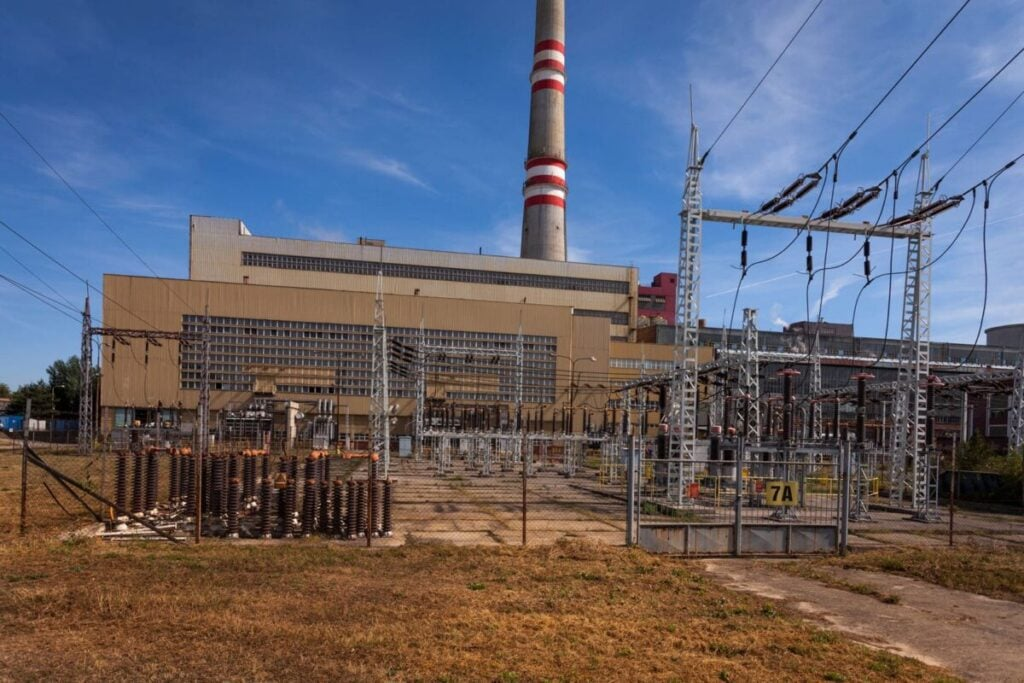
A separate project in Slovakia has already moved into operation, where Slovenské elektrárne has commissioned a 36MW/72MWh battery at the former Nováky brown coal power station in western Slovakia.
The installation comprises two systems rated at 12MW and 24MW. Together they use 22 battery containers with associated conversion equipment, transformers, switchgear, protection, controls, and balance of plant.
Rather than constructing an entirely new grid interface, the project occupies the site of a 110kV substation decommissioned in 2015. Existing transformers remained suitable for reuse, reducing the volume of replacement high voltage equipment and civil work.
The battery will provide frequency containment reserve and can charge during periods of surplus generation before discharging when demand or market value rises. Nearly €3.7 million of capital support was provided for the larger system through Slovakia’s Recovery and Resilience Plan, representing 45% of its eligible costs.
Former power sites provide a route into storage
The Romanian acquisitions and Slovak commissioning represent different stages of the same regional transition. Romania is assembling a large development pipeline, while Slovakia has placed a smaller but fully operational system onto an established power station connection.
Former thermal generation sites can offer valuable electrical infrastructure, including substations, transformers, control buildings, access roads, communications, and established relationships with network operators. Reusing those assets does not remove the need for technical studies, although it can reduce land requirements and avoid duplicating equipment that remains serviceable.
Nováky preserves part of the operational role of a closed power site without reproducing the original plant’s energy output or duration. The battery can provide rapid frequency support while making controlled use of a high voltage connection originally developed for generation.
Retained transformers, busbars, protection systems, earthing, circuit breakers, cables, and auxiliary supplies must still be assessed against the battery’s charging and discharging duty, fault contribution, harmonic profile, and expected cycling pattern.
Romania’s projects are considerably larger and will require substantial new equipment. Each site will need power conversion systems, high voltage transformers, switchgear, protection, communications, fire arrangements, civil infrastructure, and controls capable of coordinating several hundred megawatts of import and export.
The connection studies must account for maximum charging as well as discharge. A battery assessed only as a generator can obscure the effect of a very large load importing at full power during lower price periods.
Elsewhere in Europe, Zenobē has used a 1.75GW German pipeline to enter another national market, following a similar strategy of combining external capital with local development platforms and established grid relationships.
Central and Eastern European storage markets remain at different stages of regulatory and technical development. Revenue opportunities, network tariffs, queue arrangements, balancing products, and permitting processes vary substantially, preventing a standard commercial model from being transferred unchanged between countries.
Romania’s removal of double charging strengthens the economics of grid connected storage, but development risk remains until projects secure permits, connection terms, equipment, financing, and viable routes to market.
Alcemi’s portfolio would move Romania closer to its projected storage requirement, while Nováky provides an operating reference for the conversion of a former coal site. Regional progress will increasingly be measured by the number of announced gigawatt hour projects that advance into financed construction rather than remaining within development queues.

