IN Brief:
- Alcazar Energy Partners has reached financial close on two 250MW wind farms, with combined project costs of $626 million.
- EBRD, EIB, and DEG are providing $436 million in debt financing, with support from an EU guarantee arrangement.
- Siemens Gamesa will supply and maintain turbines, while Orascom Construction will undertake balance-of-plant works, targeting operation by the end of 2028.
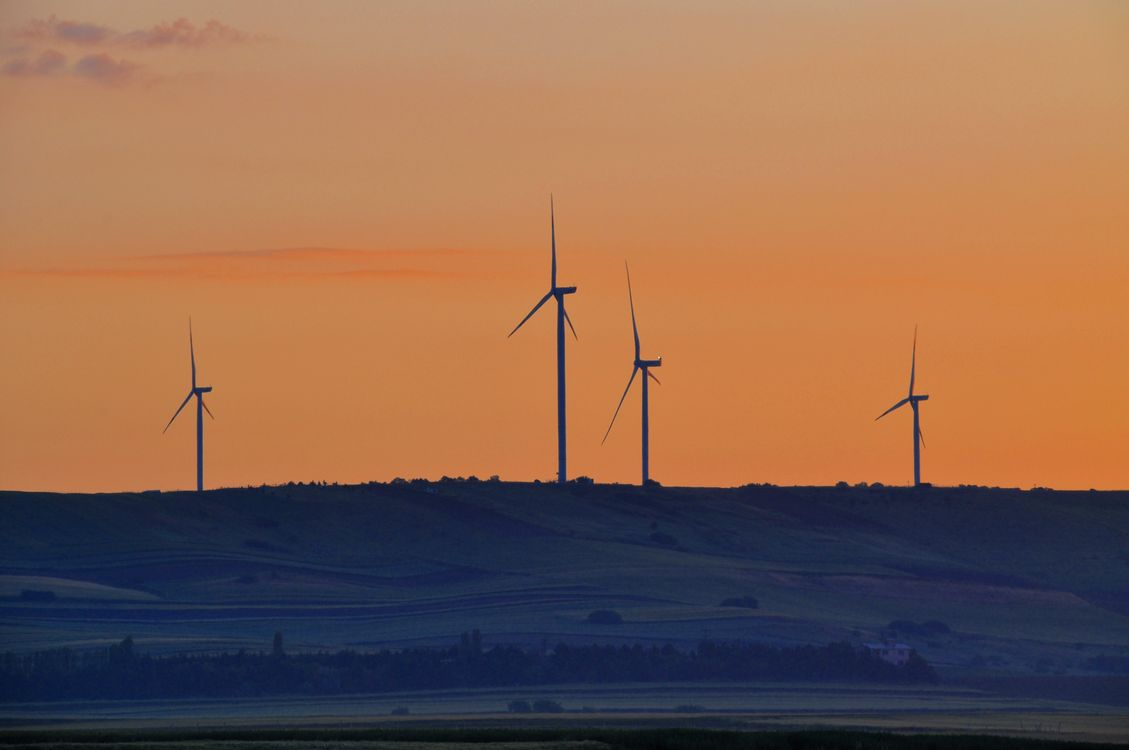
Alcazar Energy Partners has reached financial close on two wind farms in Egypt with a combined capacity of 500MW, securing $436 million in debt for developments costing $626 million. Niat and Rasgha, each rated at 250MW, are planned for the Ras Ghareb area on the Red Sea coast, with commercial operation targeted by the end of 2028.
The financing comes from the European Bank for Reconstruction and Development (EBRD), the European Investment Bank (EIB), and Germany’s DEG, a member of KfW Group. Alcazar says the three institutions are providing equal shares of the debt package. European Union guarantee support is also involved, while the balance between total project cost and announced debt will be financed through the investment structure.
Financial close establishes that the agreed financing arrangements have reached the required contractual stage for the projects to advance into execution. It does not mean the wind farms have been built, that their equipment has been installed, or that lenders have already disbursed the full debt amount. The projects remain subject to construction and commissioning before they can deliver electricity.
Alcazar has issued notice to proceed to Siemens Gamesa Renewable Energy, which will supply the turbines and provide operation and maintenance services. Orascom Construction has been appointed balance-of-plant contractor for supporting construction and infrastructure. The developer’s announcement does not identify the turbine model, machine count, or final site electrical configuration.
The Niat and Rasgha projects each hold a 25-year power purchase agreement with the Egyptian Electricity Transmission Company (EETC). Those agreements provide a contractual basis for selling electricity generated at the two sites, with the projects expected to supply the national network after construction. Specific delivery obligations and the detailed power purchase agreement provisions have not been published in the financial-close statement.
Alcazar acquired the development rights to the projects and progressed their development and financing arrangements. Siemens Gamesa undertook earlier development work before taking the turbine supply and maintenance role, while Orascom will provide the civil and electrical infrastructure included within its balance-of-plant contract.
Each generating project will require turbine foundations, site access, electrical collection equipment, and a connection capable of exporting its output to the transmission system. Balance-of-plant packages ordinarily address these supporting works, although the public announcement does not allocate every component of the final design between the named contractors.
Wind turbines deliver variable electrical output as the available wind changes. Their power is collected through a network of cables, transformers, and control equipment before being transferred to the agreed grid connection. Protection systems must coordinate faults and other electrical disturbances with the connected network, while the completed installation must satisfy operating and commissioning requirements.
The proposed 500MW is a combined nominal generating capacity, not an estimate of continuous power delivery. Electricity production will vary with the wind resource, turbine availability, electrical losses, and any operating limitations. Project financing therefore depends on forecasts of energy delivered over time rather than on nameplate capacity alone.
Alcazar expects the two wind farms to generate more than 2.3TWh of electricity annually once operating, according to information accompanying the financing announcement. The estimate is a development forecast rather than measured output. Its accuracy will depend on the equipment ultimately installed and the actual wind and operating conditions at Ras Ghareb.
The $436 million package represents about 70% of the announced $626 million project cost. The EBRD describes its participation as loans of up to $75 million to Niat for Wind Energy and $70 million to Alcazar Rasgha Energy, both special-purpose companies owned by Alcazar Energy Partners II.
European Union support is provided through the European Fund for Sustainable Development Plus and its HI-BAR guarantee arrangements. The EBRD says the guarantee is intended to reduce financing risk and lower costs for the investments. The structure supports private renewable generation development in a market where long-term payment and financing conditions are important to project bankability.
Ras Ghareb is an established area for wind development on the western side of the Gulf of Suez. The projects will add new generating assets to a system seeking additional renewable electricity supplies alongside conventional generation. Their output will enter an existing national power system in which available transmission capacity and operating requirements determine when and how much electricity can be exported.
The EBRD projects that the two developments will reduce annual greenhouse gas emissions by around 980,000 tonnes of carbon dioxide equivalent. Alcazar has used a forecast closer to 1.1 million tonnes. These estimates reflect different modelling assumptions and projected displacement of other electricity generation, rather than emissions reductions measured from an operating plant.
The financing announcement is separate from Alcazar’s $420 million Gabal El Zeit privatisation transaction, for which agreements were signed in July 2026. Gabal El Zeit concerns an existing 580MW wind complex and is moving towards its own project-finance close. Its transaction value is included when Alcazar describes more than $1 billion of Egyptian electricity investment, but it is not part of the $436 million financing for Niat and Rasgha.
With debt financing closed and notice to proceed issued, the contractors can advance the construction and equipment programmes for the two new wind farms. Turbine deliveries, electrical integration, and commissioning remain to be completed before the projects enter commercial operation, which Alcazar continues to target for the end of 2028.