IN Brief:
- Akkuyu Unit 4's turbine generator foundation received 2,241m³ of concrete during a continuous operation lasting more than 24 hours.
- Preparation involved 308 tonnes of reinforcement, 69 tonnes of embedded components, and vibration isolation assemblies.
- The foundation must develop its design strength and pass inspection before turbine generator installation can begin.
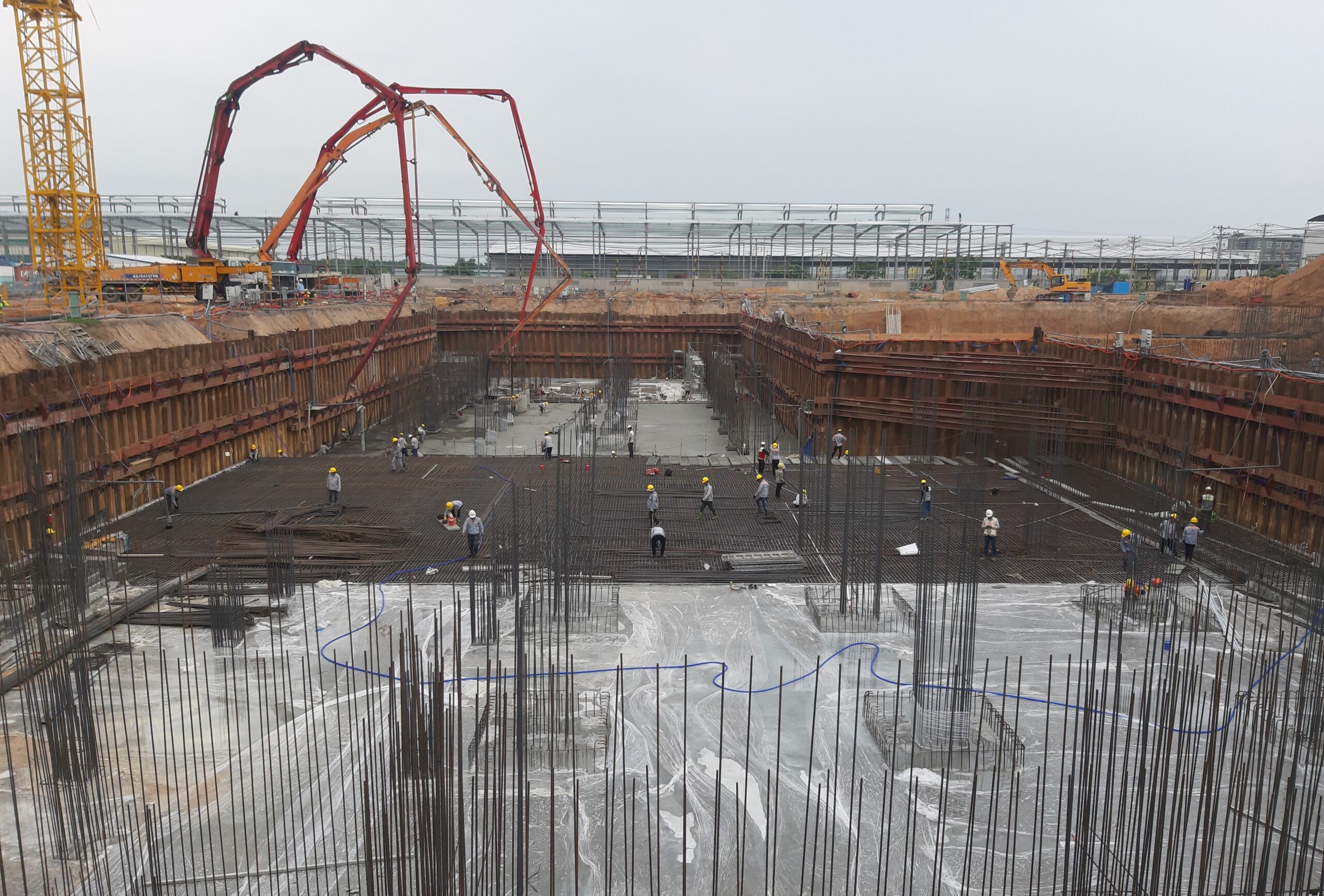
Akkuyu Nuclear has completed the continuous concrete pour for the turbine generator foundation of Unit 4 at Türkiye’s Akkuyu nuclear power station, bringing foundation concreting for turbine equipment to completion across all four planned units. The work involved 2,241m³ of concrete placed over more than 24 hours, using nine pumps supplied by concrete production facilities at the construction site.
Rosatom confirmed the milestone on 6 November 2026, before further industry coverage on 9 November. It concerns the structural foundation beneath the conventional turbine generator, not the reactor’s nuclear island or the installation of the turbine itself. Unit 4 remains under construction, and the completion of the concrete pour does not establish an electricity generation date.
Before concrete placement, construction teams installed 308 tonnes of reinforcing steel and 69 tonnes of embedded components. Anchor assemblies were positioned to secure the future turbine machinery. The concentration of reinforcement, embedded parts, and complex foundation geometry required a coordinated placement operation intended to maintain concrete supply throughout the pour.
Nine concrete pumps operated during the work, drawing material from plants within the Akkuyu construction site. The project team coordinated deliveries and placement between different parts of the foundation rather than treating the structure as a routine floor slab. The uninterrupted operation lasted more than a day, according to the developer.
Supporting the turbine and generator requires the foundation to carry their static weight while resisting forces created during operation. Large rotating machines also impose dynamic loads, with vibration characteristics depending on the machinery and supporting structure. Foundation strength, geometry, and the position of fixings are therefore relevant to both installation accuracy and continued equipment operation.
Akkuyu’s design includes spring assemblies intended to reduce the transmission of vibration from the turbine equipment into the surrounding turbine hall structures. The developer also associates those assemblies with improved resistance to seismic effects. The announcement does not provide the spring specifications, vibration measurements, or design criteria, so their performance cannot yet be assessed from the reported construction milestone.
Steel reinforcement contributes tensile resistance within the concrete, while embedded components provide interfaces for the machinery and its supports. Alignment of the foundation axes and anchor assemblies is particularly important because the rotating equipment must be positioned within specified tolerances. Problems with geometry at this stage could complicate the later installation of the turbine and generator.
A September project update described preparations for the turbine foundation following completion of a separate floor slab in the Unit 4 turbine building. At that stage the proposed pour was estimated at 2,238m³. The completed November operation used 2,241m³, which is the figure reported for the actual work. The separate floor slab must not be confused with the turbine generator foundation.
Following placement, the concrete needs time to develop its design strength. Akkuyu Nuclear expects that process to take approximately 60 days, after which the formwork can be removed and the structure inspected. The period is a construction estimate, not a confirmed date for mechanical equipment installation or a guarantee that all acceptance requirements will be satisfied automatically.
The inspection commission will include representatives of Türkiye’s Nuclear Regulatory Authority (NDK) and an independent supervisory organisation. The review will examine the completed works before turbine generator components are installed. Its successful completion is a prerequisite identified by the developer for moving to the next installation stage.
Within the conventional generating section, the turbine hall is an essential part of a nuclear power station. Heat transferred from the reactor’s systems is used to produce steam that drives a turbine, with the connected generator converting mechanical rotation into electrical output. That electricity is then conditioned and delivered through the plant’s electrical equipment and grid connection arrangements.
Completion of the turbine foundation is consequently an important step for installing the generating machinery, but it is separate from completion of the reactor, its cooling and safety systems, and the electrical equipment required for connection to the transmission network. The remaining construction, testing, and commissioning activities must progress before the unit can generate electricity commercially.
Akkuyu is Türkiye’s first nuclear power station and is being built under a build-own-operate arrangement led by Russia’s Rosatom. The site is planned to contain four Generation III+ VVER units, each rated at 1,200MW, giving a combined planned generating capacity of 4,800MW. The four units are at different construction and commissioning stages.
Foundation concreting is now complete for all four turbine units. That common milestone does not imply that the reactors or their electrical systems are at identical stages. Individual units require separate equipment installation programmes, tests, operating authorisations, and connections to the electricity system.
Concrete quality and the finished position of embedded equipment will remain central to the immediate work on Unit 4. Once the expected strength-development period has passed, the inspection commission will determine whether the foundation meets the requirements for beginning installation of the turbine set. Akkuyu Nuclear has not given a date for completion of that inspection.
Structural verification comes next, not electrical commissioning. Following acceptance, the project team can begin installing the turbine generator components, while other civil, mechanical, and electrical activities continue across the site. No change to Unit 4’s eventual commercial operation date can be inferred from the foundation announcement alone.