IN Brief:
- Applications for the two 1 GW permits close on 10 December.
- Maximum combined subsidy budgets total €9.456 billion, with eligible subsidy-free bids assessed first.
- TenneT will provide a common offshore platform and 2 GW direct current export connection.
The Netherlands has opened competitive tenders for two 1 GW offshore wind development permits within the IJmuiden Ver zone, with both projects to connect to a common 2 GW offshore electricity transmission platform.
The Netherlands Enterprise Agency (RVO) opened applications for Gamma-A and Gamma-B on 26 November. The submission window closes on 10 December, with separate procedures available for developers applying for subsidies and those submitting bids without financial support.
Gamma-A is situated approximately 53 km from the Dutch west coast and covers 129 square kilometres. Gamma-B lies approximately 61 km offshore and covers 95 square kilometres. Both sites have been designated for wind developments of around 1 GW, despite their different geographical areas.
The Dutch government has reserved a maximum subsidy budget of €4.758 billion for Gamma-A and €4.698 billion for Gamma-B. The maximum tender rates are €117/MWh and €116/MWh, respectively. These figures establish the financial limits of the subsidy procedures rather than payments already committed to successful developers.
The opening of the permit process follows European Commission approval of Dutch offshore wind support earlier in November. The latest stage enables developers to compete for the permits under the published commercial and technical conditions.
Eligible subsidy-free offers will be evaluated before subsidy applications. The highest eligible financial bid ranks first under the subsidy-free auction, whereas the subsidised procedure prioritises the lowest eligible request for support. Both types of applicant must also meet the general conditions and prequalification requirements.
RVO increased the maximum subsidy available for the developments earlier this year, principally to account for uncertainty surrounding prospective electricity network charges. The Netherlands Authority for Consumers and Markets is considering a feed-in tariff that could require electricity producers to contribute to grid costs.
Developers must assess the potential effect of those charges over the operating life of their proposed installations. Offshore wind projects require substantial commitments to turbine supply, marine construction, and electrical infrastructure before generation revenues become available, and changes to long-term network expenditure can influence the commercial viability of competing bids.
The tender application requires developers to establish the financial performance of their proposed wind farms across their operating terms. The Dutch offshore wind legislation requires sufficient confidence in the economic viability of an installation before a permit can be granted.
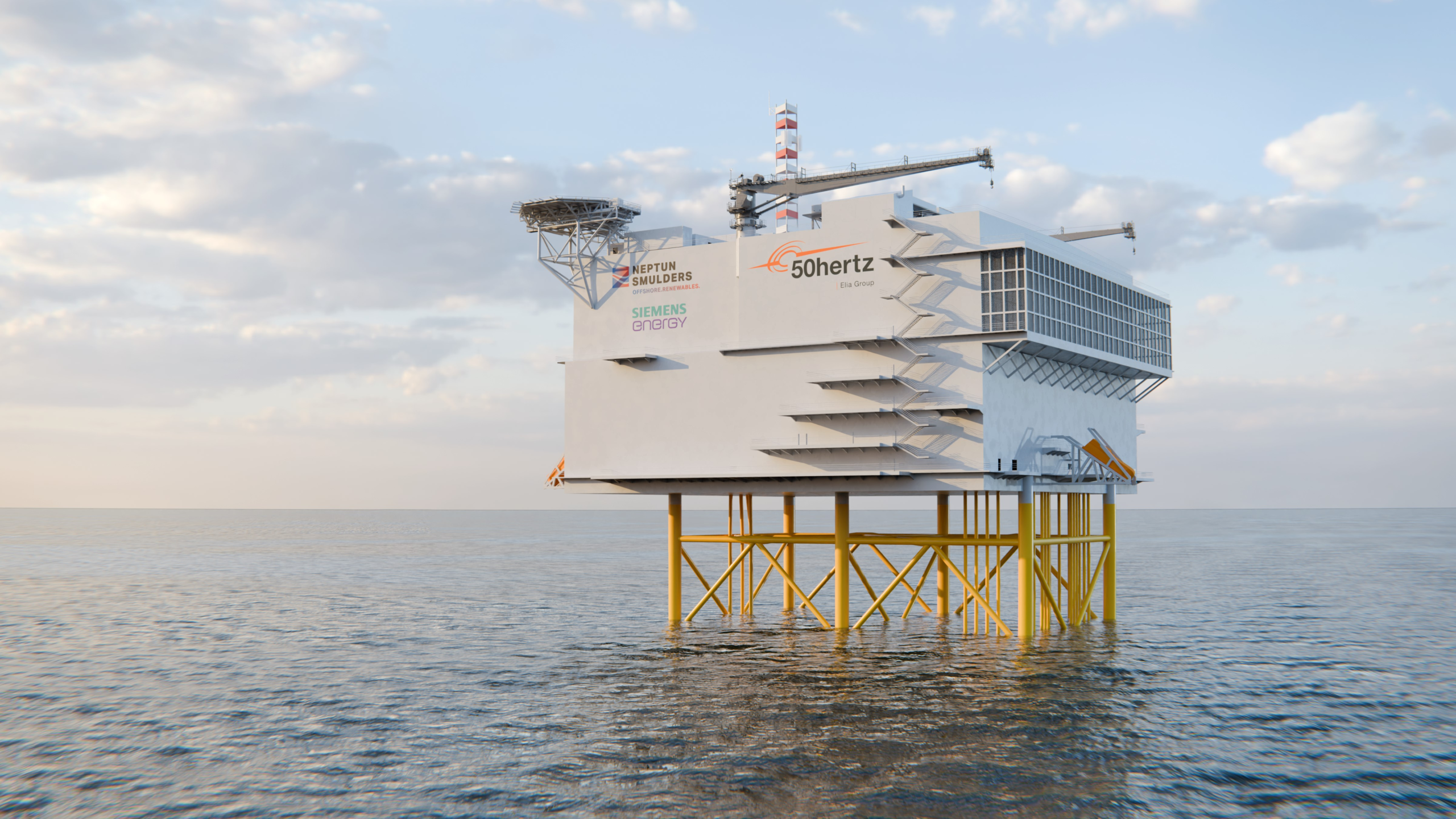
Transmission system operator TenneT is responsible for developing the offshore grid connection. Gamma-A and Gamma-B will feed into a single offshore converter platform, from which a 2 GW direct current export connection will transfer electricity to an onshore substation.
Combining the two developments within a common export arrangement avoids the need for separate platforms and export infrastructure for each 1 GW site. It also requires both generating projects to coordinate their electrical connection specifications and construction programmes with the delivery of the transmission operator’s equipment.
The offshore platform will receive alternating current from the wind farms and convert it into direct current for transmission. Compared with long AC submarine connections, high-voltage direct current circuits avoid the continuous capacitive charging currents that occupy part of an AC cable’s current-carrying capacity. Converter stations are required at both ends of the export link, adding substantial power electronic, cooling, transformer, and protection infrastructure.
Each developer must establish how its generating installation interfaces with the common platform and meets the relevant electrical performance requirements. The available export capacity, coordinated control arrangements, and timing of the transmission system’s commissioning will influence when the wind farms can deliver electricity to the onshore network.
The permit framework also incorporates revised cybersecurity requirements, under which wind farm management must take place within the European Economic Area. This condition affects the prospective location and configuration of the operational management arrangements used to supervise the developments.
Since January 2026, applicants have also been subject to a mandatory security assessment by the Dutch Investment Assessment Agency, which considers the company’s ability to construct and operate the development safely and reliably. Applicants must provide the required financial, technical, and security information before the tender deadline.
The Gamma tenders cover the remaining two of the four sites designated within the approximately 6 GW IJmuiden Ver zone, following earlier permits for Alpha and Beta in 2024. Evaluation of the latest applications will determine which developers secure Gamma-A and Gamma-B and whether either permit is awarded under the subsidy-free procedure.