IN Brief:
- Eight Battr Energy battery containers will provide 5.16 MWh of nominal storage capacity each.
- The installation combines 16 MW of inverter capacity with a 13.524 MW limit on grid imports and exports.
- Alois Müller will undertake turnkey construction, with commissioning targeted for mid-2027.
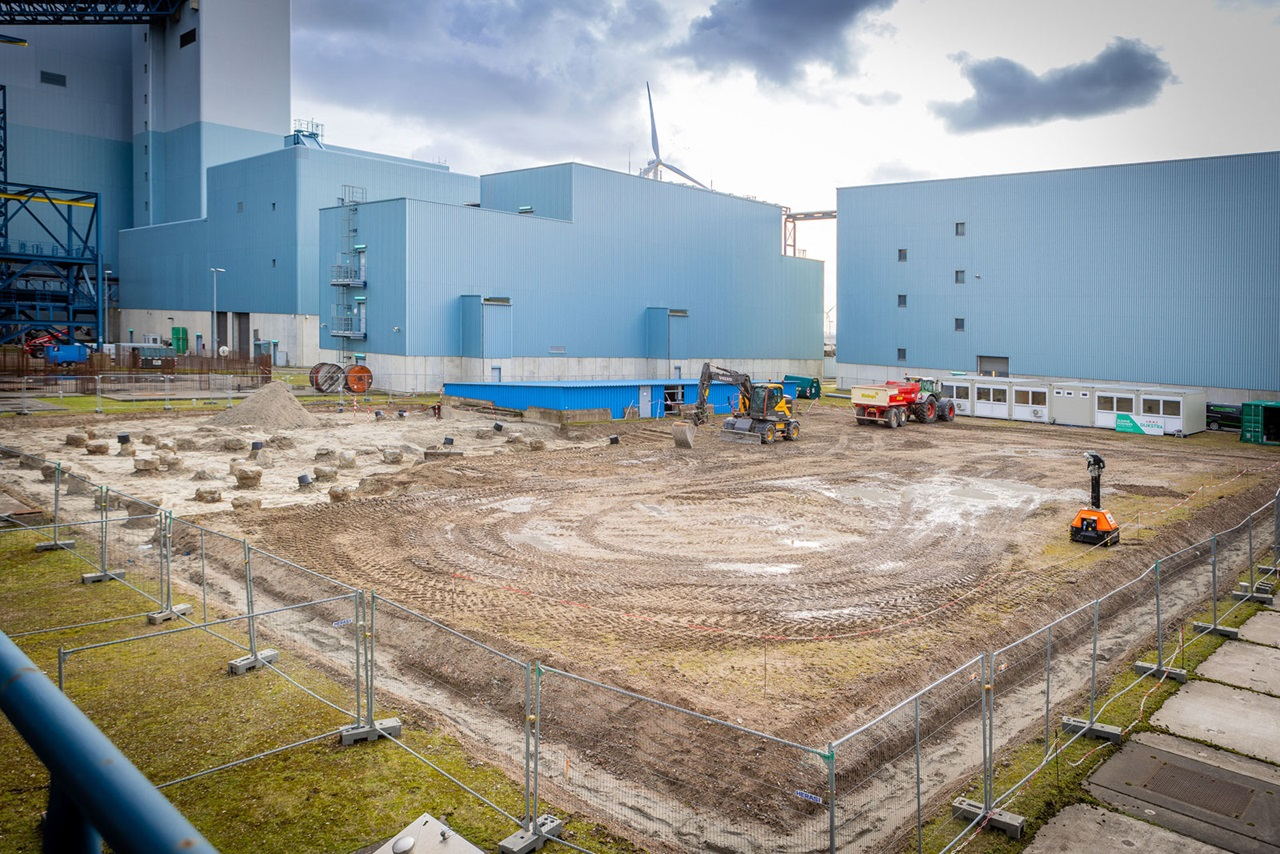
German energy engineering company E-con and storage developer Cell Mind have started construction of a standalone 41.28 MWh battery installation at Eggisried, near Ottobeuren in Bavaria, using a direct connection to the neighbouring electricity substation.
The developers established Batteriepark Eggisried GmbH & Co. KG as the project company following joint development agreements signed in September. Their construction update, published on 24 November, identifies the principal equipment suppliers and sets a target of mid-2027 for commissioning.
The development will occupy approximately 1,500 square metres and incorporate eight Cube Maxi battery containers supplied by Swiss manufacturer Battr Energy. Each container has a nominal capacity of 5.16 MWh and uses lithium iron phosphate cells. German contractor Alois Müller will be responsible for turnkey delivery.
Two 40-foot inverter containers, rated at 8 MW apiece, will provide a combined 16 MW of power conversion capacity. The connection to the public network permits imports and exports of up to 13.524 MW, so the installation’s maximum exchange with the grid will be lower than the aggregate rating of its converters.
Dividing the 41.28 MWh nominal energy rating by the connection capacity gives a theoretical discharge duration of approximately three hours and three minutes. In practice, the amount of electricity supplied at the grid connection will depend on usable battery capacity, conversion efficiency, auxiliary consumption, and operating limits. Those parameters have not been published for Eggisried.
The configuration illustrates the difference between equipment ratings and connection capacity. Power converters determine how quickly the battery system can exchange electricity with the AC network, while the connection agreement establishes the permissible active power flow at the interface with the public grid. The plant controller must coordinate individual converters so that combined imports and exports remain within that limit.
A power converter may also need to exchange reactive power with the grid to support local voltage conditions. The relationship between active and reactive power is constrained by the converter’s apparent power rating, which can affect the maximum active power available under certain conditions. The developers have not identified the reason for installing 16 MW of converter capacity behind the lower connection limit, so no specific reactive power or redundancy capability has been attributed to the project.
The battery’s location beside the substation provides a short physical connection route. Connection feasibility nevertheless depends on the surrounding network’s capacity to accommodate both directions of power flow. A standalone battery can increase demand while charging and increase generation while discharging, unlike a conventional generating facility that principally exports electricity during operation.
Whether a battery can reduce local electricity network loading depends on its operation. Charging during surplus renewable generation may reduce the electricity requiring transfer through an upstream network circuit. Charging at a time of high local consumption may instead add to the load on that same circuit. Operators therefore need to consider the restrictions at the connection point as well as opportunities arising from wholesale electricity prices.
The storage duration influences the services and trading strategies available to an installation. Its power rating sets the rate at which electricity can be exchanged, while its energy capacity determines how long that exchange can continue. A three-hour nominal configuration can shift energy between several trading periods, but cannot sustain full rated export indefinitely when generation elsewhere is unavailable.
Operating strategy also affects long-term equipment performance. Lithium iron phosphate technology is widely used in stationary storage, where energy density is generally less restrictive than in vehicle applications. Battery temperature, depth of discharge, and time spent at different states of charge still influence degradation and the capacity available over the operating life of the installation.
Using eight containerised units enables the project to assemble its storage capacity from standardised equipment packages. Final commissioning will require coordination between battery management systems, inverters, electrical protection, and the plant controller. The developers have not disclosed the specific electrical protection topology or the detailed fire detection and thermal management equipment selected.
Germany’s storage sector is progressing a range of standalone and renewable-linked developments, including the separate 125 MWh battery under construction by Voltwise. Eggisried is smaller but its identified grid connection and turnkey delivery arrangements place it beyond the initial development stage, with both the contractor and the principal battery supplier appointed.
Alois Müller will now progress the civil and electrical works required to establish the eight-container installation and its connection to the adjacent substation. Once the completed equipment has been integrated and tested, the developers intend to bring the battery into service around the middle of 2027.