IN Brief:
- The UFC500 charging station allocates up to 500 kW dynamically between connected vehicles.
- Each C Series storage cabinet provides 125 kW of power and 261 kWh of nominal energy capacity.
- Up to five cabinets can operate in parallel, giving a combined nominal rating of 625 kW and 1.305 MWh.
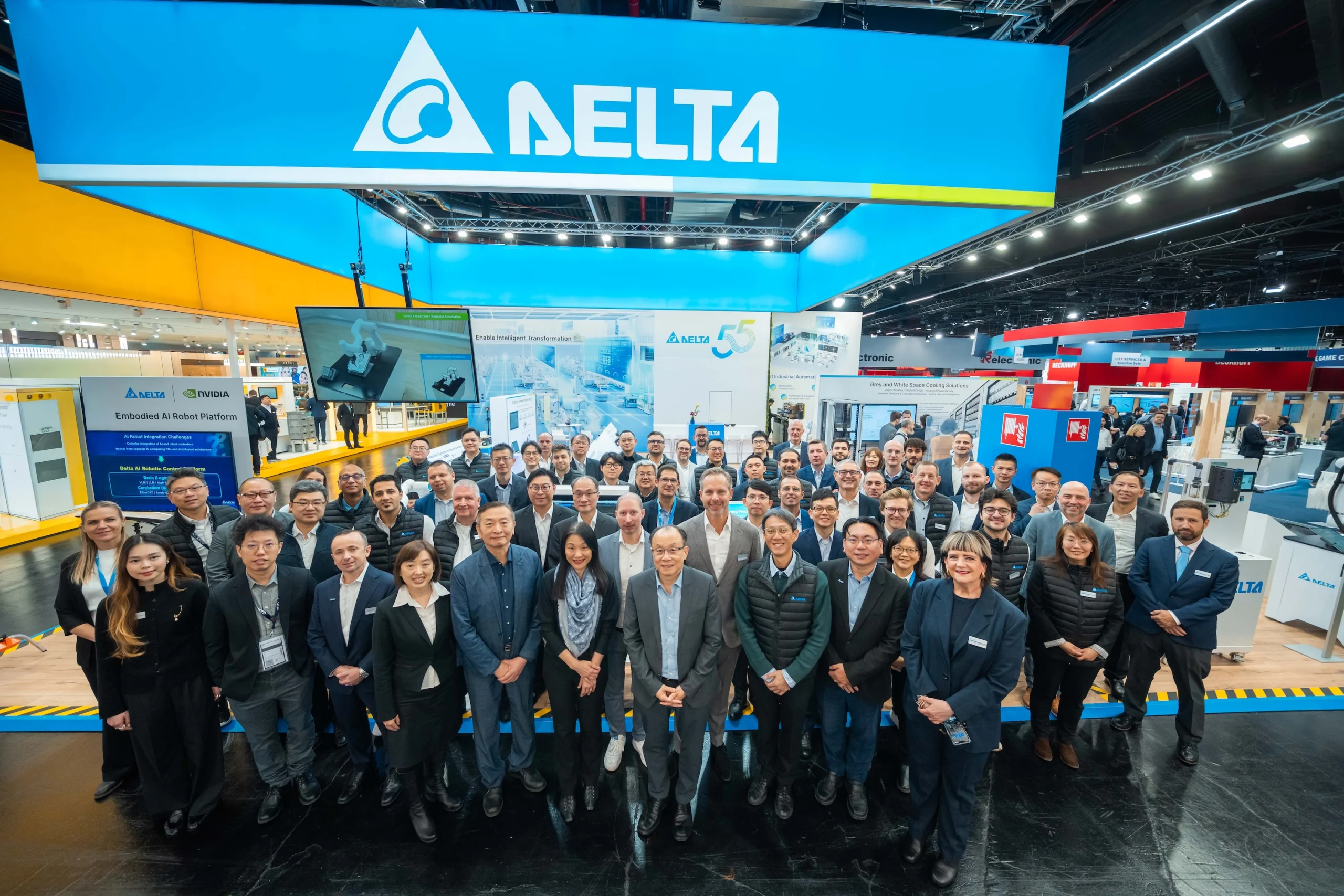
Delta Electronics is demonstrating integrated electric vehicle charging and commercial battery storage at GENERA 2026 in Madrid, where its equipment portfolio includes a 500 kW charging station and modular storage cabinets intended to help operators manage electricity demand at fleet depots and public charging sites.
The exhibition runs from 24 to 26 November. Delta’s UFC500 system allocates its available output between connected vehicles according to their charging requirements, while the C Series storage equipment can supply additional power during periods when charging demand exceeds the electricity available from the grid connection. The company’s DC Wallbox 50 kW and SLIM 100 charging systems, which can each accommodate up to three vehicles simultaneously, address sites with less demanding charging requirements.
“As charging demand continues to grow, operators are looking for ways to scale infrastructure while improving energy performance, grid utilisation and total cost of ownership,” said Gavin Hsu, Head of EV Charging Solutions EMEA at Delta Electronics. “Our Charging-Centric approach brings together high-power charging, energy storage and intelligent operation to help customers improve system availability, optimise energy use and support scalable charging deployment.”
The UFC500’s maximum rating describes the total power available from the equipment, rather than a guarantee that each connected vehicle will receive 500 kW. A vehicle’s battery management system determines the charging current it can accept at its prevailing state of charge and temperature. As that requirement falls towards the end of a session, the charger can redistribute available power to other vehicles, subject to connector and equipment limits.
At a bus or heavy goods vehicle depot, the same charging equipment may need to support several vehicles returning at similar times. The number of vehicles requiring simultaneous charging depends on route lengths, battery capacity, and turnaround times. Charging equipment must consequently be sized alongside the electricity connection, rather than on the basis of the maximum rating of an individual charger alone.
Delta’s C Series cabinet combines battery packs, a power conversion system, liquid cooling, and local controls. Each cabinet has a nominal energy capacity of 261 kWh and a power rating of 125 kW, with provision for five units to operate in parallel. That gives an aggregate nominal capacity of 1.305 MWh and an installed power rating of 625 kW before any limitations imposed by the site connection or electrical distribution equipment.
At maximum rated output, the nominal energy capacity of a single cabinet corresponds to approximately two hours of discharge. Actual duration is affected by the usable state of charge range, conversion losses, auxiliary loads, and battery operating conditions. A cabinet discharging at 125 kW could supplement a site’s incoming electricity supply during a charging peak, but would require sufficient time and spare import capacity to replenish its energy afterwards.
The duration and frequency of those peaks determine whether storage can defer an electricity connection upgrade. If several vehicles must charge throughout the night and the aggregate energy requirement exceeds what the grid connection can deliver over that period, installing batteries alone will not address the shortage. A battery can shift energy between operating periods; it cannot increase the quantity available from the connection over successive cycles without an additional energy source.
The maximum combined cabinet rating is also greater than the rated output of a single UFC500, although that comparison excludes other depot loads and losses. Delta’s storage equipment is designed to work with multiple energy management systems, allowing charging and battery operation to be coordinated with existing site loads. Where photovoltaic generation is installed, the controls can also account for its contribution, directing surplus generation towards storage or vehicle charging when operating conditions permit.
The cabinets incorporate a design intended to accommodate forklift handling, reducing some of the mechanical installation requirements associated with separate battery and converter assemblies. Electrical contractors must nevertheless establish appropriate feeder ratings, isolation provisions, protection coordination, and clearances for the completed installation. Liquid cooling also introduces requirements for monitoring and maintaining the cooling circuit over the system’s operating life.
Delta is presenting the UFC500 alongside its PowerHub equipment for public and fleet charging applications. Its combination of dynamic charging allocation and modular storage offers several ways to configure a site around its available supply. The required number of cabinets and chargers will depend on measured demand profiles, vehicle schedules, connection capacity, and the economics of additional electricity network reinforcement.