IN Brief:
- IJmuiden Ver Beta forms part of three NKT cable contracts supporting a combined 6 GW of offshore transmission capacity.
- The aluminium wire rod has a verified carbon footprint of 3.7 kg of carbon dioxide equivalent per kilogram.
- NKT’s contractual responsibilities encompass cable design, manufacture, installation, and commissioning.
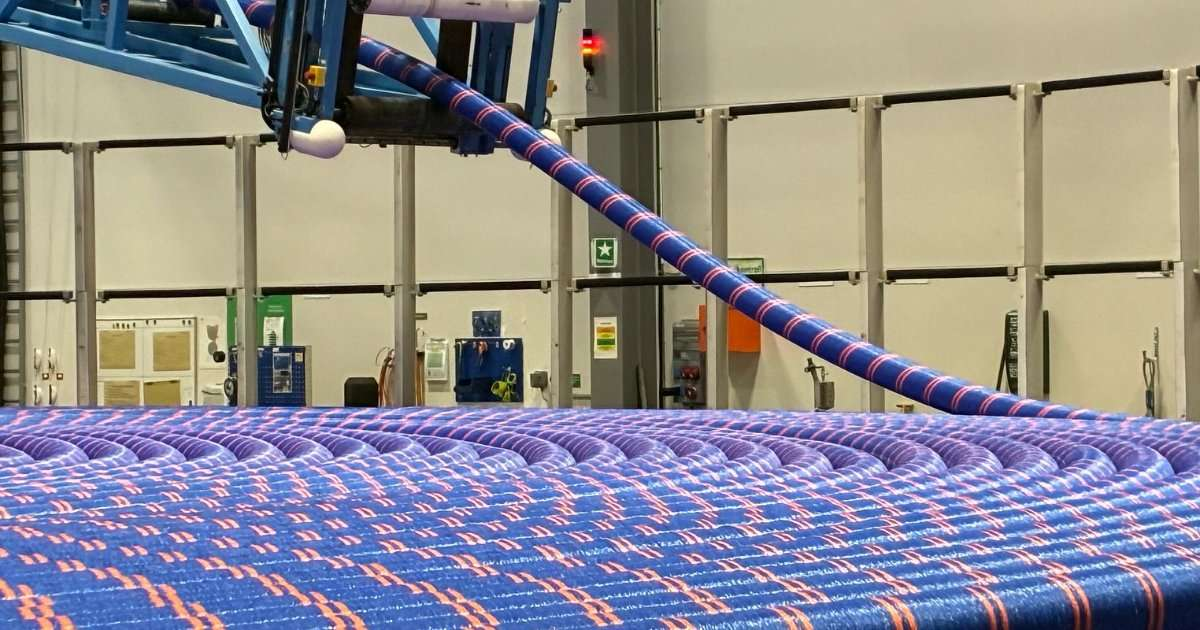
NKT has started manufacturing the high-voltage direct current (HVDC) cable system for TenneT’s IJmuiden Ver Beta offshore grid connection in the Netherlands. The manufacturer is using lower-carbon aluminium supplied by Hydro for the 525 kV system, which will transport electricity from offshore wind generation in the Dutch North Sea to the mainland.
The project forms part of three turnkey contracts awarded to NKT by TenneT in 2023, covering IJmuiden Ver Beta, IJmuiden Ver Gamma, and Nederwiek 2. Together, the contracts encompass approximately 1,700 km of onshore and submarine power cables serving connections with a combined capacity of 6 GW. NKT is responsible for the design, manufacture, installation, and commissioning of the cable systems.
The aluminium conductor material is being supplied under the long-term agreement between NKT and Hydro announced in 2024. Hydro REDUXA wire rod used for the project has a verified carbon footprint of 3.7 kg of carbon dioxide equivalent per kilogram, approximately 40% below the European average for aluminium wire rod, according to the companies. The figure relates to the conductor material rather than the completed cable or the transmission connection as a whole.
Aluminium is a significant constituent of high-capacity power cables. Its electrical conductivity, density, and mechanical properties influence the size and mass of the conductor, which must accommodate the design current without exceeding the permissible temperature of the insulation. Increasing conductor cross-section reduces electrical resistance but also increases material requirements and affects the dimensions and handling characteristics of the finished cable.
The choice of conductor cannot be assessed independently of the intended installation environment. Heat generated by electrical resistance must pass through the insulation, protective layers, and surrounding soil or seabed. Variations in burial conditions can affect the temperature reached by the conductor at a given current, making thermal assessment an integral part of cable route engineering and rating calculations.
TenneT’s 2 GW offshore connection design uses direct current to address the limitations of alternating current transmission over long submarine routes. The capacitance of an AC cable produces a charging current that increases with cable length and occupies part of its current-carrying capacity. HVDC avoids sustained capacitive charging current, leaving more of the conductor’s capacity available for transferring active power. The trade-off is the need for substantial converter infrastructure at either end of the connection.
At the offshore platform, electricity collected from the wind turbines is converted into direct current for transmission to shore. Onshore converters return it to alternating current at the voltage and frequency required by the transmission network. The cable system and its terminations must be compatible with the operating voltages and transient electrical conditions produced by the converters, including during switching and fault events.
NKT is using cross-linked polyethylene (XLPE) insulation in the 525 kV cable system. Extruded HVDC insulation must withstand sustained electrical stress over its operating life, while changes in temperature and the distribution of electrical charge within the insulation can influence the electric field. Manufacturing processes must control contamination, dimensional variation, and defects at interfaces between the insulating and semiconductive materials. Cable joints and terminations require equivalent attention because discontinuities in the insulation system can create local concentrations of electrical stress.
The Dutch contracts sit alongside other European programmes requiring cables of comparable voltage. Earlier this month, NKT delivered jointless 525 kV cable sections for Germany’s SuedLink connection, where long individual lengths reduced the need for joints at a river crossing. The applications differ, but both require specialist extrusion, testing, transport, and installation capacity.
TenneT has also been progressing onshore cable works at Rotterdam’s Maasvlakte industrial area, where three offshore connections are intended to bring 6 GW into the Dutch network. Coordinating the manufacture and installation of each cable system with converter construction and terrestrial grid reinforcement is essential to avoid leaving completed equipment awaiting other infrastructure.
The 2024 aluminium agreement gives NKT a procurement route for a material needed across successive cable orders. Lower emissions from conductor production can reduce the embodied carbon of these projects, although a complete assessment would also need to account for insulation, metallic sheathing, manufacturing energy, installation, and electrical losses during service.
With manufacturing underway for IJmuiden Ver Beta, the cable programme moves into a delivery phase that includes factory testing and subsequent installation. The 2 GW transmission connection will become available once the cable system, converter equipment, and associated network infrastructure have completed their respective commissioning requirements.