IN Brief:
- Drax disclosed three solar investment decisions as part of its November trading update and capital markets programme.
- Existing investment commitments underpin plans to increase capacity under management from 6.2 GW to 7.6 GW by 2029.
- An agreed acquisition of Bluefield Services will expand the group's renewable asset management, construction, and maintenance capabilities.
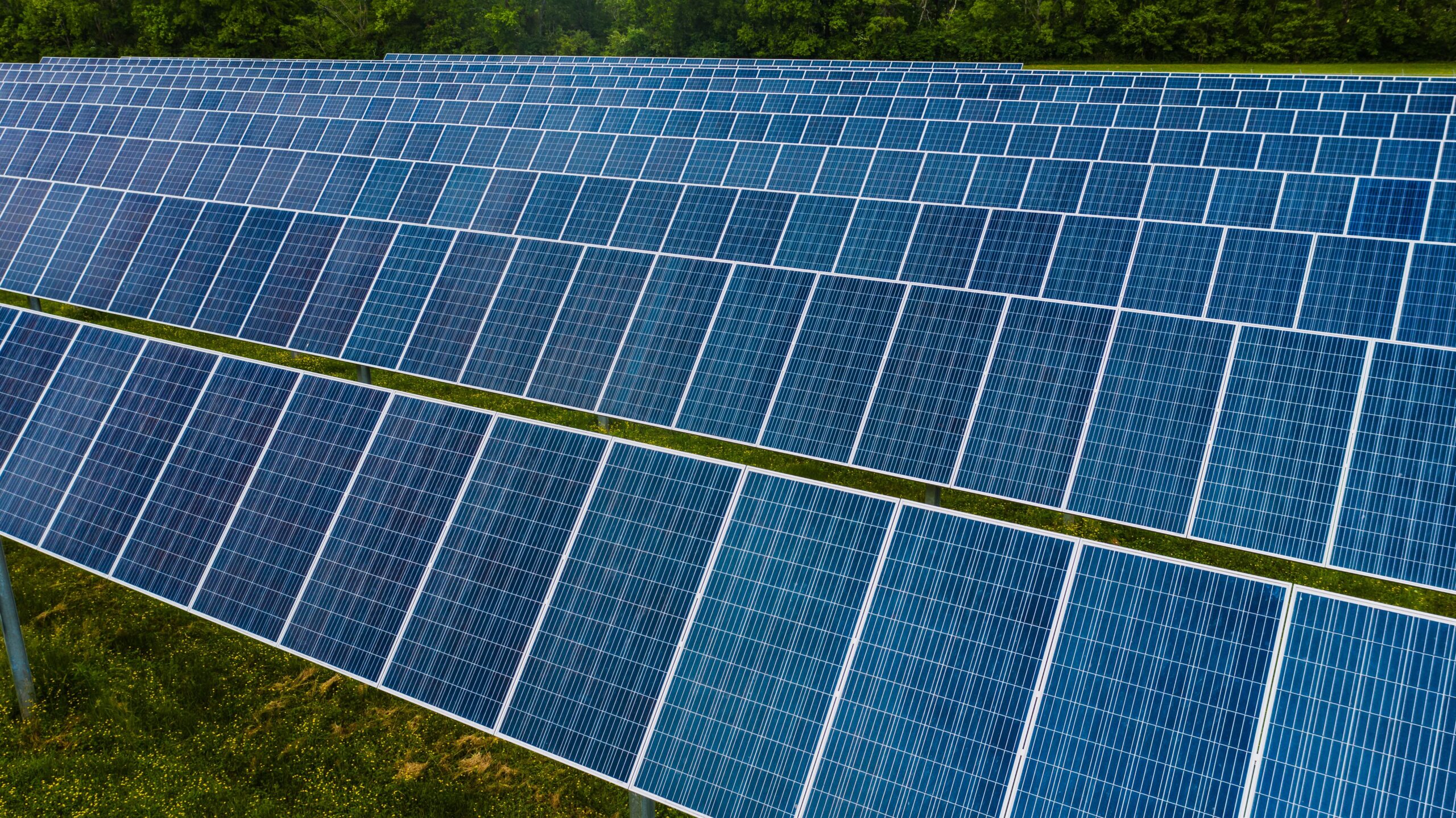
Drax has confirmed investment commitments totalling approximately £120 million across three solar developments in northern England, extending its generating portfolio as the group increases investment in renewable electricity and flexible power infrastructure.
The investment decisions, taken in October, were disclosed in the company’s trading update and capital markets programme on 23 November. The projects represent approximately 130 MW of generating capacity and are expected to enter commercial operation during 2028.
Each development is supported by a 15-year Contract for Difference (CfD), establishing a long-term revenue framework for electricity generated by the installations.
The combined investment equates to approximately £923,000 per megawatt of stated generating capacity. Drax has not disclosed the individual project locations or how expenditure will be distributed between generating equipment, construction, electrical connections, and other development costs.
The commitments form part of a wider restructuring of the group’s electricity generation activities, following its acquisition of Bluefield Solar Income Fund in July and its expansion into electricity flexibility and optimisation services through Flexitricity.
Between 2025 and 2026, Drax increased the capacity under its management from 4 GW to 6.2 GW, expanding from four generation assets to more than 200 installations across the UK. The company expects existing investment commitments across solar, battery storage, and gas turbine developments to increase that figure to 7.6 GW by 2029.
Managing a geographically distributed generating portfolio introduces different operational requirements from those associated with a small number of large thermal power stations.
Photovoltaic installations contain numerous generating arrays, inverters, transformers, and collection circuits distributed across individual sites. Equipment faults can reduce electricity output without interrupting generation across the entire installation, making performance monitoring an important part of operational management.
Identifying the cause of reduced output requires generation data to be assessed alongside environmental conditions and equipment operating information. Variations in irradiance, module temperature, and equipment availability can all affect the electricity delivered through an installation’s network connection.
Drax has separately agreed to acquire Bluefield Services, whose activities include asset management, operations and maintenance, construction management, and project development services for Bluefield Solar Income Fund and its subsidiaries.
Bringing those capabilities into the group would extend its ability to manage the delivery and subsequent operation of photovoltaic and other renewable generating assets, alongside the electricity trading functions already established within the business.
Maintenance programmes across multiple solar installations can benefit from common equipment records, diagnostic procedures, and replacement component inventories. Their implementation must nevertheless account for differences in equipment design, age, electrical connection arrangements, and site operating conditions.
The CfD contracts underpinning Drax’s latest developments provide a separate means of managing the commercial risks associated with renewable electricity generation.
Under Britain’s CfD mechanism, payments are determined by the difference between a contracted strike price and an applicable electricity market reference price. Where the reference price is lower, qualifying generators can receive payments covering that difference. When it exceeds the strike price, generators may be required to repay the difference.
The mechanism improves revenue predictability but leaves developers exposed to the engineering and delivery risks associated with bringing generating equipment into operation. Delayed construction, restrictions on electricity export, and equipment underperformance can all affect the electricity available to generate income.
The three projects also form part of Drax’s broader objective of combining variable renewable generation with dispatchable assets and electricity storage.
Its flexible generation portfolio includes conventional hydroelectric installations, the Cruachan pumped storage power station, and open-cycle gas turbines. Battery developments will provide additional flexibility as they enter operation under the group’s existing investment programme.
The operating characteristics of those technologies differ considerably. Solar generation is concentrated during daylight hours, while stored electricity can be dispatched during subsequent periods of demand. Hydroelectric and gas-fired installations can provide alternative forms of controllable generation, subject to available water, fuel, equipment, and operating restrictions.
Drax expects this increasingly diversified portfolio to change the composition of its earnings. Biomass accounted for more than 80% of adjusted earnings before interest, taxation, depreciation, and amortisation in 2025, but the company expects solar, wind, and flexible generation to collectively provide the majority by 2029.
The group has identified more than £1 billion of potential additional investment capacity for growth in renewable and flexible generation through to 2031, beyond expenditure associated with the Bluefield acquisition and existing battery developments.
Those prospective investments remain distinct from the three solar projects for which final investment decisions have already been taken. The northern England developments must now progress through equipment procurement, construction, and electrical commissioning ahead of their expected entry into service in 2028.