IN Brief:
- Hy2gen Nordic signed the European Hydrogen Bank grant agreement for Albatros on 16 November.
- The planned 100 MW electrolyser is eligible for a €0.97/kg production premium, up to €139.8 million over ten years.
- Grid access, hydrogen transport, permitting, and a final investment decision targeted for 2028 remain outstanding development steps.
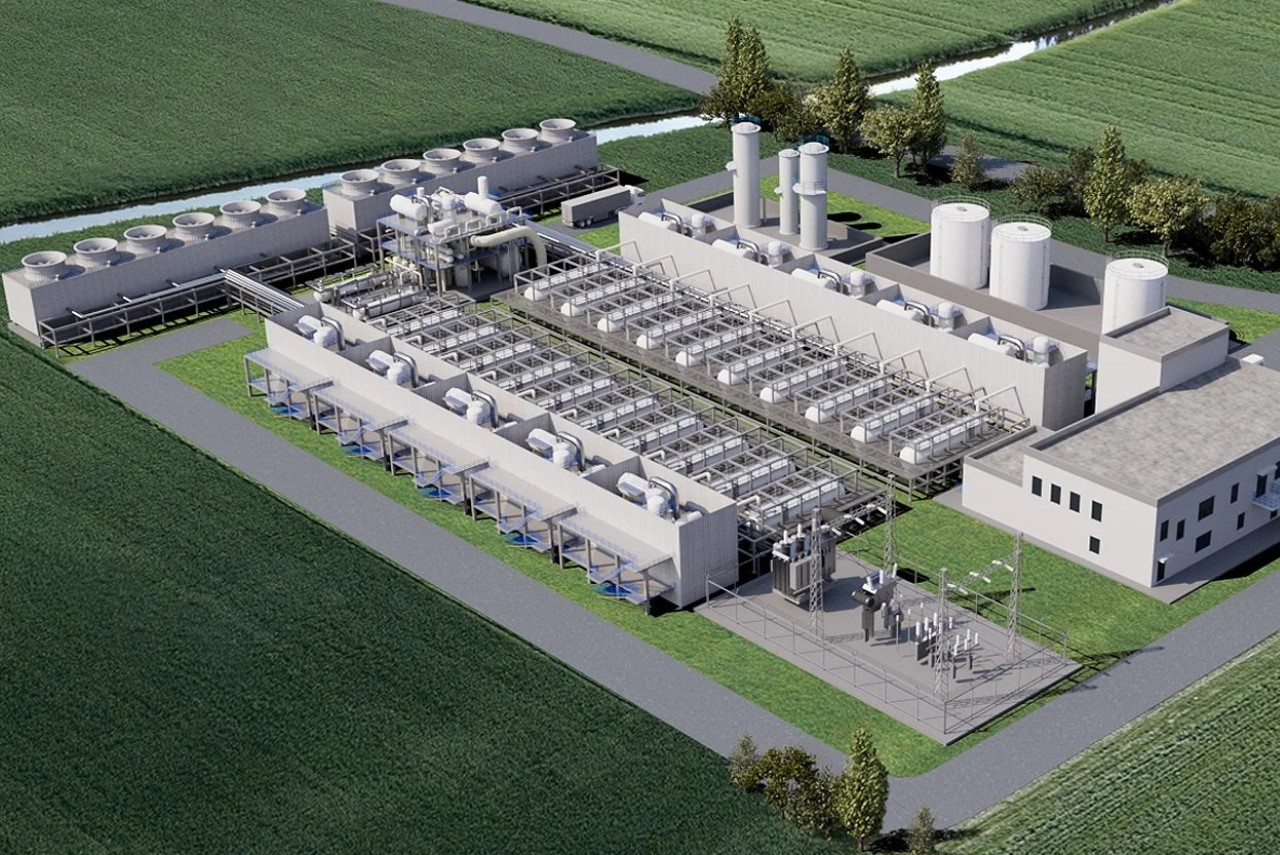
Hy2gen has signed a European Hydrogen Bank grant agreement for its planned 100 MW Albatros hydrogen facility in Kassø, Denmark, securing eligibility for support of up to €139.8 million. The contract, signed on 16 November, follows the project’s selection in the European auction earlier this year. Funding is tied to certified production, while the developer is still progressing the investment, electrical connection, and hydrogen transport arrangements needed to deliver the plant.
Hy2gen Nordic AS is developing the facility at Kassø National Industrial Park in Aabenraa Municipality. Albatros is designed to produce approximately 14,400 tonnes of renewable hydrogen annually, principally for industrial customers in Germany and other European markets. Its proposed output will require a coordinated supply of electricity and water, electrolysis and treatment equipment, and a transport route capable of moving hydrogen from southern Denmark to consumers.
The European Hydrogen Bank agreement provides a fixed premium of €0.97 for each kilogram of qualifying renewable hydrogen, over a period of up to ten years. At the project’s announced maximum, those payments could total €139.8 million. The money is linked to eligible production rather than being a lump sum paid at signing, and the stated ceiling is not a construction budget. Hy2gen must therefore assemble the remaining commercial and financial arrangements before authorising the investment.
Albatros was selected in the European Hydrogen Bank competition in June 2026, when the premium rate and potential support amount were already known. The new development is the executed grant agreement, which translates that selection into contractual support. It provides more certainty for discussions with lenders and customers, but the project still faces engineering design, permitting, supply-chain, and transport decisions before construction.
The proposed 100 MW electrolyser would be a substantial industrial electrical load. Electrolysis splits water into hydrogen and oxygen using electrical power, with actual production governed by the efficiency of the selected equipment, operating hours, and auxiliary systems such as water treatment and cooling. The 14,400-tonne annual figure is the developer’s production forecast, not measured output. Electricity procurement and the ability to operate under the relevant renewable hydrogen rules will affect how much qualifying product can be made.
The planned output falls within the European category of renewable fuels of non-biological origin (RFNBOs). Certification depends on how renewable electricity is sourced and accounted for, alongside other regulatory requirements. Plant control and power procurement therefore have a commercial role as well as an engineering one: an electrolyser can be physically available yet produce hydrogen that does not qualify for the production premium if the applicable conditions are not met.
Electricity network integration is still being developed. Hy2gen reports progress on grid connection arrangements and points to network expansion around Kassø. Engineers will have to align the incoming supply capacity with the electrolyser design, protection, switching, metering, and control arrangements. The announced 100 MW equipment rating does not demonstrate that an equivalent import connection has already been energised, and the final plant operating pattern remains subject to electricity supply and commercial agreements. Because grid connection arrangements can constrain the load available to a new electrolyser, the timing of nearby reinforcement works could also affect its commissioning sequence. The company has not assigned a confirmed import connection date in the November update.
The hydrogen export route is being advanced separately. Hy2gen plans to connect Albatros to the Danish Hydrogen Backbone and onward Danish-German pipeline infrastructure, providing access to industrial demand beyond Denmark. Progress in securing transport capacity is recorded in the company’s November update. Pipeline availability, hydrogen quality requirements, compression, and delivery commitments must be coordinated with the production facility before industrial deliveries can start.
Hy2gen expects to take a final investment decision in 2028 and begin operations towards the end of 2031. The developer’s programme continues through permitting, technical design, infrastructure coordination, and customer agreements. It also estimates that operation could avoid approximately 986,000 tonnes of carbon dioxide equivalent over ten years, a forecast dependent on the hydrogen produced and the fuels or processes it displaces. The schedule creates several dependencies between contractors and infrastructure owners: testing an electrolyser requires an available electrical supply, while sustained production for customers requires suitable hydrogen delivery arrangements. Those interfaces will have to be aligned before the plant moves from construction into operation.
Signing the grant agreement establishes a production-linked revenue support route for Albatros at a time when its electrical and hydrogen infrastructure remain under development. The project’s next significant tests will be confirmation of its grid and pipeline connections, the 2028 investment decision, equipment procurement, and the construction programme needed to reach the company’s late-2031 operating target.