IN Brief:
- Four orders cover 23 turbines in Germany, Poland, and Italy, totalling approximately 115MW.
- The contracts specify V162, V150, and V136 variants, including different power ratings within the Italian project.
- Equipment deliveries begin in 2027, with commissioning programmes extending into the third quarter of 2028.
Vestas has secured four European onshore wind turbine orders totalling approximately 115MW, comprising 23 machines for projects in Germany, Poland, and Italy. The contracts, announced on 9 November 2026, cover three turbine platforms with different electrical ratings and delivery programmes extending into 2028. All four include maintenance arrangements, although their disclosed durations differ.
Two orders are located in Germany, accounting for approximately 47MW of the reported total. The larger comprises four V162-6.0MW turbines and one V150-6.0MW machine, providing 30MW. The second specifies four V150-4.2MW units, equivalent to 16.8MW of nominal capacity, which Vestas reports as 17MW after rounding.
Both German projects are scheduled to receive their first turbine deliveries during the second quarter of 2027, with commissioning expected to begin in the first quarter of 2028. Each agreement includes a long-term service contract, but Vestas has not published its duration or the precise maintenance obligations. The customers and project locations remain undisclosed.
In Poland, the manufacturer will supply five V136-4.0MW turbines, giving a combined nominal rating of 20MW. The contract includes a 20-year AOM 5000 service agreement. Equipment deliveries are expected to start during the first quarter of 2028, with commissioning scheduled to begin in the third quarter.
The Italian order covers approximately 48MW across nine turbines. It specifies four V162-6.4MW machines and five V136-4.5MW units, producing a combined nominal capacity of 48.1MW before rounding. Deliveries are planned for the third quarter of 2027, with commissioning expected to begin during the fourth quarter. The agreement also provides for 20 years of AOM 5000 servicing.
Together, the equipment specifications give an aggregate nominal rating of 114.9MW, consistent with the manufacturer’s rounded announcement of 115MW. The difference results from the German and Italian order totals being presented as whole megawatts, rather than from an additional turbine or an unreported project.
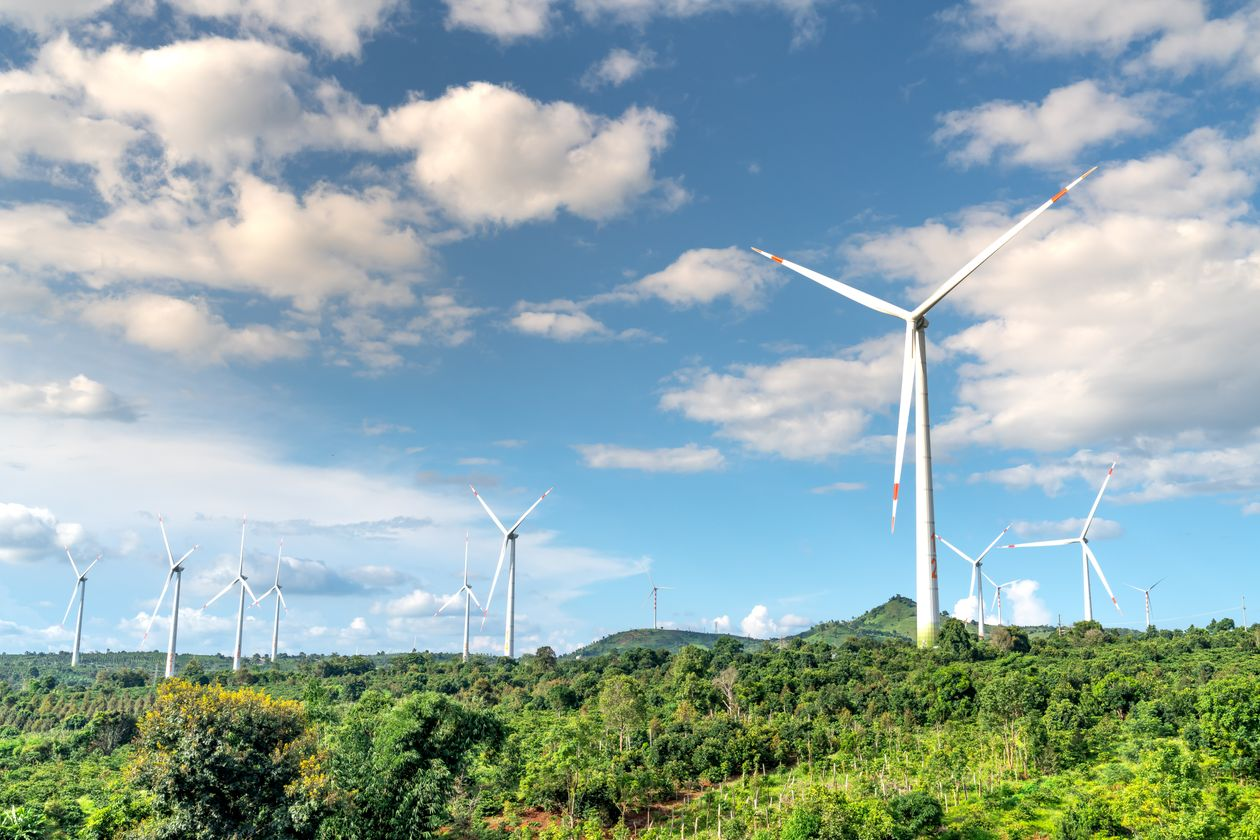
The three turbine platforms have different rotor diameters. The V162 uses a rotor measuring approximately 162 metres, compared with 150 metres for the V150 and 136 metres for the V136. Rotor dimensions affect the area through which wind passes, while the selected generator rating influences the relationship between available mechanical energy and the electrical output delivered by the turbine.
A larger rotor can capture more wind energy under suitable operating conditions, but nominal turbine capacity does not determine annual production on its own. Generation depends on the site’s wind resource, the turbine power curve, equipment availability, environmental restrictions, and electrical losses. Vestas has not disclosed expected annual production figures for these four projects.
The Italian order combines two turbine models with different rotor diameters and rated outputs. Such arrangements require the developer to account for the operating characteristics of each machine when finalising array layout, electrical collection infrastructure, and energy production forecasts. The manufacturer has not explained the particular site conditions or permitting requirements behind the mixed configuration.
Different turbine ratings also influence the electrical systems used to collect and export the generated power. Individual machines connect through their electrical equipment and transformers to the wind farm’s collection network, which must accommodate the aggregate output and meet the requirements imposed at the grid connection point.
Protection systems, switching equipment, communications, and control arrangements must operate together during normal generation and electrical disturbances. The voltage levels, export limits, and connection arrangements for the four projects have not been published, so the equipment orders do not establish that those systems have already been completed.
Commissioning will follow mechanical installation and electrical integration. Tests must confirm the operation of turbine controls, protection equipment, and interfaces with the network before the installations can enter routine commercial service. The delivery and commissioning quarters disclosed by Vestas are programme targets rather than confirmation that construction has begun.
The differences between the reported schedules are considerable. Italian deliveries and commissioning are planned for consecutive quarters in 2027, while the Polish contract allows a longer interval between the start of equipment deliveries and commissioning in 2028. Without project-specific construction schedules, those differences cannot reliably be attributed to foundation works, grid connections, or site access constraints.
The 20-year service arrangements in Poland and Italy extend Vestas’s responsibilities well beyond the initial supply and installation programme. Turbine maintenance involves monitoring and inspecting mechanical and electrical components, undertaking planned servicing, and responding to faults that may affect generating availability. Specific performance guarantees and contractual pricing have not been disclosed.
Long-term servicing also creates a continuing requirement for suitable spare parts, specialist labour, and operational data. Related turbine models may share manufacturing and maintenance arrangements, although the four order announcements do not establish the degree of component commonality between the specified configurations.
For the two German projects, the manufacturer has confirmed long-term service commitments without identifying the number of years. Applying the 20-year duration from the Polish and Italian orders to those contracts would therefore be incorrect.
All four contracts contribute to Vestas’s fourth-quarter 2026 order intake. No customer names, project valuations, or final grid connection details have been released. The confirmed supply programme begins with the German and Italian equipment deliveries in 2027 and extends to the Polish project’s planned commissioning in the third quarter of 2028.