IN Brief:
- GE Vernova has agreed to buy Trench Group from Triton Partners for $9bn equivalent, with closing expected in late 2027.
- Trench has over 3,000 employees and 11 manufacturing sites supplying high-voltage bushings, instrument transformers and coils.
- The Charlotte factory’s proposed 765kV production and the 2028 financial targets remain future milestones.
GE Vernova has agreed to acquire German high-voltage equipment manufacturer Trench Group from Triton Partners for a purchase price equivalent to $9bn. The transaction would bring an established supplier of transformer bushings, instrument transformers and coils into GE Vernova’s Electrification business, adding manufacturing capability to its existing power transmission and grid integration operations. The businesses will continue to operate independently until the deal closes, which is expected in late 2027 subject to regulatory clearances and employee consultations where legally required.
GE Vernova expects to finance the acquisition in approximately equal proportions of cash and debt, with the dollar equivalent determined by exchange rates at closing. The price represents around 13 times Trench’s forecast 2028 adjusted earnings before interest, tax, depreciation and amortisation, before potential acquisition synergies. The multiple is based on a future earnings estimate rather than the manufacturer’s current audited profit. Financing and completion conditions therefore remain material to the proposed ownership change.
Trench has more than 3,000 employees at 11 manufacturing sites across Europe, North America and Asia. Its customers include more than 800 utilities and large technology businesses, while GE Vernova values the company’s existing backlog and framework agreements at approximately $5bn. Those agreements provide an indication of anticipated demand, although order conversion, delivery timing and the conditions attached to individual frameworks will determine future manufacturing activity.
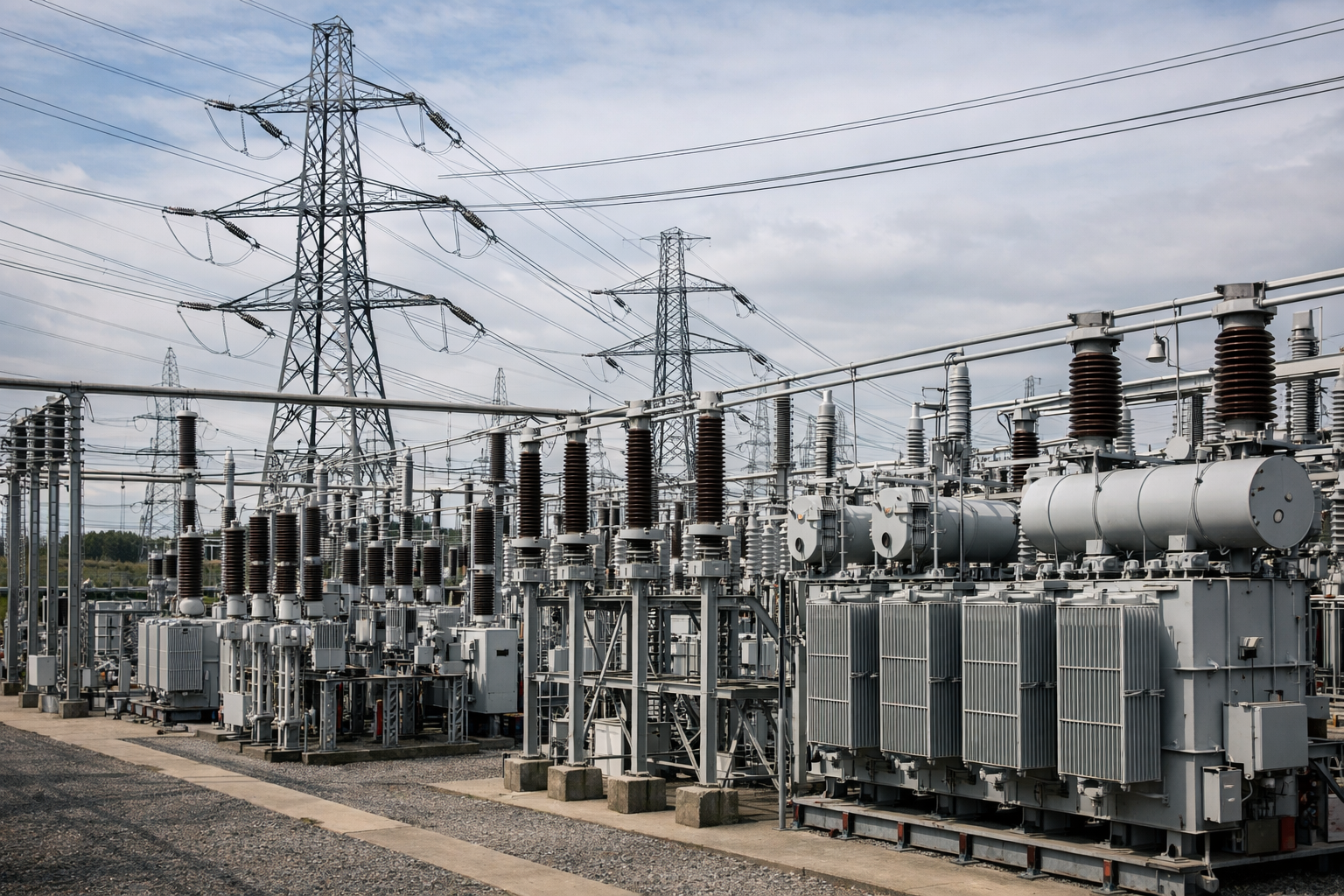
Bushings provide an insulated passage for a high-voltage conductor through the grounded tank of a transformer or another earthed enclosure. The insulation and grading structures must control the electric field around that penetration while tolerating mechanical stress, temperature variation and operating voltage. A bushing failure can force an otherwise functional transformer out of service. Its design and qualification must therefore be compatible with the transformer’s insulation level, loading conditions and network duty.
Instrument transformers perform another essential function by converting the high currents and voltages of a primary circuit into accurate, scaled signals for metering and protective relays. Measurement accuracy, insulation coordination and transient response influence fault detection and the operation of network protection systems. Reactors and other coil products can influence reactive power, current flow and system behaviour, depending on their design and location. Each product family has its own manufacturing, type-testing and acceptance requirements.
Greater coordination between a transformer maker and a bushing supplier could simplify design approvals, manufacturing schedules and factory acceptance testing. The physical and electrical interfaces still need agreement at the engineering stage, and utilities may specify particular qualified components independently of the equipment manufacturer. A completed transformer cannot be dispatched for every application until its accessories and test documentation meet the purchase specification. Owning a supplier can improve coordination but does not eliminate these acceptance obligations.
Trench has recently opened a factory in Charlotte, North Carolina, where GE Vernova expects manufacturing of 765kV equipment to begin in late 2027. The proposed capability is relevant to US transmission reinforcement, but production start is a future milestone rather than evidence of completed deliveries. Output will depend on equipment qualification, manufacturing labour, material availability and successful electrical testing. Expansion of one component line will not automatically remove delivery constraints affecting other parts of a high-voltage project.
The acquisition would also add Trench products designed to avoid sulphur hexafluoride or mineral oil in certain applications. Their use depends on the required insulation performance, environmental conditions and utility specifications; the alternatives are not universal replacements across the catalogue. Substitution can alter dimensions, operating temperatures, maintenance procedures and testing requirements, particularly where existing network standards prescribe an established configuration.
GE Vernova estimates that Trench will achieve approximately $1.9bn revenue in 2028 with an adjusted EBITDA margin of about 36%. Those figures are the buyer’s forward-looking assumptions and exclude potential integration synergies. The company expects complementary product lines and factory capacity to support future sales, while Trench’s own production investments will continue before the businesses combine. The precise integration plan and manufacturing allocation will be determined after the transaction has completed.
Grid construction programmes rely on coordinated delivery of transformers, switchgear, cables, protection equipment and specialised accessories. Even when individual components are available, connection dates can remain constrained by civil works, outage windows, network approvals and commissioning tests. Factory schedules must align with equipment assembly and site installation, and a change to one supplier can require further technical approval. The proposed integration is therefore likely to be tested against actual manufacturing lead times and project milestones rather than aggregate market demand alone.
Regulatory review, any required employee consultation and acquisition financing must be completed before the anticipated late-2027 closing. Trench will continue to fulfil its own customer obligations as an independent supplier in the meantime. Its planned 765kV production programme and GE Vernova’s projected 2028 financial performance remain separate future milestones, neither of which represents a completed benefit from the acquisition.