IN Brief:
- Construction has begun at Nowe Czarnowo on PGE’s up-to-400MW battery, which is specified for a minimum of 800MWh of storage.
- SPEC BAU POLSKA and EL PROFESSIONAL are delivering the turnkey project, with Fluence supplying SmartStack battery equipment.
- The contract exceeds PLN 1.14bn gross, and PGE has previously secured a 17-year capacity-market contract for the installation.
PGE Energia Odnawialna has begun construction of its Gryfino battery energy storage facility in Nowe Czarnowo, north-western Poland. Work started on 26 October at the site near the Dolna Odra energy complex. The installation is specified for up to 400MW of electrical output and at least 800MWh of energy storage, with commercial operation targeted for late 2028. Construction follows the separate contractor selection and contract signing completed in April.
The PLN 1.142bn gross turnkey contract is being delivered by a Polish consortium comprising SPEC BAU POLSKA and EL PROFESSIONAL. Fluence is supplying battery technology based on its SmartStack platform. The consortium’s remit covers design, supply, civil works, installation, commissioning and handover, followed by 36 months of warranty service. PGE Energia Odnawialna retains overall implementation and project supervision responsibilities. The construction milestone therefore moves an already contracted programme into physical delivery rather than marking a new procurement decision.
The facility is being built in a major existing electricity-generation area, where PGE operates the Gryfino combined-cycle gas plant. Nearby transmission infrastructure gives the storage project access to an established power corridor, while its own power conversion system, transformers, protection equipment and connection interface still have to be constructed and tested. Physical proximity to the grid is not equivalent to commissioning approval: the installation must satisfy connection conditions and demonstrate safe operation before energy can be imported or exported commercially.
Power and stored energy define different operating limits. The 400MW rating describes the maximum declared rate of electrical exchange, whereas 800MWh describes the minimum energy inventory. Dividing the two gives a nominal two-hour duration at full rated output. A practical dispatch schedule must also account for usable state of charge, power conversion losses, thermal limits and the portion of energy reserved to meet other operating commitments. A larger final installed energy capacity would change the duration without necessarily altering the connection’s 400MW power limit.
When the plant charges, its inverters convert alternating current from the power system into direct current stored by the battery cells. During discharge the process reverses, and transformers adapt the inverter output to the network voltage. Protection relays must detect and isolate electrical faults, while battery management systems monitor individual cells and limit operation outside permitted voltage or temperature ranges. Communications and supervisory controls coordinate charging instructions, site safety functions and the information exchanged with the grid operator.
PGE intends to use the installation to support a system with growing wind and solar generation. A grid battery can absorb electricity during periods of surplus supply, then return it when net demand rises. It may also participate in balancing and reserve markets, provided its inverter performance, metering, communications and availability meet the rules for each service. Charging or discharging for one purpose affects the energy and power left for another, so dispatch must reconcile market instructions with the battery’s remaining state of charge.
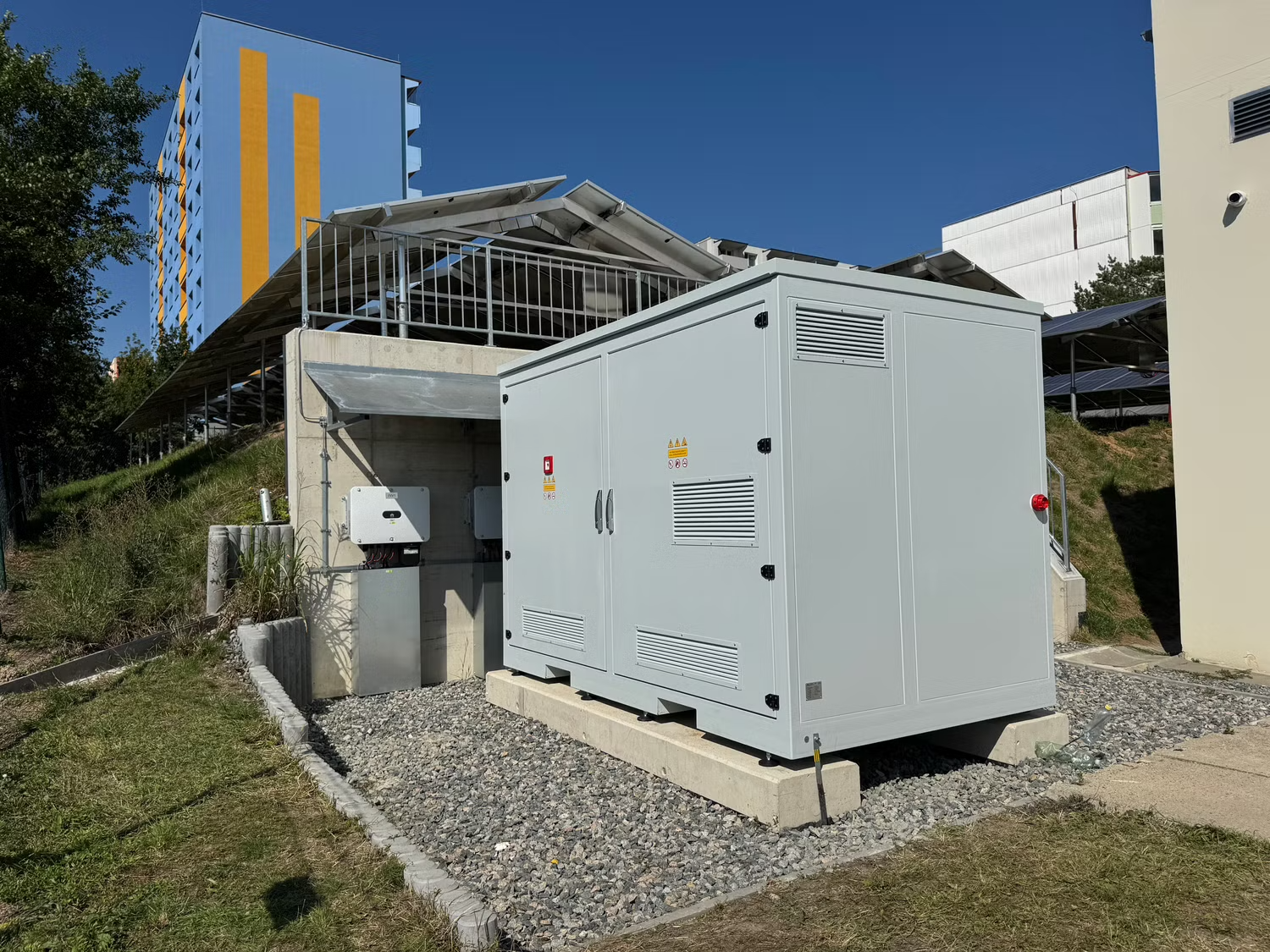
Fluence’s SmartStack is designed around modular battery units that can be deployed as repeated blocks. That architecture enables the engineering team to organise electrical connections, thermal management, fire detection and maintenance access across a large installation. Equipment density does not eliminate the requirements for fault segregation, emergency isolation, ventilation or heat control. The project will also need suitable foundations, cable routes and access for delivery and eventual equipment replacement, with interfaces coordinated between the technology supplier and civil contractor.
The project has already secured a 17-year capacity-market contract associated with the 2029 delivery period. Such arrangements can underpin investment by remunerating qualifying capacity availability, subject to specified obligations and performance requirements. They are distinct from earnings from electricity price differences and other flexibility services. The contractual commitment therefore supports the business case without establishing the volume or frequency of future battery discharge.
Gryfino is one of two major battery projects being advanced by PGE, alongside the separate Żarnowiec development, rated at 262MW and approximately 981MWh. The plants differ in location, duration and development programme. PGE is also procuring smaller distributed batteries elsewhere in Poland; those installations serve their own network and operational requirements. None of these proposed or under-construction nameplate ratings should be counted as delivered operational capacity until the relevant plants complete commissioning.
Site work will progress through civil construction, equipment deliveries, installation of battery enclosures and transformers, and integration of the power conversion and control systems. Testing will have to establish controlled charging and discharge, fault responses, grid protection coordination and communications with the relevant dispatch systems. Battery and inverter performance at individual equipment level will not by itself establish plant-wide compliance: the connection must perform safely as an integrated electrical installation under the agreed network conditions.
The timetable remains a late-2028 target. Local reports around the start of construction have described September 2028, while PGE’s contracting material specifies the end of that year. Both are forward schedules rather than confirmed energisation dates. Delivery will depend on civil progress, equipment integration, grid-side works and acceptance tests. Once operating, the plant’s contribution will be defined by available export and import power, usable stored energy and the services it can deliver within its contractual and electrical limits.