IN Brief:
- The tested system combines Tele-Fonika Kable’s 320 kV HVDC cable with PFISTERER joints and outdoor terminations.
- An independent Croatian laboratory carried out the full type-testing programme to IEC 62895.
- Qualification is a design and testing milestone, not a project supply award or completed grid installation.
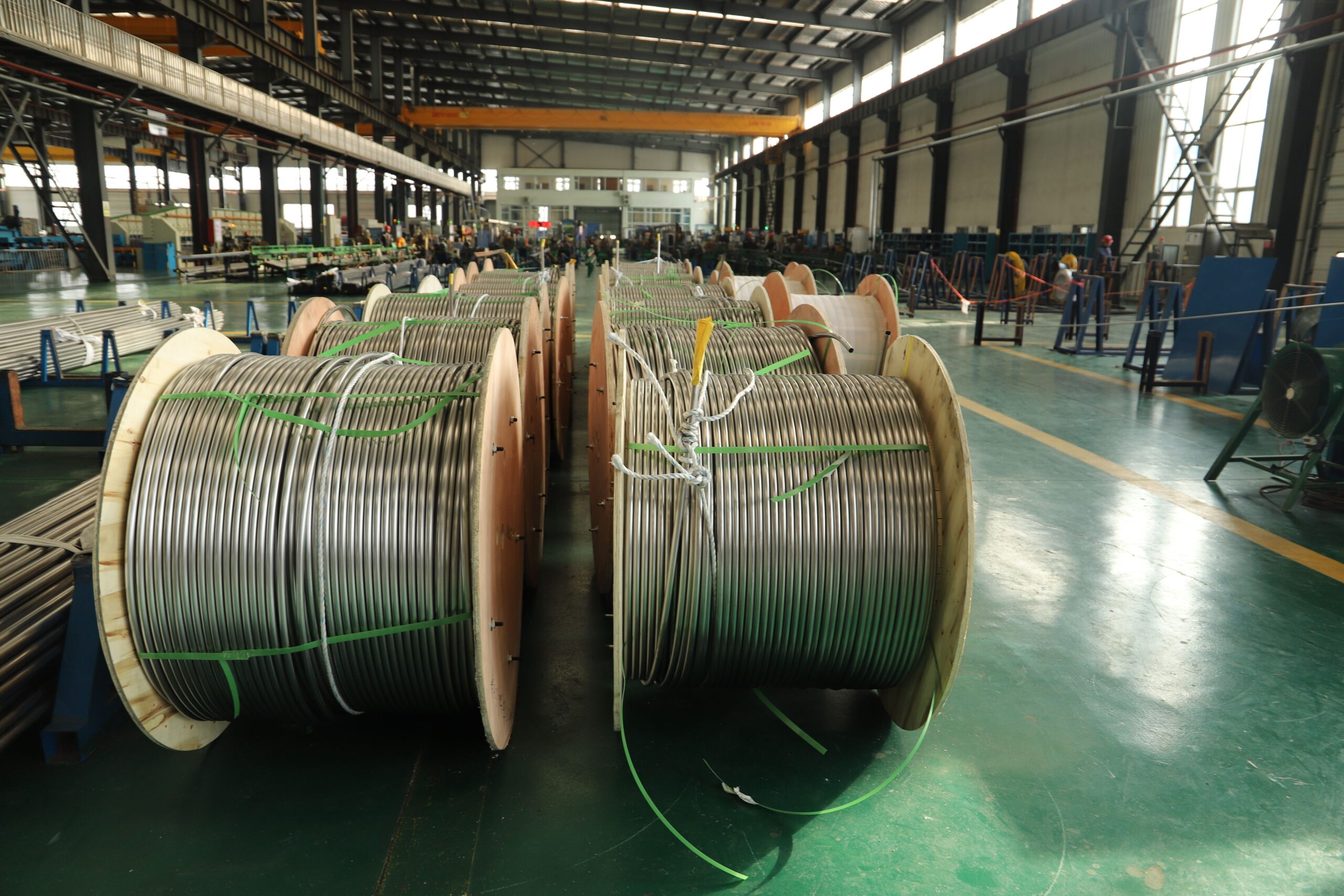
PFISTERER and Tele-Fonika Kable have completed full type testing of a 320 kV high-voltage direct-current cable system, combining PFISTERER joints and outdoor terminations with cable manufactured by the Polish supplier. The integrated assembly was assessed against IEC 62895 at the independent KONČAR – Electrical Engineering Institute in Croatia. The qualification is a new joint-system milestone for the two companies and provides a tested configuration for potential land-based HVDC connections.
The arrangement was developed as a complete electrical assembly rather than a collection of separately assessed products. PFISTERER developed and manufactured the accessories and supervised the qualification programme, while Tele-Fonika Kable supplied the HVDC cable. A joint is required where cable lengths are connected along a route; an outdoor termination provides the controlled transition between insulated cable and other high-voltage equipment at the end of a circuit. Either interface can impose different insulation and thermal conditions from those of an uninterrupted cable length.
IEC 62895 covers extruded-insulation DC cable systems for land installation at rated voltages up to 320 kV. A complete type-test programme subjects representative cables and accessories to specified electrical and thermal conditions, assessing how the components perform together. The resulting qualification establishes evidence for the defined design combination; individual production lengths and future installed circuits also require manufacturing controls, construction checks and commissioning tests tailored to their site conditions.
DC cable insulation behaves differently from insulation carrying alternating current. In an AC system, electric field distribution is governed substantially by permittivity, with polarity reversing every cycle. Under DC voltage, the distribution can also be affected by temperature-dependent electrical conductivity, charges accumulated within insulation and changing operating conditions. Cable accessories must manage those stresses where conductor geometry, insulation materials and interfaces change, making the assembled system central to the qualification exercise.
A joint connects the conductors and reinstates the insulation, screening and external protective structure at a cable interface. Its installation quality is critical because air gaps, contamination, inappropriate compression or poorly controlled surfaces can affect local electrical stress. An outdoor termination must manage the transition between the cable’s insulated environment and equipment exposed to atmospheric conditions. Creepage distances, field grading and external insulation design are therefore relevant alongside the ability to accommodate normal operating temperature changes.
Thermal cycling adds a further challenge. Power transfers heat into the conductor and insulation, while load changes cause expansion, contraction and gradients through the cable and accessories. The materials in a joint or termination may not move or conduct heat in the same way as those in the cable itself. A successful representative test programme provides evidence that the chosen combination can tolerate the prescribed stresses, rather than relying solely on test results obtained for individual parts from different suppliers.
The 320 kV rating describes the system’s voltage class rather than the amount of electrical power a future link could carry. Transfer capacity depends on current rating, conductor temperature, thermal conditions in the installation, circuit arrangement and the conversion and network equipment at either end. For a project designer, the qualified cable-and-accessory combination is one part of a wider circuit design that must establish permissible loading, losses and insulation coordination across the complete link.
HVDC is used where power transfer over long distances or between different electrical systems makes direct-current transmission technically attractive. Converters transform electricity between AC networks and the DC circuit; cable connections must preserve insulation integrity between those terminal stations. Offshore wind export systems and cross-border connections are examples of applications in which equipment reliability depends on the complete arrangement of cable, joints, landfalls, terminations and associated stations.
PFISTERER announced a 320 kV cable-system type test in November 2025. The October 2026 programme establishes the combination of PFISTERER accessories and a cable supplied by Tele-Fonika Kable, a separate configuration with its own material interfaces and test history. Qualification of one combination cannot be transferred automatically to every cable and accessory supplied by different manufacturers, because the electrical-field distribution and thermal behaviour at those interfaces may change.
The companies already supply components for wind and high-voltage infrastructure, and the October programme gives them a complete, tested 320 kV arrangement to offer for future procurement. PFISTERER is also developing technology for higher DC voltage classes, including 525 kV, for which the required insulation and accessory designs must be qualified separately. Project customers will still determine the applicable route, conductor size, rating and installation method, while the Croatian results establish the performance of the tested cable, joint and termination combination.