IN Brief:
- Rosatom's Energy Storage business and Egypt's Teletech have agreed to establish local battery assembly capabilities.
- The proposed facilities would have the capacity to assemble up to 500MWh of storage systems annually, subject to implementation.
- The partnership includes technical training and applications across electricity networks, telecommunications, data centres and industrial facilities.
The Energy Storage business of Russian state-owned nuclear group Rosatom has signed an agreement with Egyptian technology company Telecom and Technology Co. (Teletech) to develop local assembly facilities for battery energy storage systems. The proposed programme envisages capacity to assemble up to 500MWh of storage equipment annually, accompanied by technical training and a phased expansion of manufacturing activities.
The agreement was signed in connection with Egypt Energy 2026, where the two companies discussed the role of energy storage in electricity infrastructure and opportunities to develop local technical capabilities. Rosatom’s Energy Storage business operates within its Fuel Division, which has been expanding into lithium-ion battery technology alongside its established nuclear activities.
The companies have agreed to cooperate on the establishment of Egyptian assembly capacity but have not identified the factory location, construction budget, manufacturing equipment or date on which production could begin. The proposed 500MWh figure describes potential annual output rather than manufacturing capacity already installed or a confirmed volume of equipment orders.
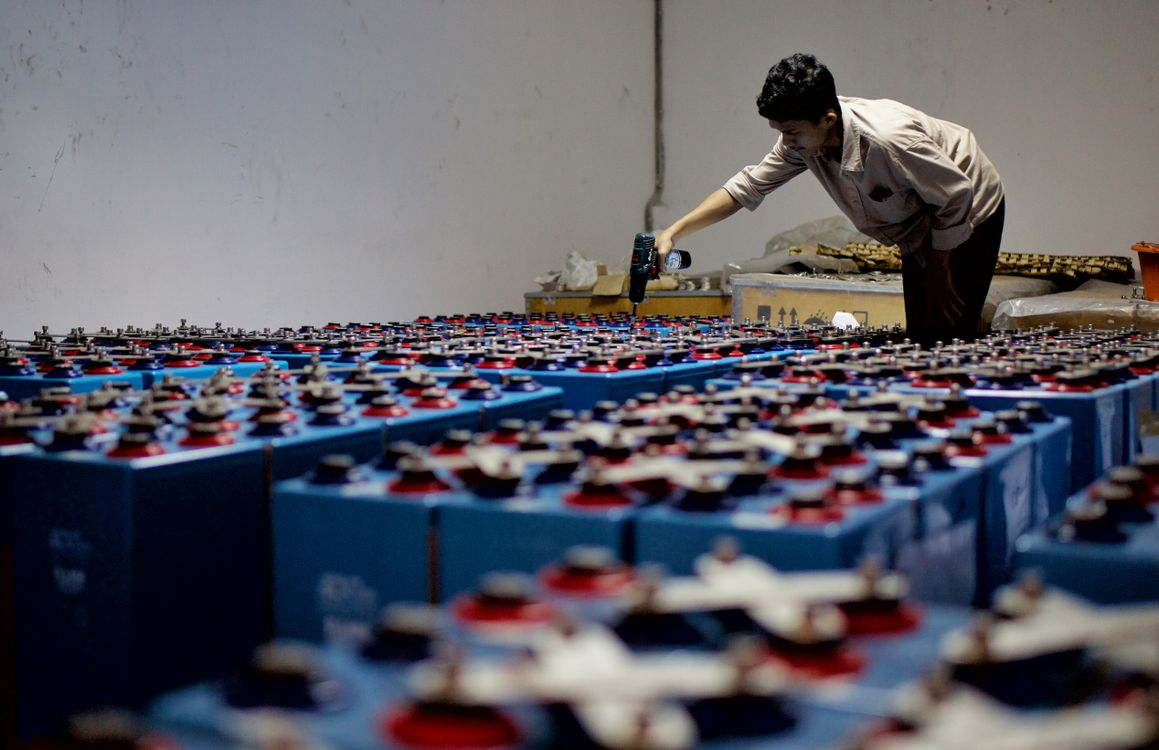
Local assembly could allow battery storage products to be integrated and tested closer to the facilities in which they will operate, although the extent of local manufacturing has not yet been defined. Rosatom develops battery cells, modules, management systems and complete stationary storage products, but the agreement does not establish whether the Egyptian operation will assemble imported modules, complete battery containers or a broader range of equipment.
Those alternatives involve different technical processes and levels of manufacturing investment. Integrating preassembled battery modules requires electrical connections, mechanical installation, monitoring equipment and verification of the completed assembly. Producing battery cells involves a substantially different manufacturing process, including electrode preparation, cell assembly and electrochemical formation, which has not been announced as part of the Egyptian programme.
Rosatom’s existing lithium-ion portfolio includes traction batteries and stationary equipment intended for electrical networks, emergency power supplies and industrial applications. The company develops technology across several stages of the battery manufacturing process, from electrodes and cells through to battery management systems and completed storage installations.
The battery management system is responsible for monitoring electrical and thermal conditions within the storage equipment. Cell voltage, current and temperature measurements help establish whether charging and discharging can continue within defined limits. Protection arrangements must also prevent abnormal operating conditions from damaging the batteries or creating wider safety risks.
Manufacturing and assembly procedures influence the reliability of these functions because electrical connections, sensors, cooling equipment and communication interfaces need to be installed and tested consistently. Factory inspection can establish whether a completed unit meets its specified requirements before it is transported for installation, although Rosatom and Teletech have not published the testing standards or product configuration proposed for Egypt.
The companies expect the partnership to support applications in electricity networks, telecommunications, data centres and oil and gas operations. These sectors have different requirements for power delivery and stored energy, meaning the manufacturing programme may need to accommodate systems configured for several operating duties rather than a single standard installation.
A battery installed to support renewable generation may charge and discharge regularly to move electricity between periods of higher and lower production or demand. Backup systems for telecommunications equipment, by comparison, may remain available for extended periods and discharge when the normal power supply is interrupted. Their required capacity, power rating and operating controls will consequently depend on the equipment and loads being supported.
For grid-connected storage, battery modules also require power conversion equipment capable of exchanging electricity with the alternating-current network. The converter manages charging and discharging, while transformers, protection systems and plant controls provide the interface needed for the installation to operate within its connection requirements.
The annual 500MWh manufacturing target relates to the energy capacity of storage systems that could be assembled over a year. It is not a statement of the factory’s electricity demand, the power rating of an individual battery installation or the amount of storage capacity already commissioned on Egypt’s network.
Rosatom and Teletech also intend to establish training arrangements for personnel involved in assembly and deployment. Manufacturing staff will require competence in electrical safety, handling high-energy battery equipment, quality inspection and the testing of control and protection systems, while installation teams must work to the specifications and procedures applying to the finished products.
Teletech’s existing activities include technology procurement, project engineering, logistics and implementation, providing a potential local delivery base for the partnership. Rosatom will contribute its established battery technology and manufacturing experience, although the companies have not disclosed how investment, ownership or responsibility for the proposed facilities will be divided.
The Russian group is separately developing lithium-ion manufacturing capacity at its Kaliningrad and New Moscow operations, which it describes as having combined planned capacity of approximately 8GWh. Those factories are distinct from the proposed Egyptian assembly facilities, and the agreement does not specify which components, if any, would be supplied from them.
Egypt’s development of renewable electricity generation is increasing interest in storage systems capable of managing variable production and supporting electricity supply. Rosatom and Teletech identify this as a potential market for their cooperation, alongside backup and industrial power applications that may require different equipment configurations.
The October agreement establishes the intended scope of cooperation rather than a completed industrial investment. Its next milestones will depend on confirmation of the site, production equipment, investment arrangements, manufacturing processes and workforce programme needed to turn the planned 500MWh annual assembly capacity into operational output.