IN Brief:
- Boskalis will transport and install about 149 km of 66 kV inter-array cable for Zeevonk Phase 1.
- The electrical collection system will connect 69 turbines, with testing, burial, termination, and cable protection included in the scope.
- Zeevonk Phase 1 is planned to provide 1 GW of Dutch offshore wind capacity by 2029.
Boskalis has secured the transport and installation contract for the inter-array cable system on the first phase of the Zeevonk offshore wind farm in the Dutch North Sea. The package covers about 149 km of 66 kV cable connecting 69 wind turbines with the project’s offshore high voltage infrastructure, together with testing, termination, cable protection, survey, and seabed intervention work.
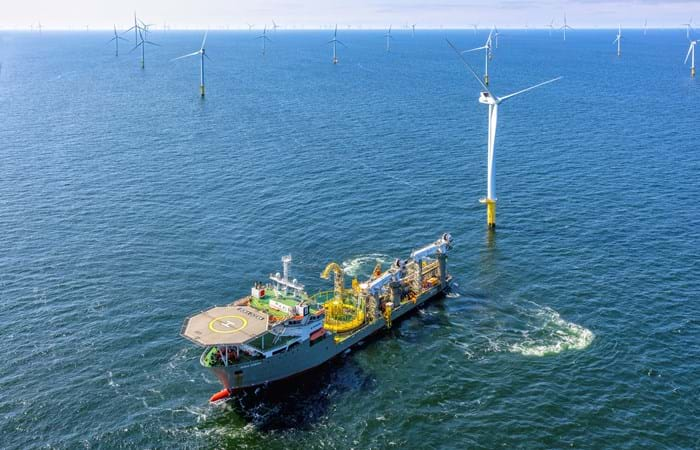
The contractor classifies the award as a sizeable contract, which under its reporting convention represents a value between €50 million and €150 million. Cable transport from the manufacturing facility in Eemshaven and the offshore installation campaign will use Boskalis’ BOKA Ocean cable laying vessel, supported by additional vessels for trenching, survey work, and rock placement on the seabed.
Zeevonk is being developed by Vattenfall and Copenhagen Infrastructure Partners through their joint venture of the same name. Phase 1 is planned to deliver 1 GW of offshore wind capacity by 2029, while a second phase is intended to add another 1 GW of wind and 500 MW of system integration capacity in 2032. The wider concept includes an electrolyser in the Port of Rotterdam for green hydrogen production.
The inter-array network forms the electrical collection system inside the wind farm. Each turbine exports through its transformer into the array cable network, which groups turbine output and carries it towards the offshore high voltage infrastructure. From there, the export system transfers bulk power towards the onshore transmission network. Reliability at array level therefore directly affects how much generating capacity can reach the grid.
Boskalis’ scope extends beyond laying cable on the seabed. The contract includes route preparation, loading, laying and burial, connection and testing of the 66 kV cables, and installation of protective rock structures where required. Vattenfall says Boskalis will also provide stabilisation berms around cable protection systems, while the Ndeavor support vessel is expected to assist with trenching and a rock installation vessel will handle erosion protection.
Cable routes have to be surveyed, prepared, and conditioned where necessary before installation. Burial depth and protection measures depend on seabed conditions, crossing points, fishing activity, anchoring risk, and the mechanical behaviour of the cable system. Once installed, termination and electrical testing must demonstrate that each section is ready to operate as part of the complete array network.
Zeevonk has already placed several major work packages. DEME secured the transport and installation contract for 69 monopile foundations in July, while TKF is supplying the 66 kV inter-array cables from its Eemshaven manufacturing facility. EEW Special Pipe Constructions has since been selected to manufacture the transition piece-free monopiles at Rostock.
The cable supply and installation figures are not identical because the manufacturing package covers about 162 km, allowing for project requirements beyond the final installed route length. Boskalis’ installation scope is about 149 km. Factory lengths, spare cable, route engineering, termination allowances, and installation planning do not necessarily translate directly into final seabed distance.
Phase 1 remains subject to a final investment decision, so the award forms part of an advanced procurement programme rather than a completed construction commitment. Ordering foundations, cables, manufacturing capacity, and specialist installation services ahead of offshore execution is necessary because cable plants, installation vessels, heavy foundation manufacturing, and suitable construction windows all need to be aligned years before first power.
Boskalis is also expanding its own cable installation capability. Earlier in 2026, the company announced a new 24,000 tonne cable lay vessel intended for high capacity offshore wind and interconnector work from 2029. Zeevonk will instead use BOKA Ocean for the array campaign, but the broader fleet investment reflects increasing cable volumes and weights as offshore wind farms and transmission links grow.
The 66 kV array architecture allows more power to be collected on each circuit than older 33 kV systems. Higher voltage does not remove installation risk. Joints, terminations, protection systems, burial quality, and route stability remain critical, while a cable fault offshore can require specialist vessels and suitable weather before repair work can begin.
Zeevonk’s first phase is scheduled for 2029, leaving a substantial engineering and construction programme before all 69 turbines can export at full scale. Boskalis now holds one of the electrical work packages sitting directly between generation and the offshore transmission interface. The project’s eventual output depends not only on turbines and foundations, but also on 149 km of subsea collection network being installed, protected, tested, and commissioned as one operating system.