IN Brief:
- SR Energy has ordered four V182-7.2 MW turbines for the 29MW Staverhult wind farm.
- The contract covers turbine supply and commissioning alongside a 35-year AOM 5000 service agreement.
- Deliveries are scheduled from the second quarter of 2028, with commissioning planned for the third quarter.
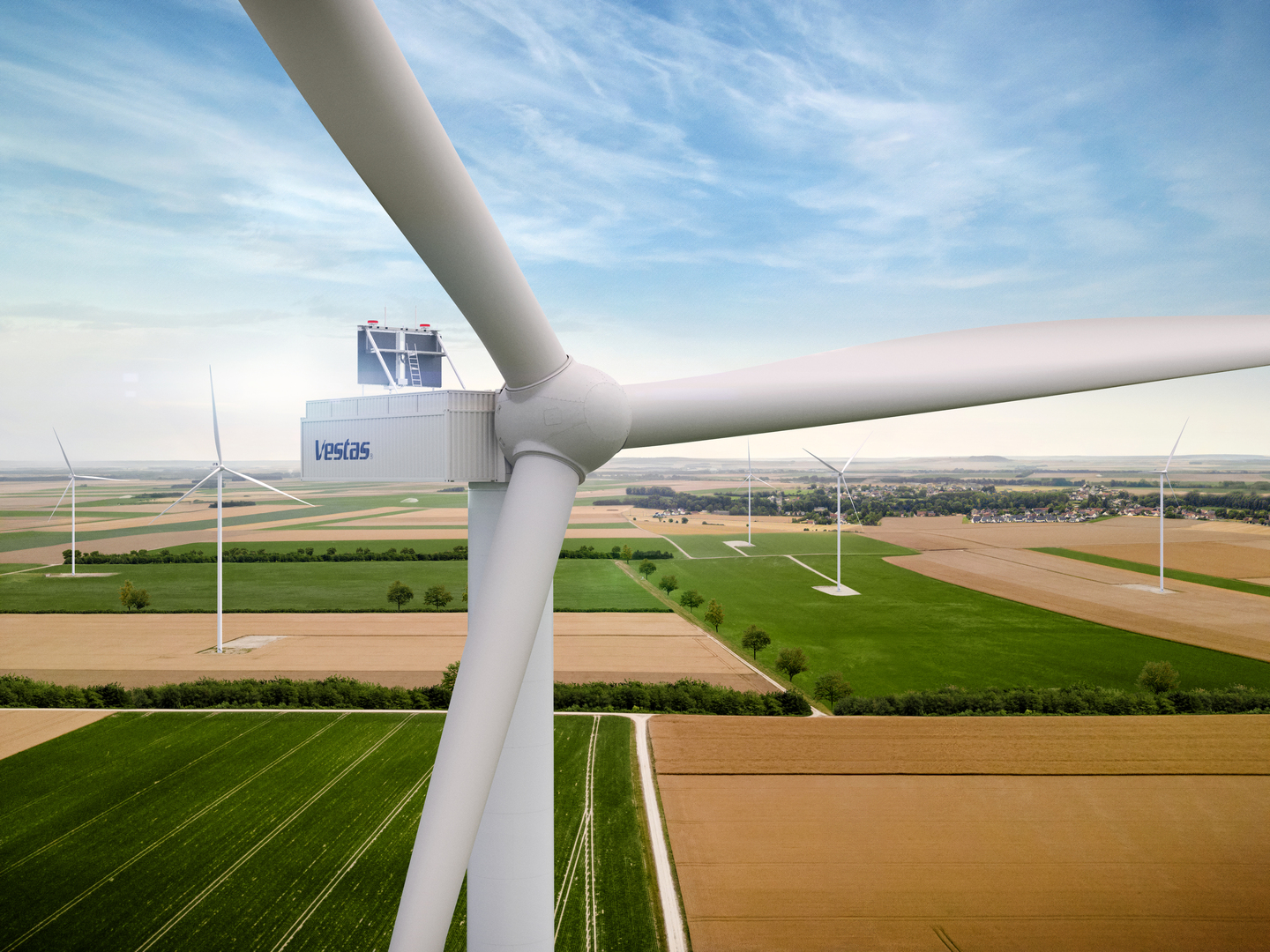
Vestas has secured the first commercial order for its V182-7.2 MW onshore turbine, with SR Energy selecting four machines for the 29MW Staverhult wind farm in southern Sweden.
The order covers supply, delivery and commissioning of four V182-7.2 MW turbines alongside a 35-year Active Output Management 5000 service agreement. Turbine deliveries are scheduled to begin in the second quarter of 2028, followed by commissioning during the third quarter.
Staverhult is being developed in Ljungby municipality in Kronoberg County, where SR Energy plans to begin construction in February 2027. The developer expects the four-turbine project to produce more than 100GWh of electricity in a normal year, with E.ON providing the local network connection.
The contract gives the V182-7.2 MW its first identified commercial project following the turbine’s technical launch. The new EnVentus model was introduced earlier this month, while Staverhult moves the design into a defined manufacturing, delivery and commissioning programme.
The V182 retains the 7.2MW rated output used elsewhere in the EnVentus range but increases rotor diameter to 182 metres. Its swept area reaches 26,016 square metres, with Vestas projecting annual energy production around 4% to 6% above the V172-7.2 MW depending on site conditions.
The larger rotor increases the amount of wind energy available to the turbine during lower and moderate wind conditions without raising the headline generator rating. That can allow the machine to operate closer to rated power for a greater proportion of the year where the wind regime suits the design.
The gain has to be balanced against the physical requirements of a larger rotor. Blade transport, crane selection, turbine spacing, foundation loads and construction access all influence the overall project design, leaving energy yield to be assessed against civil and installation requirements at each site.
Staverhult provides an early commercial test in southern Sweden. SR Energy says the project lies in electricity area 4, where consumption is comparatively high against local generation. Four turbines are expected to deliver more than 100GWh annually, concentrating a significant amount of output into a relatively small turbine count.
The electrical balance of plant remains substantial despite that compact layout. The four machines require an internal collection network, protection, switching, metering and plant level control before output reaches the E.ON connection. Turbine converters must also comply with network requirements covering active and reactive power, voltage behaviour and fault response.
Vestas uses a full scale converter architecture on the V182-7.2 MW, allowing the generator and grid interface to be controlled independently within the turbine’s operating envelope. The arrangement supports more precise electrical behaviour as wind farms are increasingly expected to contribute predictable voltage and power responses alongside variable generation.
The V182 is based on the established EnVentus platform rather than a separate turbine architecture. More than 15GW of EnVentus capacity has already been installed globally, giving the new model access to an existing base of manufacturing, operating and service experience while introducing the larger rotor and associated component changes.
Serial production is expected to increase from the end of 2027, placing Staverhult close to the beginning of the industrialisation programme. The project will therefore test both turbine performance and the ability of the expanded component supply chain to move the design into repeatable production.
SR Energy has appointed Veidekke for construction and expects the wind farm to move into operation around the middle of 2028. Vestas’ third-quarter commissioning programme sits within the same broad delivery period, although final energisation will also depend on civil completion, the grid connection and plant testing.
The 35-year service agreement keeps Vestas involved well beyond installation. Long term agreements of this type combine planned maintenance, monitoring and performance support, increasing the importance of component availability, spare parts and lifecycle reliability over several decades of operation.
The first commercial order therefore establishes more than a reference customer. SR Energy has fixed the principal generating technology for a project already moving towards construction, while Vestas now has a delivery programme against which the V182’s manufacturing and operating assumptions can be tested.
The next milestones are physical rather than promotional: construction from February 2027, serial turbine production from late 2027 and delivery of the four machines from the second quarter of 2028.