IN Brief:
- Buckeläcker will provide 35.7MWp of solar generation across approximately 30 hectares in Eppingen.
- A 10MW/20.3MWh battery will store solar output for later grid export.
- ZaberSolar is coordinating construction, with completion expected during the first half of 2027.
hep global has completed development of its 35.7MWp Buckeläcker solar project in Eppingen and is moving the scheme into construction alongside an integrated 10MW/20.3MWh battery storage system.
The approximately 30-hectare development is the company’s largest solar project in Germany to date. hep expects it to generate around 38GWh of electricity annually, equivalent on its calculation to the yearly consumption of roughly 10,800 households.
Electricity will feed into the regional network through the new Hohenstein substation. ZaberSolar is coordinating construction, which hep expects to complete during the first half of 2027.
The battery gives the project a second operating mode beyond direct photovoltaic generation. Its 10MW power rating and 20.3MWh energy capacity provide slightly more than two hours of storage at maximum output, allowing part of the solar production to be shifted away from the period in which it is generated.
hep intends the system to store excess solar electricity and return it to the network when prices are higher. The arrangement can reduce the need to export all available photovoltaic output at the same time, although the final operating limits will depend on the grid connection agreement and plant control strategy.
Solar and storage have separate power conversion equipment but share the requirements imposed at the network connection point. Photovoltaic inverters convert DC output from the arrays into grid compatible AC power, while the battery uses bidirectional converters to move between charging and discharging.
A common plant controller must coordinate those systems against agreed limits for import, export, voltage and reactive power. Protection, transformer specification and communications also have to account for different operating combinations, including full solar production, battery charging and battery discharge.
The Hohenstein substation is consequently part of the generating system rather than simply a cable termination. Renewable projects can have land, planning consent and equipment available but still depend on suitable network capacity before construction can translate into commercial generation.
hep’s development material identifies the Eppingen location as favourable partly because of its proximity to connection infrastructure. The Buckeläcker site lies northeast of the Dammhof estate on slightly elevated agricultural land, with landscape screening and environmental measures incorporated into the plan.
The company intends to establish native vegetation beneath and around the arrays and generally limit mowing to no more than twice a year, with sheep grazing also under consideration. Fencing is intended to remain permeable to smaller wildlife, while row spacing and module clearance should allow light and rainfall to reach vegetation beneath the structures.
Those measures influence maintenance and civil design over the planned 30-year operating period. Vegetation has to be controlled without obstructing modules or restricting access to electrical equipment, while drainage, tracks and fencing must remain compatible with routine inspection and repair work.
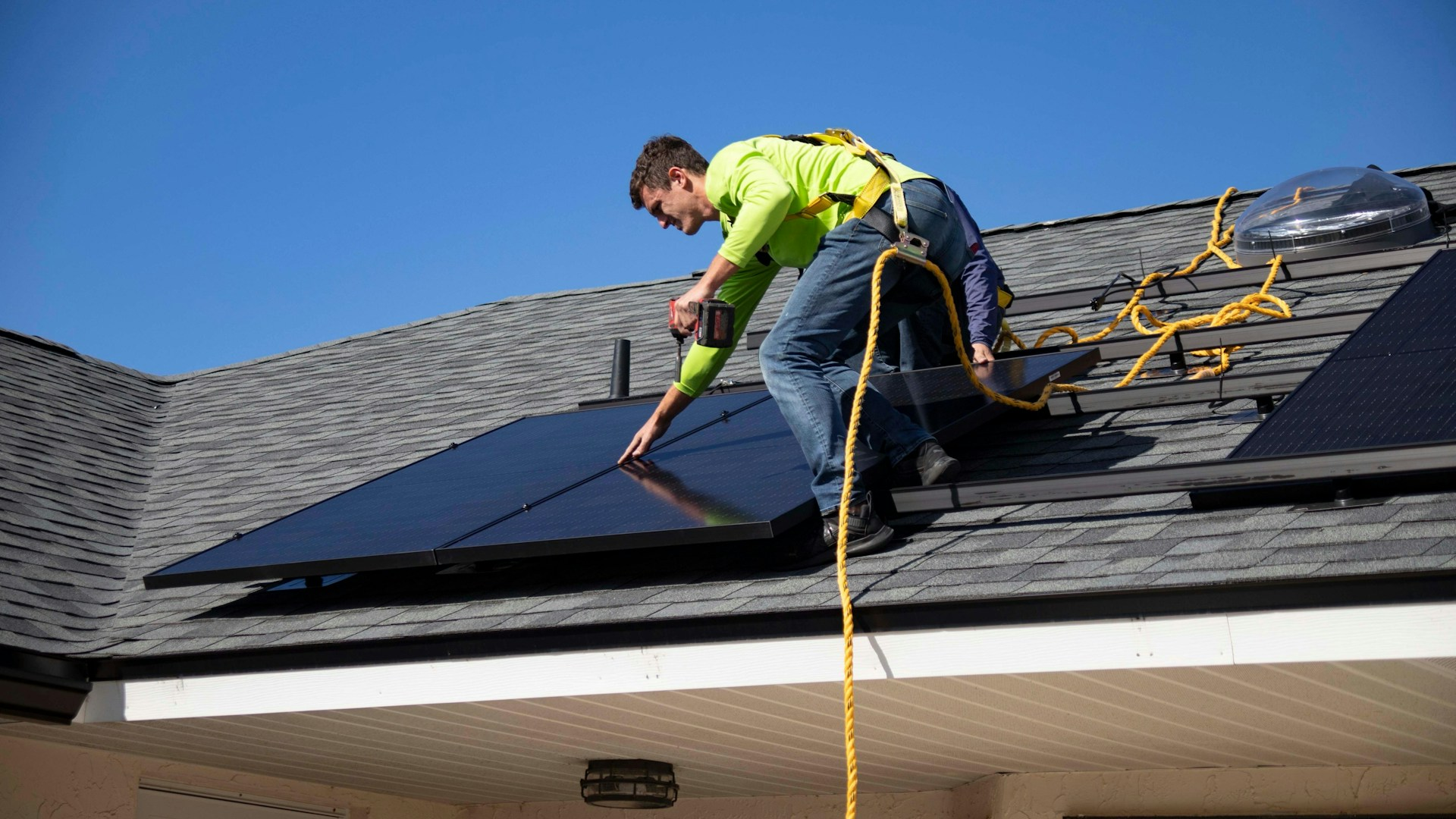
Construction now converts those designs into a sequence of physical work. Site preparation, mounting structures, photovoltaic modules, inverters, internal cabling, transformers and connection equipment have to be installed before the solar plant can begin electrical testing.
The battery adds its own commissioning programme. Cell and rack systems, battery management controls, power conversion equipment, fire protection and communications interfaces all require testing before the storage plant can cycle energy safely. Integrated commissioning must then demonstrate that solar and storage respond correctly both independently and as a combined generating asset.
hep has incorporated storage into other German developments, including projects at Biessenhofen and Mintraching. Buckeläcker therefore extends an existing hybrid approach rather than introducing batteries as a one-off addition to a solar scheme.
The commercial logic is based on greater control over when electricity reaches the market, but the engineering requirement is equally important. A hybrid installation has more operating states than a solar-only plant, and its control system has to manage those states without exceeding the technical conditions of the grid connection.
Buckeläcker now has a defined delivery programme leading into 2027. Bringing hep’s largest German solar project into service will require the generation, storage and new substation infrastructure to pass construction and commissioning as one coordinated system rather than three separate packages.
Completion during the first half of 2027 remains the next major milestone. Until then, progress will be determined by physical installation, connection work and successful integrated testing rather than the development approvals that brought the project to construction.