IN Brief:
- Raudsepa will provide 192MW of power and 420MWh of energy storage around 50km south of Tartu.
- Smartecon will deliver the project using LG Energy Solution batteries and Power Electronics inverters.
- The battery will participate in electricity arbitrage and ancillary services when it enters operation in 2027.
Taaleri Energia has invested in the 192MW/420MWh Raudsepa battery energy storage project in Estonia, with construction due to begin during September and full operation targeted for November 2027.
The project is located around 50km south of Tartu and is jointly owned by the Taaleri SolarWind III Fund, a SolarWind III co-investor and KJK Fund III, managed by KJK Capital. Baltic renewable energy developer Evecon developed the scheme with French independent power producer Corsica Sole.
Estonian contractor Smartecon will construct and install the system on a turnkey basis. The project will use battery equipment from LG Energy Solution and European made inverters from Power Electronics, establishing the principal storage and power conversion suppliers before construction begins.
Raudsepa combines 192MW of power with 420MWh of stored energy, giving it an energy-to-power ratio of slightly more than two hours at maximum rated output. The operating strategy combines electricity arbitrage with ancillary services rather than dedicating the battery to a single market.
Arbitrage allows the system to charge when electricity is comparatively cheaper and discharge when prices rise, while ancillary services can provide revenue for helping the grid maintain frequency and other operating parameters. Dispatch software and state of charge management therefore sit at the centre of the commercial model because the battery cannot commit its full capacity to every service simultaneously.
The project will also add a sizeable block of fast response capability to the Estonian system. Batteries can change active power output rapidly, making them suitable for short-notice balancing and frequency control. The 420MWh energy capacity allows larger quantities of electricity to be shifted between trading periods when the plant is not reserved for other services.
Estonia’s changing generation mix adds to the opportunity for flexible assets. Taaleri has cited electricity price volatility and the phase-out of oil-fired generation as elements of its investment case. A system carrying more variable renewable output requires capacity that can move quickly between charging and discharging, although the value available to operators will continue to depend on market conditions and competition between flexibility providers.
The inverter package is a critical part of the electrical design because the battery connects to the AC grid through bidirectional power electronic conversion. Inverters control the exchange of active and reactive power between the DC battery system and the network, while protection, transformer specification, harmonic performance and grid code compliance determine how that connection operates during normal and abnormal conditions.
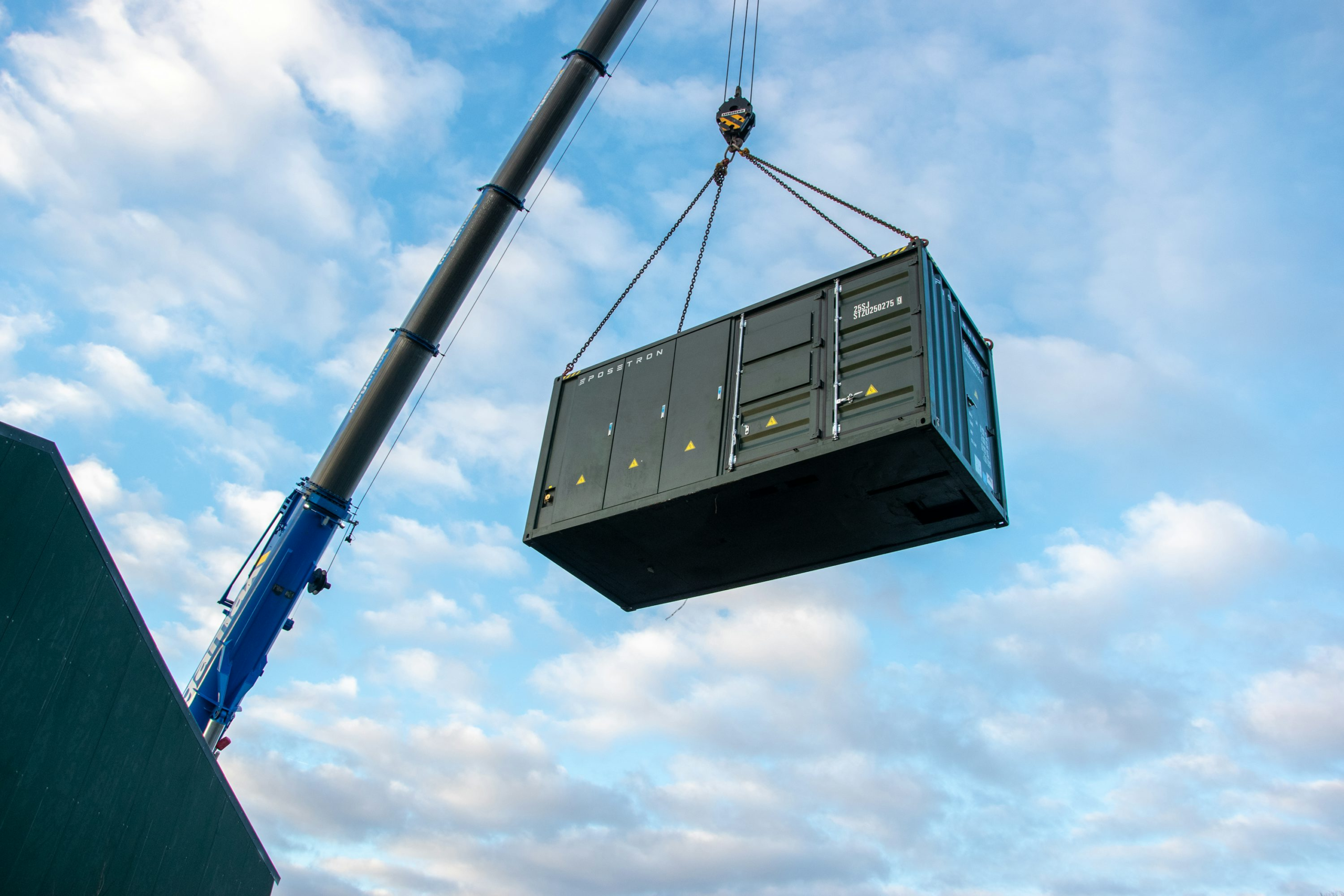
Smartecon’s turnkey role places the contractor across the interfaces between the battery equipment, power conversion system and balance of plant. Utility scale storage requires civil works, cabling, transformers, switchgear, controls, communications systems, fire protection and grid connection equipment alongside the battery enclosures themselves.
Commissioning must then establish that those systems operate as a single plant. Factory and site testing, communications checks, protection verification and grid compliance work precede commercial operation, with the control architecture required to coordinate individual battery blocks while presenting the correct response at the network connection point.
The investment is the SolarWind III Fund’s first battery storage project in Estonia and Taaleri Energia’s fifth investment in the Baltic countries. SolarWind III targets utility scale onshore wind, solar and battery storage assets through development, construction and operation before eventual exit.
The fund and associated co-investment vehicles have total commitments of €630 million, including €74 million of co-investment commitments. Taaleri said SolarWind III has so far made investment commitments totalling €425 million across markets including the Nordic and Baltic countries, Poland, southeast Europe and Spain.
Raudsepa therefore sits within a wider European infrastructure strategy rather than as an isolated storage purchase. The project also gives KJK Capital exposure to a large grid asset in a region where the investment manager already has a presence.
Taaleri expects Raudsepa to become the largest battery storage system in the Nordic and Baltic region when it enters operation, although other large projects are moving through construction across the same markets. The more immediate milestone is physical delivery: construction starting in September brings the project out of development and into a programme of equipment installation, grid works and commissioning.
Those stages will determine whether the November 2027 operating target can be maintained. Only after energisation and successful system testing can the battery begin the multi-market strategy on which its investment case is built.